
The Scientific Breakthrough in Biological Nitrogen Fixation
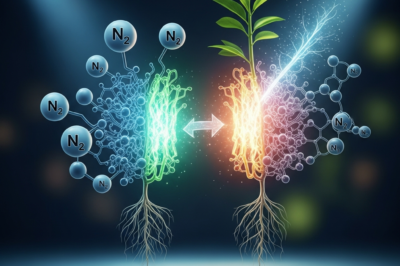
In a groundbreaking revelation that has sent ripples through the global scientific community, researchers have finally unlocked the mystery of why certain nitrogen-fixing enzymes exhibit significantly higher efficiency than their counterparts. This discovery, recently highlighted by Tech Explorist, addresses a fundamental question in biochemistry and environmental science: how do nature’s most sophisticated catalysts manage the nearly impossible task of breaking down atmospheric nitrogen? Nitrogen is an essential element for all life forms, serving as a critical component of DNA, RNA, and proteins. However, atmospheric nitrogen (N2) is notoriously difficult to process due to its incredibly strong triple bond. Only a select group of microorganisms, known as diazotrophs, possess the specialized enzymes called nitrogenases required to convert this inert gas into bioavailable ammonia. For decades, scientists have observed that different versions of these enzymes—specifically those containing different metal centers like molybdenum, vanadium, or iron—operate with varying degrees of success and speed. By pinpointing the structural and electronic nuances that drive these performance gaps, this research paves the way for a revolution in sustainable agriculture and industrial chemistry.
The Chemical Paradox: Understanding the Triple Bond Challenge
To appreciate the magnitude of this discovery, one must first understand the sheer chemical resilience of the nitrogen molecule. The dinitrogen triple bond is one of the strongest bonds in nature, requiring a massive influx of energy to cleave. In the industrial sector, humans achieve this through the Haber-Bosch process, which operates under extreme pressures and temperatures, consuming approximately 1% to 2% of the world’s total energy supply and contributing significantly to global carbon emissions. In contrast, biological nitrogen fixation occurs at ambient temperatures and pressures, powered by the metabolic energy of a cell. The nitrogenase enzyme complex is the machinery responsible for this feat. It typically consists of two components: the reductase (Fe protein), which provides the electrons, and the dinitrogenase (MoFe or VFe protein), where the actual reduction of N2 takes place. Despite their shared purpose, not all nitrogenases are created equal. The molybdenum-dependent nitrogenase (Mo-nitrogenase) is generally considered the gold standard for efficiency, while the alternative vanadium (V-nitrogenase) and iron-only (Fe-only nitrogenase) variants are often viewed as backups, utilized by organisms when molybdenum is scarce. The recent study dives into the atomic-level differences that make the Mo-variant so superior.
Decoding the Architecture of Catalytic Clusters
At the heart of the nitrogenase enzyme lies a complex metal cluster known as the cofactor. In the most efficient enzymes, this is the FeMoco (Iron-Molybdenum cofactor). The research indicates that the specific geometric arrangement of atoms within this cluster, and the way they interact with the surrounding protein matrix, dictates the speed of the reaction. Scientists utilized high-resolution imaging and advanced spectroscopic techniques to compare the FeMoco with the FeVco (Iron-Vanadium cofactor). They found that the molybdenum atom in the Mo-nitrogenase provides a unique electronic environment that stabilizes the intermediate states of the nitrogen molecule more effectively than vanadium. This stabilization reduces the ‘activation energy’ required for each step of the reduction process. Furthermore, the protein shell surrounding the cluster acts like a sophisticated gatekeeper, precisely timing the delivery of protons and electrons. In the less efficient variants, this timing is slightly off, leading to ‘leaky’ reactions where electrons are wasted on producing hydrogen gas instead of ammonia. This insight into the ‘synchronized dance’ of subatomic particles is what makes the new discovery so transformative.
The Role of Electron Flux and ATP Hydrolysis
One of the most critical findings involves the rate of electron transfer. Nitrogen fixation is an incredibly ‘expensive’ process for a cell, requiring at least 16 molecules of ATP (Adenosine Triphosphate) to reduce a single molecule of N2. The study revealed that the most efficient nitrogenases have optimized the interface between the Fe protein and the catalytic protein. This optimization allows for a faster ‘turnover’ rate. Think of it like a production line: if the person handing over the materials (the electrons) and the person assembling the product (the cofactor) are perfectly in sync, the output is maximized. In the high-performing molybdenum enzymes, the conformational changes triggered by ATP hydrolysis are more direct and forceful, ensuring that every electron provided is used to push the chemical reaction forward. In contrast, the alternative enzymes often ‘stall’ or require more energy to reach the same catalytic state. By mapping these specific amino acid sequences that facilitate this high-speed transfer, researchers now have a blueprint for what a ‘perfect’ nitrogenase looks like.
From Lab to Field: Bioengineering the Future of Agriculture
The implications of this discovery for global food security are staggering. Currently, modern agriculture relies heavily on synthetic nitrogen fertilizers produced via the energy-intensive Haber-Bosch process. These fertilizers are not only expensive but also environmentally damaging, as runoff leads to the ‘dead zones’ in oceans and the release of nitrous oxide, a potent greenhouse gas. If scientists can take the lessons learned from these high-efficiency enzymes and engineer them into common crop plants like wheat, corn, or rice, we could potentially see a world where crops ‘fertilize themselves.’ This has been a dream of plant biologists for decades, but it has been hindered by our lack of understanding of enzyme efficiency. Now that we know why some enzymes work better, we can use CRISPR and other gene-editing tools to ‘supercharge’ the nitrogen-fixing capabilities of bacteria that live in symbiosis with plants, or eventually, integrate the nitrogenase genes directly into the plant genome itself. This would reduce the cost of farming, decrease the carbon footprint of food production, and help feed a growing global population.
Green Ammonia and Industrial Innovation
Beyond agriculture, this research holds the key to ‘Green Ammonia.’ Ammonia is not only used for fertilizer but is also emerging as a promising carbon-free fuel for shipping and a medium for hydrogen storage. If we can mimic the efficiency of the molybdenum nitrogenase in a synthetic catalyst, we could produce ammonia using renewable energy sources like wind and solar at room temperature. The current study provides a detailed look at the ‘active site’ of the enzyme, showing exactly how the metal atoms and sulfur ligands cooperate to bind nitrogen. Industrial chemists can now use this biological template to design new catalysts that are far more efficient than the ones used today. This bio-inspired approach to chemistry could lead to a new era of manufacturing where we use nature’s own blueprints to solve our most pressing energy challenges.
Conclusion: A New Chapter in Bio-Chemical Engineering
The discovery of why certain nitrogen enzymes outperform others marks a turning point in our understanding of life’s fundamental processes. By bridging the gap between structural biology and quantum chemistry, researchers have provided the tools necessary to replicate one of nature’s most difficult tricks. As we move forward, the focus will shift from observation to application. Whether it is through the creation of self-fertilizing crops or the development of sustainable industrial catalysts, the impact of this research will be felt for generations. We are no longer just observers of the nitrogen cycle; we are becoming its master architects. This profound leap in knowledge ensures that the future of both agriculture and energy looks significantly greener and more efficient than ever before.







































Leave a Reply