
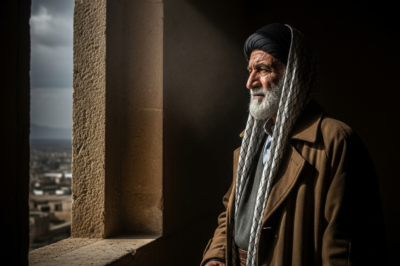
The New Geopolitical Chessboard: Tehran’s Waiting Game
In the high-stakes theater of Middle Eastern geopolitics, the Islamic Republic of Iran has reportedly shifted its tactical focus toward a doctrine of long-term attrition, specifically aimed at navigating the volatile landscape of American electoral politics. Recent reports and statements from Tehran suggest a sophisticated, if not dangerous, strategy: prolonging regional tensions and low-level conflicts until the potential return of Donald Trump to the White House is either neutralized by time or mitigated by a change in administration. This strategy of strategic patience is not merely about surviving sanctions; it is about actively exhausting the United States’ military, economic, and political capital in the region. By signaling that they have ‘learnt how to’ bypass traditional Western pressures, Iranian officials are betting on a future where the ‘Maximum Pressure’ campaign becomes a relic of the past rather than a revived reality. The current climate suggests that Tehran views the period leading up to the 2024 U.S. Presidential Election as a critical window where they must maintain a delicate balance between provocation and preservation, ensuring that the U.S. remains bogged down in peripheral conflicts while Iran strengthens its internal resilience and external alliances.
The Shadow of Maximum Pressure: Historical Context
To understand why Iran is so focused on outlasting a potential second Trump term, one must look back at the years between 2017 and 2021. The Trump administration’s decision to unilaterally withdraw from the Joint Comprehensive Plan of Action (JCPOA) in 2018 marked a turning point in bilateral relations. This was followed by the ‘Maximum Pressure’ campaign, which utilized some of the most stringent economic sanctions in modern history, targeting Iran’s oil exports, banking sector, and manufacturing. The goal was to force Tehran back to the negotiating table to accept a more restrictive deal or, as some hawks in Washington hoped, to catalyze internal regime change. However, the assassination of General Qasem Soleimani in January 2020 served to harden Iran’s resolve rather than weaken it. Tehran’s current posture is a direct response to those years. They have transitioned from a defensive crouch to an offensive diplomatic and proxy-based strategy. Iranian leadership believes that the U.S. political system is deeply polarized and that by maintaining a state of ‘controlled chaos’ in the Middle East, they can influence the American public’s appetite for further intervention, thereby making a return to aggressive ‘Maximum Pressure’ politically unfeasible for any future administration.
How Tehran Claims to Have ‘Learnt’ to Defy the West
A central pillar of the recent claims from Tehran is that the Iranian state has successfully adapted to the global sanctions regime. This ‘learning process’ involves several layers of economic and technological innovation. Firstly, Iran has developed a robust ‘shadow banking’ network that allows it to continue trading oil and other commodities despite being cut off from the SWIFT international payment system. By utilizing front companies and intermediaries in jurisdictions with lax oversight, Tehran has maintained a steady flow of hard currency. Secondly, the deepening relationship with China has provided a critical lifeline. China remains the largest buyer of Iranian crude oil, often ignoring U.S. secondary sanctions. This ‘Pivot to the East’ is a strategic shift that Tehran believes makes them immune to Western-led isolation. Furthermore, Iran has made significant strides in domestic technological production, particularly in drone and missile technology. The use of Iranian-made Shahed drones in global conflicts has demonstrated that Tehran can export its military influence even while under heavy technological embargoes. This self-reliance is what Iranian officials refer to when they claim they have ‘learnt how’ to survive and thrive under pressure, suggesting that the leverage the U.S. once held through economic warfare has significantly diminished.
The Strategy of Regional Proxy Exhaustion
The ‘exhaustion’ of the United States is primarily being carried out through what military analysts call ‘Grey Zone’ warfare. Rather than engaging in a direct conventional conflict with the U.S. military—a fight Iran knows it would lose—Tehran utilizes its ‘Axis of Resistance.’ This network of proxies includes Hezbollah in Lebanon, various militias in Iraq and Syria, and the Houthi movement in Yemen. By providing these groups with intelligence, funding, and advanced weaponry, Iran can strike at U.S. interests and allies with a degree of plausible deniability. The goal is to create a ‘ring of fire’ around U.S. assets in the region, forcing the Pentagon to keep thousands of troops and billions of dollars’ worth of equipment deployed in defensive postures. This constant state of alert drains the U.S. Treasury and creates political friction at home, where voters are increasingly skeptical of ‘forever wars.’ Tehran’s gamble is that the U.S. will eventually suffer from ‘intervention fatigue,’ leading to a strategic withdrawal similar to what was seen in Afghanistan. If Iran can keep the regional temperature just below the threshold of a full-scale war, they believe they can wait for a more isolationist or distracted American administration to take office.
Psychological Warfare and the 2024 Election
Beyond the physical and economic dimensions, there is a significant psychological component to Iran’s strategy. Recent intelligence reports from the U.S. have suggested that Iranian actors are actively attempting to influence the 2024 election through cyber operations and disinformation campaigns. By targeting the vulnerabilities of the American political discourse, Tehran aims to exacerbate internal divisions. Their specific interest in ‘prolonging the war until Trump is out’ reflects a belief that Donald Trump represents a uniquely existential threat to the current Iranian establishment due to his unpredictability and willingness to use extreme economic force. Conversely, Tehran may view other political outcomes as more predictable or manageable. This interference is a form of asymmetric warfare designed to weaken the domestic resolve of their primary adversary. By making the cost of Middle Eastern involvement seem too high for the average American voter, Iran hopes to force a policy shift that prioritizes domestic issues over foreign containment. This psychological exhaustion is intended to mirror the economic exhaustion of the sanctions era, creating a multi-front pressure point on the American leadership.
Global Alliances and the Multi-Polar Pivot
Iran’s confidence in its ability to outlast U.S. pressure is also bolstered by the shifting global order. The emergence of a more multi-polar world has given Tehran options it did not have two decades ago. The strengthening of the Iran-Russia-China triad represents a significant challenge to U.S. hegemony. Russia, facing its own set of Western sanctions, has found a willing partner in Iran for military and economic cooperation. This ‘coalition of the sanctioned’ is working to build alternative financial systems that bypass the U.S. dollar, further insulating Iran from future ‘Maximum Pressure’ campaigns. Additionally, Iran’s entry into the BRICS+ group and the Shanghai Cooperation Organisation (SCO) provides it with diplomatic cover and new avenues for trade. By aligning itself with the Global South and powers that are skeptical of U.S. foreign policy, Tehran is signaling that it is no longer a pariah state but a key player in a new international alignment. This global support network makes the strategy of ‘prolonging the war’ much more viable, as Iran is no longer standing alone against the weight of the Western world.
The Risks of Over-Calculation
While Tehran’s strategy of exhaustion appears calculated, it is fraught with extreme risks. The primary danger is the risk of miscalculation leading to an unintended full-scale war. ‘Grey Zone’ tactics are inherently volatile; a single drone strike that results in high U.S. casualties could trigger the very overwhelming military response that Iran is trying to avoid. Furthermore, the economic resilience Tehran claims to have ‘learnt’ is fragile. The Iranian population has faced years of high inflation, currency devaluation, and social unrest. There is a limit to how much ‘exhaustion’ the Iranian public can endure before internal pressures become a threat to the regime’s survival. Additionally, betting everything on the outcome of a foreign election is a high-stakes gamble. If Donald Trump were to return to power, he might double down on his previous policies with even greater intensity, potentially targeting the very loopholes Iran has spent years building. The ‘waiting game’ assumes that the opponent will eventually tire, but it does not account for an opponent that decides to end the game through decisive, albeit risky, action. Tehran’s strategy is essentially a race between American political patience and Iranian economic and social endurance.
Conclusion: A Future Defined by Attrition
The declaration that Iran intends to exhaust the United States and has learned to navigate the pressures of the West marks a definitive era in Middle Eastern diplomacy. It is no longer a matter of simple negotiation over nuclear capabilities; it is a comprehensive struggle for regional dominance and political survival. By aiming to prolong conflict until the political tides in Washington shift, Tehran is engaging in a long-form geopolitical marathon. The world now watches a high-stakes game of chicken where the stakes are not just the price of oil or the stability of a single nation, but the future of the international order itself. Whether the United States can maintain its strategic focus amidst internal political turmoil, or whether Iran’s ‘learnt’ resilience will see it through to a more favorable global environment, remains the defining question of the decade. One thing is certain: the era of quick diplomatic fixes is over, replaced by a grueling war of wills that will test the foundations of both the American republic and the Islamic Republic for years to come.

































Leave a Reply