
Introduction: A Night Under the Celestial Fire
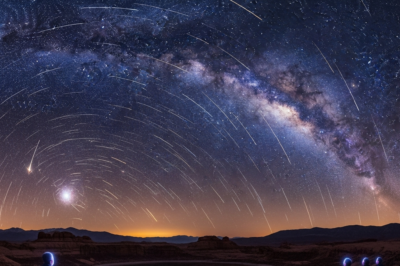
Every August, as the Earth embarks on its annual journey through the dusty wake of Comet 109P/Swift-Tuttle, the night sky transforms into a canvas of cosmic pyrotechnics. The 2024 Perseid meteor shower peak was nothing short of spectacular, captivating millions of observers from the remote peaks of the Himalayas to the dark sky preserves of the American Southwest. This year’s event was particularly anticipated due to the favorable lunar cycle, which saw the waxing gibbous moon set before the peak hours of dawn, providing a perfectly dark backdrop for the ‘tears of St. Lawrence’ to fall. Across the globe, photographers and astronomers gathered their equipment, braving the midnight chill to capture what many are calling the most vivid display of the decade. The resulting images, shared across space agencies and social media platforms, serve as a poignant reminder of our place in the universe and the enduring mystery of the cosmos. This comprehensive analysis explores the science, the artistry, and the profound cultural impact of the 2024 Perseid peak, offering an in-depth look at why this celestial event remains the undisputed king of meteor showers.
The Origins of the Perseids: The Legacy of Comet Swift-Tuttle
To truly appreciate the visual splendor of the Perseids, one must look back nearly two thousand years and millions of miles into deep space. The Perseids are the debris trail left behind by Comet 109P/Swift-Tuttle, a massive icy wanderer with a nucleus roughly 16 miles (26 kilometers) across. Discovered independently by Lewis Swift and Horace Parnell Tuttle in 1862, this comet takes 133 years to orbit the Sun. Each time it swings through the inner solar system, the Sun’s heat causes its icy surface to sublimate, releasing a stream of dust, rock, and ice particles. Over centuries, these particles have spread out into a wide ‘river’ of debris that Earth intersects every August. When these particles, most no larger than a grain of sand, collide with Earth’s atmosphere at a staggering velocity of 59 kilometers per second (about 132,000 miles per hour), the friction causes the air around them to ionize and glow brilliantly. This process, known as ablation, is what creates the long, glowing streaks we see from the ground. The 2024 peak was notably intense, suggesting that Earth may have passed through a particularly dense filament of debris shed during the comet’s 1862 passage, resulting in a higher frequency of ‘fireballs’—meteors that appear brighter than any of the planets in our night sky.
Why 2024 Was a Banner Year for Stargazers
Astronomical events are often at the mercy of the moon and the weather, but 2024 offered a rare alignment of favorable conditions. The moon is the primary antagonist of meteor showers; its reflected light can easily drown out all but the brightest meteors. In 2024, the moon was in its first-quarter phase during the peak, meaning it set around midnight in many northern latitudes. This left the prime viewing hours—between 2:00 AM and dawn—in total darkness. Furthermore, atmospheric stability across large swaths of the Northern Hemisphere allowed for exceptional transparency. In Europe, the Alps provided a high-altitude sanctuary for observers, while in North America, the absence of major smoke plumes from wildfires (compared to previous years) ensured that the ‘seeing’ conditions were optimal. Scientists also noted that the Perseids are known for their high percentage of persistent trains—glowing paths of ionized gas that remain visible for several seconds or even minutes after the meteor has vanished. In 2024, these trains were particularly vivid, providing ample time for wide-field cameras to capture the ghostly remnants of each atmospheric entry.
Capturing the Cosmos: The Art and Tech of Astrophotography
The ‘spectacular’ photos mentioned in recent headlines are the result of a sophisticated blend of art and cutting-edge technology. Modern astrophotography has undergone a revolution with the advent of high-sensitivity mirrorless cameras and advanced image processing software. To capture the Perseids, photographers typically utilize wide-angle lenses (14mm to 24mm) with fast apertures (f/1.4 to f/2.8) to maximize the light-gathering capability. A key technique involves taking hundreds of consecutive 15-to-30-second exposures over several hours. These frames are then ‘stacked’ using software like Starry Landscape Stacker or Sequator, which helps to reduce digital noise while keeping the stars sharp. However, the meteors themselves must be manually masked into a single composite image to show the ‘radiant’—the point in the constellation Perseus from which all the meteors appear to originate. In 2024, we saw an increase in the use of dual-camera setups: one camera tracking the stars with an equatorial mount to capture deep-sky detail, and another static camera focused on the landscape. This allowed for breathtaking compositions where the Milky Way served as a backdrop to the plummeting fireballs, creating a sense of depth and scale that was previously difficult to achieve without significant digital manipulation.
The Radiant Point and the Geometry of the Sky
While meteors can appear anywhere in the sky, they all share a common point of origin called the radiant. For the Perseids, this point lies within the constellation Perseus, which rises in the northeast after sunset. This geometric phenomenon is an effect of perspective, much like how parallel railroad tracks appear to converge in the distance. The position of the radiant is crucial for observers; the higher Perseus is in the sky, the more meteors are visible. In 2024, the peak coincided with the radiant reaching its highest point just before dawn, which is why the hourly rates (ZHR, or Zenithal Hourly Rate) reached their maximum of nearly 100 meteors per hour during the pre-dawn hours of August 12th. Interestingly, observers in the Southern Hemisphere see far fewer Perseids because the radiant never rises very high above their horizon. However, those located near the equator were treated to ‘Earthgrazers’—meteors that skim the top of the atmosphere at a shallow angle, creating incredibly long, slow-moving trails that can span half the sky. These rare sightings were among the most talked-about highlights of the 2024 event, documented extensively by observers in regions like Northern Australia and Southeast Asia.
Dark Skies and the Battle Against Light Pollution
The success of the 2024 Perseid viewing also brought a critical issue into focus: the vanishing darkness of our planet. For many city dwellers, the Perseids were invisible due to light pollution—the excessive and misdirected artificial light that creates ‘sky glow.’ The spectacular photos that have circulated recently were almost exclusively taken from Bortle 1 or 2 locations, which represent the darkest skies remaining on Earth. The International Dark-Sky Association (IDA) used the 2024 peak to advocate for better lighting policies, noting that for every person who saw a meteor this year, dozens more were denied the experience by poorly designed streetlights and neon signs. The Perseids serve as a natural laboratory for measuring sky quality; the number of meteors one can count is a direct indicator of how much light pollution is present. In 2024, citizen science projects like ‘Globe at Night’ saw a surge in participation, with thousands of people submitting their meteor counts to help map global light pollution levels. This intersection of hobbyist stargazing and environmental activism highlights the broader importance of the Perseids as more than just a visual treat; they are a call to preserve our nocturnal heritage.
Future Outlook: The Road to the 2028 Return
As the dust settles on the 2024 peak, astronomers are already looking forward to future iterations of the shower. While the Perseids occur every year, their intensity varies based on the specific pockets of debris Earth encounters. We are currently approaching the mid-point between the comet’s last appearance in 1992 and its next expected return in 2126. However, orbital calculations suggest that 2028 may see a significant ‘outburst’ of Perseids, as Earth is predicted to pass through a particularly fresh trail of debris left by the comet during its 1479 passage. Until then, each year offers a unique opportunity to refine our understanding of cometary decay and atmospheric physics. The 2024 event set a high bar for photographic excellence and public engagement, fostering a new generation of amateur astronomers. As space agencies like NASA and the ESA continue to monitor near-Earth objects, the data gathered from meteor showers like the Perseids provides invaluable insights into the composition of the early solar system and the potential risks posed by larger space rocks. The 2024 Perseids weren’t just a show; they were a bridge between our ancient past and our future in the stars.
Conclusion: The Timeless Appeal of the Shooting Star
In an era dominated by screens and artificial intelligence, the 2024 Perseid meteor shower reminded us of the power of the natural world to evoke awe and wonder. There is something fundamentally human about sitting in the dark, eyes fixed on the heavens, waiting for a flash of light that traveled millions of miles just to vanish in our atmosphere. The spectacular photos captured this year are more than just pixels on a screen; they are trophies of patience and evidence of our enduring curiosity. Whether viewed through the lens of a high-end camera or with the naked eye from a backyard lawn chair, the Perseids offer a rare moment of global synchronicity, where people across borders and cultures look up in unison. As we move forward, the memories of the 2024 peak will serve as a beacon for those who seek to understand the universe, proving that as long as Comet Swift-Tuttle continues its silent orbit, the August sky will never cease to amaze.





































Leave a Reply