
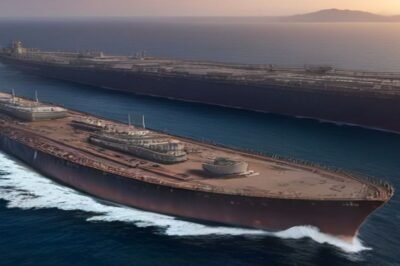
The global maritime community was sent into a state of high alert recently following reports that the Iranian government has officially blacklisted approximately 45 vessels, including several ships originating from India and Pakistan. This decision, primarily centered on alleged violations within the volatile Strait of Hormuz, marks a significant escalation in regional maritime tensions. The Strait of Hormuz is widely regarded as the world’s most sensitive oil transit chokepoint, through which nearly 20 to 30 percent of the world’s total petroleum consumption passes daily. The blacklisting of these vessels is not merely a bureaucratic hurdle for shipping companies; it represents a complex interplay of international law, regional power dynamics, and the ongoing shadow war between Iran and various global actors. As New Delhi and Islamabad assess the fallout, the move has raised urgent questions regarding the safety of international shipping lanes, the stability of global energy prices, and the diplomatic maneuvers required to prevent a full-scale maritime crisis. This development serves as a stark reminder of how regional friction can instantaneously impact the global supply chain, forcing nations to reconsider their maritime security protocols and diplomatic alliances in the Middle East.
The Strategic Significance of the Strait of Hormuz
To understand the gravity of Iran’s blacklisting of these 45 ships, one must first grasp the unparalleled strategic importance of the Strait of Hormuz. Located between Oman and Iran, the strait connects the Persian Gulf with the Gulf of Oman and the Arabian Sea. At its narrowest point, it is only 21 miles wide, with shipping lanes in both directions consisting of only two-mile-wide channels separated by a two-mile-wide buffer zone. This narrow passage is the only sea route from the Persian Gulf to the open ocean, making it the lifeline for major oil producers like Saudi Arabia, Iraq, the UAE, Kuwait, and Qatar. For India and Pakistan, the strait is the primary artery for their energy needs. India, which imports over 80 percent of its crude oil requirements, relies heavily on the stability of this region. Any disruption, whether through military blockade or regulatory blacklisting, has an immediate and disproportionate effect on the economies of South Asian nations. The current blacklisting of Indian and Pakistani vessels suggests that Tehran is leveraging its geographical advantage to send a message to regional and global players. Historically, Iran has used its control over the strait as a geopolitical tool, often threatening to close it in response to international sanctions or perceived threats to its sovereignty. The inclusion of ships from traditionally neutral or partner nations like India adds a new layer of complexity to this long-standing maritime theater.
Detailed Breakdown of the Violations and the Blacklist
According to Iranian maritime authorities, the decision to blacklist these 45 vessels stems from a series of “violations” related to maritime safety and environmental regulations. However, the specifics of these violations remain somewhat opaque. Iranian officials have cited instances of unauthorized entry into Iranian territorial waters, failure to adhere to pollution control standards, and non-compliance with the vessel traffic service (VTS) protocols established by the Ports and Maritime Organization of Iran. For many industry experts, these technical justifications often mask deeper political motives. The blacklisted fleet reportedly includes oil tankers, bulk carriers, and container ships. By targeting Indian and Pakistani vessels, Iran may be attempting to exert pressure on these nations to navigate their diplomatic relationships with the West—specifically the United States—more carefully. The blacklisting effectively bans these ships from docking at Iranian ports and subjects them to potential seizure or detention if they enter Iranian-controlled waters. This creates a high-risk environment for shipping insurers, who may respond by hiking premiums for any vessel traversing the region. The legal framework used by Iran involves its domestic maritime laws, which it asserts take precedence in its contiguous zones, despite international treaties like the United Nations Convention on the Law of the Sea (UNCLOS) which guarantee the right of ‘transit passage’ through international straits.
Impact on South Asian Maritime Interests and Energy Security
For India, the blacklisting is a particularly delicate issue. India has historically maintained a balanced relationship with Iran, even during periods of intense Western sanctions. The Chabahar Port project, a cornerstone of India’s strategy to bypass Pakistan and reach Central Asian markets, is a testament to this partnership. However, the inclusion of Indian ships in this blacklist suggests a cooling of relations or a shift in Iranian priorities. Indian shipping companies, such as the Shipping Corporation of India (SCI) and various private operators, now face logistical nightmares. Rerouting ships to avoid Iranian waters is often impossible given the geography of the Persian Gulf, leading to increased costs and delays. Pakistan finds itself in an equally precarious position. While Pakistan has sought to maintain cordial ties with its neighbor to the west, its growing reliance on Saudi Arabian and Emirati investment often puts it at odds with Tehran’s regional ambitions. The blacklisting of Pakistani vessels could be seen as a warning against Islamabad’s deepening military and economic ties with Iran’s rivals. Furthermore, both India and Pakistan are currently grappling with high inflation and energy shortages; any sustained disruption to shipping through Hormuz could lead to a spike in fuel prices that neither government can easily afford. The maritime trade between the Persian Gulf and the ports of Mumbai, Mundra, and Karachi is the backbone of regional commerce, and this blacklist directly threatens its continuity.
Geopolitical Implications: Sanctions, Proxies, and Power Plays
The broader geopolitical context of this news cannot be ignored. Iran remains under heavy economic sanctions imposed by the United States and its allies, which have severely restricted its ability to export oil and participate in the global financial system. Tehran often views the international shipping industry as a venue for asymmetric warfare. By blacklisting vessels from various nations, Iran demonstrates its capability to disrupt the global economy without firing a single shot. This move also occurs against the backdrop of the ‘Tanker War’ legacy, a period in the 1980s when Iran and Iraq targeted each other’s commercial shipping, and more recent incidents of ship seizures in response to the detention of Iranian tankers abroad. The involvement of 45 ships suggests a systemic crackdown rather than an isolated incident. There is also the factor of regional rivalries. Iran’s actions in the Strait of Hormuz are closely watched by the ‘Quad’ and other international maritime task forces patrolling the region. The blacklisting could trigger a reciprocal response or an increased naval presence from international powers, which would only heighten the risk of a military miscalculation. For the vessels involved, the situation is a terrifying example of being caught in the crossfire of high-stakes international diplomacy.
The Legal and Regulatory Battlefield: UNCLOS vs. Sovereignty
At the heart of the dispute lies a fundamental disagreement over maritime law. The 1982 United Nations Convention on the Law of the Sea (UNCLOS) provides a framework for ‘transit passage’ through straits used for international navigation. Under these rules, ships are allowed to pass through such straits as long as they proceed without delay and refrain from any threat or use of force. However, Iran, while a signatory to UNCLOS, has never ratified it. Consequently, Tehran argues that it has the right to enforce its own regulations within its territorial waters, which extend 12 nautical miles from its coast. This includes the right to stop, inspect, and even blacklist ships it deems to be in violation of its laws. The international community, led by the International Maritime Organization (IMO), has consistently called for the freedom of navigation to be respected. The blacklisting of 45 vessels creates a dangerous precedent where a coastal state can unilaterally decide which ships are ‘fit’ to pass through an international chokepoint based on subjective criteria. If other nations were to follow suit in other strategic waterways like the Malacca Strait or the Suez Canal, the global shipping industry would collapse under the weight of conflicting regional regulations. Legal experts suggest that the blacklisted companies may seek recourse through international arbitration, but such processes are lengthy and rarely provide immediate relief to ships already barred from transit.
Future Outlook: Is Escalation Inevitable?
As we look toward the future, the resolution of this crisis depends on whether it is treated as a technical maritime issue or a political one. If the blacklisting is truly about environmental and safety violations, there is a path forward through technical audits and diplomatic assurances. However, if this is a move by Iran to exert geopolitical leverage, the situation is likely to worsen before it improves. We may see an increase in ‘flag-hopping,’ where ships are re-registered under different national flags to avoid the blacklist, though this is often a temporary and legally grey solution. Diplomatic channels between New Delhi, Islamabad, and Tehran are undoubtedly buzzing with activity as officials seek to de-list their vessels. The coming months will be critical. Will Iran expand the list, or will the threat of international isolation and potential maritime counter-measures force a retreat? One thing is certain: the Strait of Hormuz remains the world’s most dangerous flashpoint, and the security of global trade hangs in a delicate balance. The blacklisting of Indian and Pakistani ships is a signal that the era of ‘business as usual’ in the Persian Gulf is over, and maritime operators must now prepare for a future defined by uncertainty and geopolitical volatility.




































Leave a Reply