
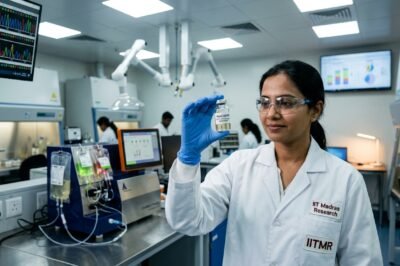
The global landscape of oncology is currently witnessing a seismic shift as India emerges as a formidable player in the realm of advanced biotechnology. For decades, the most cutting-edge cancer treatments, particularly those involving genetic engineering, were the exclusive preserve of wealthy Western nations, carrying price tags that rendered them inaccessible to the vast majority of the global population. However, the recent clinical success of NexCAR19, an indigenous Chimeric Antigen Receptor T-cell (CAR-T) therapy developed through a collaborative effort between the Indian Institute of Technology Bombay and Tata Memorial Hospital, has fundamentally altered this narrative. This ‘Made in India’ breakthrough is not merely a local milestone; it represents a global beacon of hope for patients suffering from relapsed or refractory B-cell lymphomas and leukemia. By demonstrating significant long-term blood cancer control in real-world clinical settings, this therapy proves that high-end medical innovation can be both effective and affordable. The significance of this achievement lies in its ability to harness the body’s own immune system, specifically the T-cells, and reprogram them to hunt and destroy malignant cells with surgical precision. As we delve into the details of this medical marvel, it becomes clear that India has successfully bridged the gap between academic research and life-saving clinical application, setting a new standard for the pharmaceutical industry worldwide. Under the banner of Science and Technology, this development is a testament to the power of indigenous innovation in tackling some of the most complex diseases known to humanity. Understanding CAR-T Cell Therapy and the Indian Innovation: At its core, CAR-T cell therapy is a form of immunotherapy often referred to as a living drug. Unlike traditional chemotherapy, which utilizes chemical agents to kill rapidly dividing cells indiscriminately, CAR-T therapy involves the extraction of a patient’s own white blood cells, specifically T-cells. These cells are then genetically modified in a laboratory to express a specific receptor known as the Chimeric Antigen Receptor (CAR). In the case of NexCAR19, the target is the CD19 protein, which is found on the surface of most B-cell malignancies. Once these modified cells are infused back into the patient, they act as guided missiles, identifying and eliminating cancer cells while sparing healthy tissue. The Indian innovation, NexCAR19, is unique because it utilizes a humanized version of the CAR, which reduces the likelihood of the patient’s body rejecting the therapy or experiencing severe inflammatory responses. This subtle but critical modification in the genetic design has allowed for a much better safety profile compared to the first-generation CAR-T therapies approved in the United States and Europe. The Genesis of NexCAR19 and the Role of ImmunoACT: The journey of NexCAR19 began in the labs of IIT Bombay under the leadership of Professor Rahul Purwar. The project, which received significant support from the Department of Biotechnology and the Birac (Biotechnology Industry Research Assistance Council), eventually led to the birth of ImmunoACT, a startup dedicated to commercializing this technology. The collaboration with Tata Memorial Hospital provided the essential clinical infrastructure to test the therapy in human subjects. This public-private partnership is a blueprint for how academic breakthroughs can be translated into commercial products that serve the public good. The research team focused heavily on manufacturing efficiency, realizing that the high cost of CAR-T therapy in the West (often exceeding 400,000 USD) was largely due to complex supply chains and high royalty fees. By developing the entire process within India, from viral vector production to cell expansion, the team managed to bring the cost down to approximately 30,000 to 40,000 USD, making it ten times cheaper than its global counterparts. Clinical Success and Statistical Resilience: The efficacy of NexCAR19 has been validated through rigorous Phase I and Phase II clinical trials. The data presented in recent studies indicate that approximately 70 percent of patients who received the therapy showed a significant clinical response. More impressively, a substantial number of these patients achieved complete remission, meaning no detectable cancer remained in their bodies months after the infusion. Long-term follow-up studies are particularly encouraging, showing that the modified T-cells remain active in the patient’s bloodstream for an extended period, providing a sentinel effect that prevents the cancer from returning. Statistics from the trials showed that the therapy was effective even in patients who had failed multiple lines of chemotherapy and bone marrow transplants, which were previously considered their last line of defense. The ability of NexCAR19 to provide long-term control in such a high-risk population is a remarkable clinical achievement that solidifies its place in the standard of care for blood cancers. Safety Profile and the Reduction of Side Effects: One of the most feared complications of CAR-T therapy is Cytokine Release Syndrome (CRS) and Immune Effector Cell-Associated Neurotoxicity Syndrome (ICANS). These are systemic inflammatory responses that can be life-threatening if not managed correctly. However, the humanized nature of the NexCAR19 receptor has proven to be a game-changer in terms of safety. In the clinical trials, the incidence of severe (Grade 3 or higher) CRS was significantly lower than that observed with earlier CAR-T products like Tisagenlecleucel or Axicabtagene Ciloleucel. This enhanced safety profile means that the therapy can potentially be administered in a wider range of hospital settings, not just in highly specialized intensive care units. For a country like India, with a diverse healthcare infrastructure, this lower toxicity is vital for the widespread adoption of the treatment across various regional cancer centers. Cost-Effectiveness and Global Impact: The most revolutionary aspect of NexCAR19 is its affordability. In a world where the rising cost of healthcare is a major political and social issue, India’s ability to produce a world-class gene therapy at a fraction of the cost is a massive disruption. This development has significant implications for medical tourism and global health equity. Patients from Southeast Asia, the Middle East, and even Africa, who previously had no access to CAR-T therapy, can now look to India as a destination for advanced oncology. Furthermore, the success of NexCAR19 challenges the global pharmaceutical giants to re-evaluate their pricing models and manufacturing processes. It demonstrates that the high costs associated with biotechnology are not always a necessity but often a result of corporate structures and market monopolies. By prioritizing patient access, the Indian scientific community has forced a global conversation on the ethics of drug pricing for life-saving treatments. Challenges in Scaling and Future Directions: Despite the success, several challenges remain. The manufacturing of CAR-T cells is a patient-specific, bespoke process that is difficult to scale to the thousands of patients who need it. Each dose must be individually crafted using the patient’s own cells, which requires a highly controlled environment and skilled personnel. ImmunoACT and its partners are currently working on expanding their manufacturing capacity and automating certain steps of the process to meet the growing demand. Additionally, while NexCAR19 is currently approved for B-cell malignancies, research is already underway to apply this technology to solid tumors like lung, breast, and gastric cancers, which represent a much larger portion of the cancer burden. The future of CAR-T in India also involves exploring ‘off-the-shelf’ or allogeneic CAR-T cells, which could be produced from healthy donors and stored for immediate use, further reducing costs and wait times. Conclusion on Future Implications: The approval and clinical success of NexCAR19 mark the beginning of a new chapter in Indian medicine. It signifies India’s transition from being the ‘pharmacy of the world’ in generic medicines to a leader in specialized biopharmaceuticals and gene therapy. The long-term blood cancer control offered by this ‘Made in India’ therapy provides a platform for future innovations in precision medicine. As the technology matures and manufacturing scales up, we can expect to see this therapy becoming a first-line treatment option, potentially replacing more toxic and less effective traditional therapies. The success of NexCAR19 is a reminder that when science is driven by the goal of accessibility, it can overcome even the most daunting financial and biological barriers. For the millions of cancer patients worldwide, the Indian CAR-T story is not just a study in a medical journal; it is a promise of a future where life-saving technology is a right, not a luxury.
Made in India CAR-T Therapy: A Paradigm Shift in Affordable Oncology and Long-Term Cancer Remission
Posted by
Stories





-

Mithila Palkar: The Relatable Queen of Indian Web Series and Her Meteoric Rise
-

Wamiqa Gabbi: The Meteoric Rise of Indian Web Series’ Most Versatile Leading Lady
-

Triptii Dimri Biography: The Evolution of India’s Newest Cinematic Sensation and Web Series Star
-

Wamiqa Gabbi: The Rise of India’s New Digital Icon and the Future of OTT Stardom
-

Mithila Palkar: The Unstoppable Evolution of India’s Digital Darling and Her Journey to the Silver Screen
-

Mithila Palkar: The Comprehensive Journey of India’s Web Series Sensation and Digital Pioneer
-

Mithila Palkar: The Relatable Queen of Indian Web Series and Her Inspiring Journey to Stardom
-

Sobhita Dhulipala Biography: The Meteoric Rise of India’s Most Versatile Web Series Star
-

Mithila Palkar: The Unstoppable Journey of India’s Digital Darling and Web Series Queen
-

Triptii Dimri: The Complete Biography of India’s Newest Cinematic Sensation and Web Series Icon
-

Wamiqa Gabbi: The Ethereal Rise of India’s Most Versatile Web Series Star
-

Sobhita Dhulipala: The Unstoppable Rise of India’s Most Versatile Web Series Icon
-

Wamiqa Gabbi: The Meteoric Rise of the New Queen of Indian Web Series and Her Unstoppable Journey to Stardom
-

Triptii Dimri: The Meteoric Rise of India’s New Cinema Sweetheart and Web Series Icon
-

Wamiqa Gabbi: The Versatile Queen of Indian OTT and Her Phenomenal Rise to Stardom
-

Tripti Dimri Biography: The Rise of India’s New National Crush and Her Journey from Laila Majnu to OTT Stardom
-

Wamiqa Gabbi Biography: The Meteoric Rise of India’s Newest OTT Sensation and Versatile Powerhouse
-

Wamiqa Gabbi Biography: The Meteoric Rise of the Digital Queen of Indian Web Series
-

The Rise of Wamiqa Gabbi: A Deep Dive into the Journey of India’s Most Versatile OTT Sensation
-

The Meteoric Rise of Triptii Dimri: Biography, Acting Prowess, and the Journey of India’s Newest Cinema Sensation
-

Wamiqa Gabbi Biography: The Meteoric Rise of the Digital Queen and Her Unmatched Acting Prowess

Launching Soon: The Future of News with Our E-Newspaper
In the ever-evolving landscape of media and technology, we are thrilled to announce the upcoming launch of our innovative e-newspaper, set to redefine the way news is consumed in the digital age. Embracing the convenience and accessibility that the digital world offers, our e-newspaper aims to deliver real-time news updates, insightful articles, and interactive features directly to your devices. With a commitment to journalistic integrity and a passion for storytelling, we are dedicated to keeping you informed, engaged, and connected, no matter where you are. Stay tuned for the launch of our e-newspaper, where the future of news awaits at your fingertips.
Recent News
- Adiyogi Shiva Exhibition at National Crafts Museum Explores India’s Craft Legacy

- The Invisible Architect of Fertility: A Deep Dive into Vaginal Microbiome Profiles and Reproductive Success

- Advancing Semiconductor Contamination Control with 20 nm Particle Monitoring: A Deep Dive into Precision Fabrication

- Rapid Testing Cuts Time to Appropriate Antibiotics in ICU Pneumonia: A Deep Dive into Clinical Innovation

- Made in India CAR-T Therapy: A Paradigm Shift in Affordable Oncology and Long-Term Cancer Remission
- Sri Lanka vs India 2nd Test: Dinusha ton helps Sri Lanka salvage draw – The Hindu

Politics
- India’s Strategic Shift: Decoding Ex-CDS Chauhan’s Insights on Skardu vs Sargodha Airbases

- Rahul Gandhi Leads Massive Dharna in New Delhi Over Pellet Gun Incident: A Turning Point in Political Confrontation

- Shocking Claims Emerge: Is Imran Khan ‘No Longer With Us’? Analyzing the Explosive Report from Pakistani Military Sources

- Iran’s Doctrine of Strategic Exhaustion: The High-Stakes Gamble to Outlast the Trump Era

- India’s Strategic Response: Analyzing the Defense Pact Between Pakistan, Turkey, and Saudi Arabia and Its Global Implications

- Jharkhand Students Protest Live: Massive Unrest as Protestors Breach Barricades, Demand Immediate Recruitment Reforms

Categories
- Art & Culture 100
- Auto 85
- Beauty 15
- Blog 243
- Books 7
- Business 359
- Celebrities 217
- Crime Files 139
- Democracy 308
- Education 84
- Entertainment 154
- Environment 133
- epaper 1
- Fashion 37
- Food 58
- Gadgets 86
- Guide 150
- Handicrafts 10
- Health 258
- Healthy Living 107
- History 4
- incidents 152
- Lifestyle 31
- Music 5
- Photography 15
- Politics 420
- Science & Technology 160
- Sports 226
- Tech 122
- Television 2
- Travel 68
- Travel & Tourism 30
- Trends 40
- Weather 6
- Web Series 96
- Workout 4
- World 648
Leave a Reply