
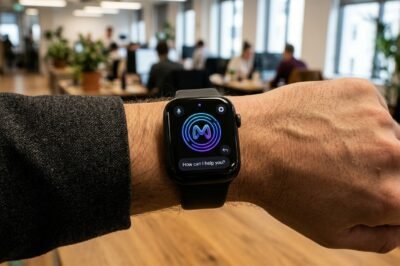
The tech world is witnessing a tectonic shift as Meta Platforms Inc. aggressively pivots its artificial intelligence strategy from the smartphone screen to the intimate space of the human wrist. With the official launch of ‘Muse,’ Meta’s sophisticated personal AI assistant, on both Apple Watch and Android Wear OS devices, Mark Zuckerberg’s empire has signaled its intention to dominate the wearable ecosystem. This move is not merely a software update; it is a declaration of war against the entrenched incumbents—Apple’s Siri and Google’s Assistant—who have long enjoyed a duopoly on smartwatch intelligence. As users demand more from their wearables than just fitness tracking and notifications, the arrival of Muse promises a generative AI experience that is conversational, context-aware, and deeply integrated into the Meta social graph. This strategic expansion marks a pivotal moment for investors and consumers alike, as Meta seeks to prove that its massive investments in large language models can translate into practical, daily utility for billions of users worldwide. The integration of Muse on smartwatches represents the first step toward a future where ambient computing becomes the primary mode of digital interaction, fundamentally changing how we communicate, work, and navigate our physical surroundings in an increasingly digital world.
The Technical Architecture of Muse: LLMs on the Wrist
The deployment of Muse on smartwatches is a feat of engineering that reflects Meta’s breakthroughs in model quantization and edge computing. Unlike traditional assistants that rely heavily on cloud-based processing for every command, Muse utilizes a hybrid architecture designed to minimize latency. For Apple and Android wearables, Meta has optimized its Llama 3 infrastructure to handle complex natural language understanding at the device level where possible, while offloading more intensive generative tasks to its robust GPU clusters. This ensures that a user asking Muse to summarize a long thread of WhatsApp messages or to generate a quick reply based on the tone of a conversation receives an answer in near-real-time.
Furthermore, the Muse interface has been meticulously designed for the small-screen experience. Instead of forcing users to scroll through walls of text, Muse provides concise, bulleted summaries and interactive components. The integration with the device’s hardware—such as the digital crown on the Apple Watch and the touch-sensitive bezels on Android devices—allows for a more tactile interaction model. Meta has also emphasized the use of ‘Voice-First’ navigation, leveraging advanced noise-cancellation algorithms to ensure Muse can hear commands even in bustling urban environments or during intense outdoor workouts. This technical prowess is a core part of Meta’s strategy to make Muse the most reliable assistant available on the market.
Disrupting the Duopoly: Meta vs. Siri and Google Assistant
For years, the smartwatch market has been a closed loop, with Apple Watch users tethered to Siri and Wear OS users reliant on Google Assistant. These legacy assistants, while functional, have often been criticized for their rigid response patterns and lack of true generative intelligence. Meta’s Muse enters this space as a disruptive force, offering a level of conversational fluidity that Siri and Google Assistant currently struggle to match. By leveraging the latest advancements in Generative AI, Muse can perform tasks that go beyond simple commands, such as drafting emails, planning travel itineraries based on user preferences, and even providing motivational coaching during fitness activities.
The competitive advantage for Meta lies in its massive social data and the ubiquity of its apps like Instagram, Messenger, and WhatsApp. Muse can seamlessly pull information from these platforms, allowing a user to ask, “When was the last time I sent a photo to Sarah on Instagram?” or “Remind me of the meeting details from the WhatsApp group chat.” This deep integration creates an ecosystem lock-in that is platform-agnostic, meaning a user can transition from an iPhone to an Android device and still have a consistent, intelligent experience with Muse. This flexibility is a significant threat to Apple and Google, who rely on ecosystem exclusivity to maintain their market share.
Strategic Implications for Meta’s Wearable Ambitions
The launch of Muse on smartwatches is a critical component of Meta’s broader hardware roadmap, which includes the successful Ray-Ban Meta smart glasses and the ongoing development of augmented reality (AR) goggles. By establishing Muse as a trusted assistant on the wrist, Meta is preparing its user base for a future where screens are less central to the digital experience. Smartwatches act as a bridge between the smartphone era and the era of ambient computing, where AI is always present and accessible through voice and gesture. This strategic positioning allows Meta to gather invaluable data on how users interact with AI in real-world, on-the-go scenarios, which will inform the development of future hardware products.
Moreover, this move highlights Meta’s shift from being a social media company to an AI-first company. The company has spent billions on data centers and AI research, and Muse is the primary consumer-facing vehicle for that investment. By making Muse available on the most popular wearable platforms, Meta is ensuring that it remains the gatekeeper of the AI experience, regardless of who manufactured the hardware. This software-first approach on third-party hardware is a savvy way to scale quickly without the massive overhead and risk associated with launching a proprietary Meta smartwatch at this stage.
Financial Outlook and Market Sentiment
Wall Street has responded positively to Meta’s aggressive AI expansion, with analysts noting that the company’s ability to monetize AI through enhanced user engagement and advertising is unparalleled. The arrival of Muse on smartwatches provides a new surface for user interaction, which ultimately translates to more data and more opportunities for personalized services. While Meta currently offers Muse as a free service, there is significant potential for premium features or integration with business services in the future. Financial experts suggest that Meta’s AI leadership could drive a multi-year growth cycle, as the company effectively leverages its existing user base to adopt new AI-driven behaviors.
- Increased user retention across the Meta family of apps.
- New revenue streams through AI-enhanced business-to-consumer communication.
- Cost savings through more efficient, AI-driven content moderation and platform management.
- Competitive positioning against OpenAI and Microsoft in the personal assistant space.
However, the financial success of Muse will also depend on Meta’s ability to manage the high costs of running generative AI models at scale. The energy consumption and server requirements for processing billions of Muse queries are substantial. Investors will be closely watching Meta’s quarterly earnings reports to see how the company balances its massive capital expenditure on AI infrastructure with the revenue generated from these new services. For now, the sentiment remains bullish as Meta demonstrates its capacity to execute complex product rollouts across competing platforms.
Privacy, Ethics, and Data Security in the Age of Muse
As with any product from Meta, the launch of Muse has reignited discussions regarding data privacy and user security. Smartwatches are highly personal devices that track health data, location, and intimate communications. The prospect of an AI assistant constantly listening for triggers and processing this data has raised concerns among privacy advocates. Meta has countered these concerns by emphasizing its ‘Privacy by Design’ approach, stating that Muse only activates when prompted and that a significant portion of the processing is encrypted. The company has also provided users with granular controls to manage what data Muse can access and how long that data is stored.
Despite these assurances, Meta faces the challenge of building trust in an era of heightened digital skepticism. The company must navigate a complex global regulatory landscape, including the European Union’s AI Act and various privacy laws in the United States and Asia. Transparency in how Muse uses personal data to improve its models will be crucial for long-term adoption. If Meta can prove that it can handle sensitive wearable data responsibly while providing a superior AI experience, it could set a new standard for the industry. However, any data breach or misuse of AI-gathered information could lead to significant legal and reputational consequences for the tech giant.
Conclusion: The Future Implications of Wearable AI
The introduction of Meta’s Muse to Apple and Android smartwatches is more than just a new feature; it is a glimpse into the future of human-computer interaction. As AI becomes more integrated into our daily lives through the devices we wear, the boundaries between the physical and digital worlds will continue to blur. Muse represents a shift toward a more proactive, intuitive digital assistant that understands our context and anticipates our needs. For Meta, this is a winning move that leverages its strengths in social networking and AI research to challenge the status quo of the wearable market.
Looking ahead, we can expect Muse to become even more deeply integrated with biometrics, providing personalized health insights and stress management tips in real-time. The success of this rollout will likely encourage other AI companies to follow suit, leading to a vibrant and competitive market for wearable intelligence. As we move closer to the era of augmented reality and truly ambient computing, Meta’s Muse will be remembered as the assistant that moved the needle, proving that the most powerful AI is the one that is always within reach, right on your wrist.







































Leave a Reply