
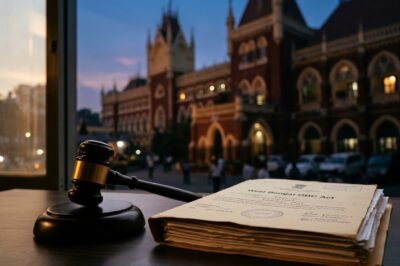
In a landmark judgment that has sent seismic ripples through the Indian political landscape, the Calcutta High Court recently delivered a verdict that effectively dismantled a significant portion of West Bengal’s reservation framework. The Division Bench, comprising Justices Tapabrata Chakraborty and Rajasekhar Mantha, struck down the Other Backward Classes (OBC) status of 77 communities, most of which were added to the list after 2010. This decision arrives at a critical juncture in Indian politics, where the nuances of caste-based reservations often dictate the electoral fortunes of major political parties. By nullifying the OBC certificates issued under specific categories created during the tenure of the current Trinamool Congress government, the court has opened a Pandora’s box of legal questions regarding the executive’s power to bypass statutory bodies. The ruling not only challenges the administrative processes of the West Bengal government but also forces a nationwide conversation on the empirical necessity of backwardness in the granting of affirmative action benefits. As the state navigates this judicial setback, the implications for thousands of students and job aspirants hang in a delicate balance, making this one of the most consequential legal interventions in recent state history.
The Genesis of the Controversy: Understanding the 2012 OBC Act
The roots of this legal battle lie in the West Bengal Backward Classes (Other Backward Classes) Act, 2012. This legislation was a hallmark of the Mamata Banerjee-led government, aimed at expanding the safety net for various marginalized communities within the state. Under this Act, and through various executive orders dating back to 2010, the state government identified and classified dozens of communities as OBCs, specifically under the ‘OBC-A’ (More Backward) and ‘OBC-B’ (Backward) categories. A significant portion of these newly included groups belonged to the Muslim community, which led to immediate and sustained criticism from opposition parties who alleged that the move was motivated by “vote bank politics” rather than genuine socio-economic assessment.
The petitioners in the case challenged these inclusions on the grounds that they were made without following the due process of law. Specifically, they argued that the state government had bypassed the West Bengal Commission for Backward Classes, a statutory body mandated to conduct rigorous surveys and research before recommending any community for inclusion in the reservation list. The lack of quantifiable data regarding the social and educational backwardness of these 77 communities became the primary point of contention, leading the court to scrutinize whether the state had acted within its constitutional mandate or had engaged in an exercise of executive overreach.
The Judicial Ruling: Why the Court Intervened
The Calcutta High Court’s judgment was unequivocal in its criticism of how these communities were classified. The bench observed that the inclusion of 77 classes as OBCs was done in a “hasty” and “arbitrary” manner. One of the most striking findings of the court was that the recommendations for these inclusions did not originate from the Backward Classes Commission in the manner prescribed by law. Instead, it appeared that the executive had directed the Commission to endorse a pre-determined list of communities. The court emphasized that the Commission must act independently and that its recommendations should be based on objective criteria rather than political directives.
Furthermore, the court highlighted that the identification of these classes was largely based on religion, which is a direct violation of constitutional principles. While the Indian Constitution allows for reservations for backward classes, it does not permit reservations solely on the basis of religion. The court found that the state had failed to provide empirical evidence that these specific groups were truly backward in comparison to the rest of the population. By striking down the OBC status of these groups, the court aimed to restore the integrity of the reservation system, ensuring that benefits reach those who are legitimately disadvantaged according to constitutional standards.
Socio-Economic Impact and the Fate of Existing Certificate Holders
One of the most immediate concerns following the verdict was the fate of individuals who had already secured government jobs or educational admissions using these OBC certificates. Recognizing the potential for widespread chaos, the Calcutta High Court provided a crucial safeguard: the ruling will not affect those who have already availed of the benefits. This means that individuals currently employed in the public sector or students currently enrolled in professional courses under the affected OBC categories will not lose their positions or seats. This pragmatic approach was taken to prevent the retrospective disruption of lives and careers that were built on the basis of certificates issued by the state authorities over the last decade.
However, the road ahead is fraught with uncertainty for those who were planning to apply for upcoming recruitment drives or admission cycles. The court has directed that no new appointments or admissions can be made using the struck-down OBC categories moving forward. This creates a massive hurdle for thousands of youth from these 77 communities who now find themselves suddenly excluded from the reservation quota. The economic implications are significant, as government jobs remain a primary vehicle for social mobility in West Bengal. The sudden removal of this support system could lead to increased social friction and a sense of betrayal among the impacted communities.
Constitutional Thresholds: Article 16(4) and the Indra Sawhney Precedent
To understand the depth of this judgment, one must look at the constitutional framework of India. Article 16(4) empowers the State to make provisions for the reservation of appointments or posts in favor of any backward class of citizens which, in the opinion of the State, is not adequately represented in the services under the State. However, this power is not absolute. The Supreme Court of India, in the landmark Indra Sawhney case (1992), established that the “opinion” of the State must be based on a legitimate and scientific assessment of backwardness. It laid down that the creamy layer must be excluded and that the total reservation should generally not exceed 50%.
The Calcutta High Court relied heavily on these precedents to conclude that the West Bengal government had failed to meet the “test of backwardness.” The court noted that for a community to be classified as an OBC, there must be a showing of both social and educational backwardness that leads to a lack of adequate representation. In the case of the 77 communities in West Bengal, the court found a total absence of such a rigorous inquiry. The judgment serves as a stern reminder to all state governments that the constitutional provisions for reservation are meant to be a tool for social justice, not a political instrument to be wielded at the discretion of the executive without judicial or statutory oversight.
Political Fallout and the State Government’s Response
The political response to the verdict was swift and polarized. Chief Minister Mamata Banerjee immediately declared her government’s intention to challenge the order in the Supreme Court. In public rallies, she asserted that the reservation for these communities would continue and that she would not accept the High Court’s “interference” in the state’s policies. This confrontational stance reflects the high stakes involved, as the affected communities represent a significant portion of the electorate. The TMC leadership has framed the judgment as an attack on the rights of minorities and the marginalized, potentially using it as a rallying cry for their support base.
On the other hand, the Bharatiya Janata Party (BJP) welcomed the judgment, characterizing it as a victory against “appeasement politics.” The opposition argued that the TMC government had deliberately ignored the rights of other backward communities by diluting the OBC list with groups that did not meet the legal criteria. This judicial intervention has provided the opposition with a potent narrative ahead of future local and state elections, allowing them to question the legal validity of the state’s welfare and reservation schemes. The clash between the judiciary and the executive in this instance highlights the deep-seated divisions in West Bengal’s political discourse regarding the definition and implementation of social equity.
Conclusion: Future Implications for Indian Jurisprudence
The Calcutta High Court’s decision to strike down the OBC status for several classes in West Bengal is likely to serve as a pivotal reference point for future legal challenges across India. It reinforces the principle that the judiciary remains the ultimate guardian of the Constitution, capable of checking the powers of the executive when they stray from established legal norms. The requirement for “quantifiable data” and the mandatory involvement of specialized commissions are now more firmly entrenched as non-negotiable prerequisites for changes in reservation policy. As the case moves to the Supreme Court, the legal fraternity will be watching closely to see if the higher judiciary upholds the High Court’s emphasis on empirical backwardness over executive discretion. Ultimately, this ruling underscores the delicate balance between social engineering and the rule of law, reminding us that true social justice cannot be achieved through shortcuts that bypass constitutional safeguards.




































Leave a Reply