
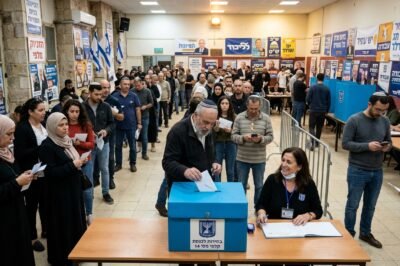
The state of Israel finds itself at a perennial crossroads, a nation where the ballot box has become a recurring fixture of the seasonal calendar rather than a quadrennial event. As the dust settles on another high-stakes election, the global community and the Israeli electorate alike are left grappling with the fundamental questions of governance: When will a stable government finally be formed, and who will emerge from the intricate web of coalition negotiations to lead it? The Israeli political landscape is a complex tapestry of ideological fervor, personal rivalries, and the cold, hard arithmetic of the Knesset’s 120 seats. Unlike many Western democracies with two-party dominance, Israel’s proportional representation system demands the delicate art of the deal, where tiny fringe parties often hold the keys to the kingdom. This election cycle is no different, serving as a referendum on national identity, security, and the future of the judiciary. As Al Jazeera and other global outlets report, the path to a majority is rarely a straight line; it is a winding trek through presidential mandates, horse-trading over ministerial portfolios, and the constant threat of a return to the polls if a consensus remains elusive. Understanding this process requires peering beneath the surface of the headlines to examine the structural and personal forces that define the current race for the Prime Minister’s office.
The Complex Arithmetic of the 120-Seat Knesset
To understand the timeline of government formation, one must first grasp the mathematical reality of the Knesset. In Israel, no single party has ever won an outright majority of 61 seats. This inherent fragmentation means that the day after an election is merely the beginning of the real contest. The process of building a coalition begins with the President of Israel, who holds consultations with every party that crossed the 3.25 percent electoral threshold. Based on these recommendations, the President tasks a Member of Knesset (MK)—usually the leader of the largest party or the one with the most endorsements—with the mission of forming a government.
This mission is governed by strict legal deadlines. The designated prime minister-elect has 28 days to cobble together a coalition. If the task proves difficult, they can request a 14-day extension from the President. Should they fail within this window, the mandate may be passed to another candidate, or in extreme cases, it moves to the Knesset at large, where any MK who can garner 61 signatures can attempt to lead. This structural design is intended to prevent total paralysis, yet in recent years, it has often resulted in a cycle of failed attempts and repeated elections, leaving the country in a state of prolonged administrative limbo.
Leadership Profiles: The Contenders and Kingmakers
At the heart of the current leadership struggle is Benjamin Netanyahu, the longest-serving prime minister in the country’s history. For his supporters, he is ‘King Bibi,’ a master of security and international diplomacy; for his detractors, he is a divisive figure whose ongoing legal battles cast a shadow over his fitness for office. Netanyahu’s strategy hinges on a cohesive bloc of right-wing and religious parties. These allies, including the Likud, Shas, and United Torah Judaism, provide him with a reliable floor of support, but his path to 61 often depends on the performance of the far-right Religious Zionism party, which has surged in popularity by tapping into nationalist sentiments and security concerns.
Opposing Netanyahu is a diverse ‘Change Bloc,’ currently led by Yair Lapid. Lapid’s challenge is far more complex, as his potential coalition must bridge the gap between secular centrists, left-wing labor parties, and occasionally, Arab-Israeli factions. While the Change Bloc is united by their opposition to Netanyahu, they often differ wildly on economic policy and the Palestinian conflict. This ideological heterogeneity makes the formation of a Lapid-led government a logistical nightmare, requiring each partner to swallow significant compromises. The role of the ‘kingmaker’—a party that can tip the scales in either direction—remains a pivotal element, with figures like Benny Gantz or even smaller sectorial parties potentially dictating the terms of the next administration.
The Timeline for Government Formation
The timeline for when a government will be formed is dictated by both the official calendar and the pace of backroom negotiations. Once the final votes are tallied and certified, the President has seven days to choose a candidate. Assuming the first candidate takes the full 42 days (including the extension), the process can easily stretch into a two-month saga. During this period, the outgoing ‘transition government’ continues to function, but with limited powers to pass major legislation or set long-term budgets. This creates a vacuum that can be dangerous in a region as volatile as the Middle East.
Furthermore, the negotiation phase is where the most controversial policy promises are often made. Smaller parties leverage their ‘nuisance value’ to secure high-profile ministries or specific funding for their constituents. For example, religious parties may demand concessions on Sabbath laws or military draft exemptions, while security-focused parties might demand a harder line on regional threats. These negotiations are rarely transparent and often continue until the final minutes before the legal deadline, keeping the nation and the global markets on edge.
Market Implications and Economic Stability
The protracted nature of Israeli government formation has tangible effects on the national economy. Financial markets generally loathe uncertainty, and the lack of a permanent budget is a significant drag on infrastructure and long-term planning. The Shekel often experiences volatility during the coalition-building phase as investors weigh the likelihood of a stable right-wing government versus a more fragmented centrist coalition. Specifically, the tech sector—which is the engine of the Israeli economy—is sensitive to changes in judicial oversight and international relations, both of which are central themes in the current election cycle.
Economists note that if a government is not formed within a reasonable timeframe, the credit rating of the country could come under scrutiny. Rating agencies like Moody’s and S&P have previously expressed concern over Israel’s political instability. A government that includes extreme elements may also face international pushback, potentially affecting trade agreements or foreign direct investment. Consequently, the business community is often among the loudest voices calling for a swift resolution to the deadlock, regardless of which leader takes the helm.
Geopolitical Stakes: Security and Diplomacy
Beyond the borders, the leadership of Israel determines the trajectory of regional peace and security. A Netanyahu-led government, supported by hardline religious nationalists, is expected to take a more assertive stance regarding West Bank settlements and the Iranian nuclear threat. This could create friction with the Biden administration in the United States and test the limits of the Abraham Accords—the historic normalization deals with Arab neighbors. Conversely, a government led by the center-left might seek more cooperative ties with the Palestinian Authority and prioritize diplomatic channels, though their ability to act is often hamstrung by their narrow parliamentary majority.
The role of Hezbollah in the north and Hamas in the south remains a constant variable. During the formation period, the caretaker government must remain vigilant, as adversaries may perceive the domestic political chaos as a window of vulnerability. The military leadership remains a stabilizing force, but the strategic direction of the country—whether to engage in preemptive strikes or pursue long-term ceasefires—is a political decision that only a fully empowered cabinet can make. This makes the question of ‘who will lead’ a matter of life and death for millions in the region.
Conclusion: The Future of Israeli Democracy
The recurring cycle of elections in Israel is more than a logistical hurdle; it is a symptom of a deeply polarized society struggling to find a common vision. Whether the next government is formed in the coming weeks or the nation is forced back to the polling stations for a sixth time, the underlying issues remain unresolved. The eventual leader will face the monumental task of healing domestic rifts while navigating an increasingly complex global environment. If a government is successfully formed, its durability will depend on its ability to satisfy the conflicting demands of its coalition partners without alienating the broader public. In the end, the formation of an Israeli government is not just about the numbers in the Knesset; it is a test of the resilience of the nation’s democratic institutions. The world watches closely, for the decisions made in the halls of Jerusalem reverberate far beyond the borders of the Middle East, shaping the future of global security and the international order.




































Leave a Reply