
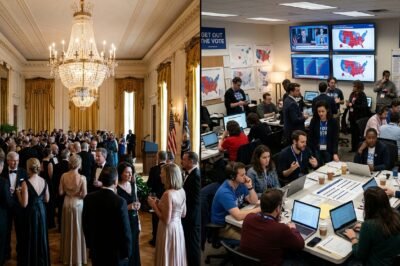
As the United States hurtles toward the 2026 midterm elections, the political atmosphere has reached a fever pitch, characterized by a stark dichotomy between the incumbent administration’s performative confidence and an opposition party desperate to reclaim a legislative foothold. The recent headlines surrounding Donald Trump’s presentation of the White House ballroom serve as a potent symbol of his administration’s desire to project an image of opulence, stability, and enduring power. However, beneath the gilded chandeliers and polished marble, a fierce tactical battle is being waged. Democrats have signaled a unified front, framing the upcoming elections not merely as a contest for seats, but as a crucial defensive maneuver to protect the institutional checks and balances they argue have been eroded. This early posturing suggests that the 2026 cycle will be one of the most consequential in modern American history, serving as a definitive referendum on the populist movement that has redefined the Republican Party.
The strategic deployment of imagery from within the White House is no accident; it is a calculated move to dominate the news cycle and appeal to a base that equates visual grandeur with national strength. While the President showcases the architectural heritage of the Executive Mansion, Democratic leaders are shifting their focus to the granular realities of governance, highlighting issues ranging from economic equity to the preservation of judicial independence. This clash of narratives—one focused on the symbolic authority of the presidency and the other on the oversight responsibilities of Congress—sets the stage for a high-stakes showdown. As the electorate prepares to head to the polls in less than two years, the fundamental question remains: will the American people endorse a continuation of the current trajectory, or will they seek to impose a legislative check on an administration that shows no signs of slowing down its transformative agenda?
The Historical Weight of Midterm Elections
Historically, the first midterm election following a presidential victory serves as a correction period in American politics. The party in power almost universally loses seats in both the House of Representatives and the Senate, as the initial enthusiasm of a presidential win gives way to the complexities of governing. For the 2026 cycle, Democrats are leaning heavily into this historical precedent, hoping to capitalize on the “midterm slump” that has plagued previous administrations. By positioning themselves as the necessary “brakes” on an administration they characterize as overreaching, the Democratic Party is attempting to build a broad coalition that includes not only their progressive base but also moderate Republicans and independent voters who may be experiencing “incumbent fatigue.”
Statistically, the swings in midterm elections can be dramatic. In 2010, the Democratic Party suffered a “shellacking” under Obama, and in 2018, the Republicans faced a similar wave during Trump’s first term. The 2026 landscape, however, is unique due to the extreme polarization of the electorate and the unconventional nature of the current administration. Analysts suggest that the traditional “pendulum swing” may be tempered by redistricting efforts and the shifting demographics of key swing states. Nevertheless, the Democrats are banking on the idea that the American public historically prefers a divided government to ensure that no single branch of government becomes too powerful. This strategy of “institutional preservation” is becoming the cornerstone of their 2026 messaging.
The Democratic Playbook: Containment and Oversight
The Democratic strategy for 2026 is multifaceted, focusing on the dual goals of legislative containment and rigorous oversight. Party leaders have vowed to use their potential majority to launch investigations into executive branch conduct, focusing specifically on departmental spending, foreign policy decisions, and the use of executive orders. By framing their campaign around the concept of “accountability,” Democrats are hoping to appeal to voters who are concerned about the perceived lack of transparency in the current administration. This isn’t just about passing new laws; it is about reclaiming the power of the subpoena and the purse to ensure that the executive branch remains answerable to the legislative branch.
Furthermore, the Democratic playbook involves a significant focus on protecting social programs and environmental regulations that they believe are under threat. By highlighting the potential for a “reined-in” Trump administration to be forced back to the negotiating table on issues like healthcare, climate change, and infrastructure, the party is attempting to provide a positive vision of what a Democratic-controlled Congress could achieve. This approach aims to counter the Republican narrative that a divided government leads only to gridlock. Instead, Democrats are arguing that gridlock is a better alternative than what they describe as a “unilateral overhaul” of the American social contract.
Visual Power: The White House Ballroom as a Political Tool
The recent focus on the White House ballroom is a masterclass in political optics. In the world of 24-hour news and social media, the visual presentation of a leader can be just as impactful as their policy decisions. By showcasing the ballroom, Trump is effectively using the majesty of the presidency to create an aura of inevitability and permanence. This “theatre of power” is designed to reassure his followers that the administration is in full control and that the traditions of the American presidency are being upheld, albeit with a distinct, modern flourish. It is a rebuttal to the Democratic narrative of chaos, replacing it with an image of order, beauty, and executive confidence.
However, this strategy also carries risks. Critics argue that focusing on the aesthetic upgrades of the White House while millions of Americans struggle with inflation and housing costs can come across as out of touch. Democrats have been quick to contrast the “gold-leafed ballroom” with the “rusting bridges” and “struggling classrooms” of the heartland. This battle of imagery is central to the 2026 campaign: one side selling a vision of American greatness through the lens of executive splendor, and the other selling a vision of American resilience through the lens of community support and public service. The effectiveness of the ballroom display will likely depend on whether the electorate sees it as a symbol of national pride or a symptom of executive excess.
Economic Stakes: Wall Street and the 2026 Shift
From a financial perspective, the 2026 midterms represent a significant pivot point for investors and market analysts. Wall Street generally prefers the predictability of a divided government, as it often prevents radical shifts in tax policy or regulatory environments. A Democratic victory in either the House or the Senate would likely mean that the sweeping tax cuts or deregulation efforts proposed by the Trump administration would face significant hurdles. This potential for a legislative stalemate can actually lead to market stability, as it reduces the likelihood of disruptive, partisan legislation being passed without bipartisan consensus.
Conversely, the threat of a prolonged budget battle or a debt ceiling standoff looms large in the minds of economic forecasters. If Democrats win a majority and use it to aggressively challenge the administration’s fiscal priorities, the resulting friction could lead to increased market volatility. Investors are currently monitoring the 2026 polls to gauge the probability of such a scenario. The key sectors to watch include energy, healthcare, and technology, as these industries are most sensitive to changes in federal oversight. A “reined-in” administration might be forced to moderate its stance on trade and tariffs, which could provide some relief to international markets, but it could also lead to domestic uncertainty regarding the future of industrial policy.
Swing States and the Demographic Tug-of-War
The outcome of the 2026 midterms will ultimately be decided in a handful of key battleground states. Michigan, Pennsylvania, Wisconsin, Arizona, and Georgia remain the primary theaters of conflict. In these states, the demographic shifts are creating a complex electoral map. Democrats are making significant gains in suburban areas, particularly among college-educated women, while Republicans continue to solidify their hold on rural communities and are making surprising inroads with minority voters, particularly Hispanic men. This demographic realignment means that the 2026 campaign will be fought on a much narrower margin than previous cycles.
The mobilization of young voters is another critical factor. Issues such as reproductive rights, student loan debt, and climate change are expected to be the primary drivers for voters under 30. Democrats are betting that these issues will outweigh concerns about the economy, while Republicans are counting on the “pocketbook” issues to bring disaffected young voters into their camp. The 2026 midterms will test whether the cultural issues that have dominated the headlines for the past several years still hold the same weight, or if the electorate is ready to return to a focus on traditional governance and economic stability. The ground game in these swing states will involve unprecedented levels of spending and micro-targeting, as both parties seek to edge out the other in a game of inches.
Global Consequences: The World Watching Washington
The 2026 elections are not just a domestic affair; they have profound implications for global geopolitics. International allies and adversaries alike are watching closely to see if the American electorate will choose to sustain the “America First” approach or signal a return to a more traditional, multilateral foreign policy. A Democratic-controlled Congress would likely advocate for stronger ties with NATO, increased support for international climate agreements, and a more cautious approach to trade confrontations. For foreign leaders, the midterms are a barometer for the long-term stability and reliability of the United States as a global partner.
In capitals around the world, from Brussels to Beijing, the prospect of a “reined-in” Trump is being analyzed through the lens of trade and security. If the Democratic Party manages to secure a majority, it could limit the President’s ability to unilaterally withdraw from treaties or impose new tariffs without legislative approval. This would provide a level of comfort to international markets and diplomatic circles. However, it could also signal a return to the internal political friction that some believe has weakened America’s standing on the world stage. Regardless of the outcome, the 2026 midterms will serve as a definitive statement on America’s role in the 21st century and whether the current populist trend is a temporary shift or a permanent realignment of the world’s leading superpower.
Conclusion: The Path to November 2026
In conclusion, the 2026 U.S. midterm elections are shaping up to be a historic confrontation between two vastly different visions for the country. The Democratic vow to rein in the Trump administration is more than a campaign slogan; it is a fundamental strategy aimed at restoring a balance of power that they believe has been dangerously tilted. Meanwhile, the President’s focus on the symbols of executive authority, such as the White House ballroom, reflects a confidence in a movement that seeks to redefine the traditional structures of government. Between these two poles lies an electorate that is deeply divided, yet highly engaged. The path to November 2026 will be paved with intense debate, economic uncertainty, and a relentless battle for the soul of the American political system. Ultimately, the voters will decide whether they want a government of unchecked momentum or one of cautious oversight, a choice that will resonate far beyond the halls of Congress and the walls of the White House.



































Leave a Reply