
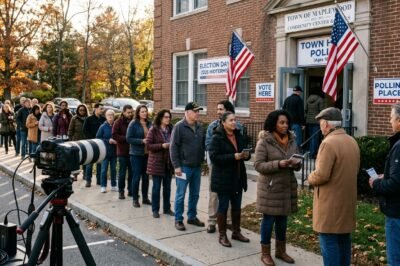
As the sun rises over the eastern seaboard, the United States enters one of the most consequential electoral moments in its modern history. The 2026 Midterm elections are not merely a routine check on the executive branch; they represent a seismic shift in the American sociopolitical fabric. With all 435 seats in the House of Representatives and 33 Senate seats up for grabs, the stakes could not be higher for an administration grappling with complex domestic challenges and a volatile international landscape. From the bustling streets of New York City to the quiet rural precincts of the Midwest, millions of Americans are heading to the polls to voice their verdict on the direction of the country. This election cycle is characterized by intense polarization, record-breaking campaign spending, and a hyper-focused media environment that has turned every local district race into a national referendum. As the first ballots are cast, the world watches with bated breath, understanding that the outcome will dictate the legislative agenda for the next two years and set the stage for the 2028 presidential contest. The atmosphere at polling stations is one of somber determination, reflecting a nation at a crossroads, eager to define its identity in a post-pandemic, tech-driven era. Current live updates suggest high turnout in critical swing districts, underscoring the urgency felt by voters on both sides of the aisle.
The Battle for Congressional Control and Legislative Power
The 2026 midterms are unfolding against a backdrop of razor-thin margins in both chambers of Congress. Historically, the party in power faces significant headwinds during the midterm cycle, a phenomenon that has dictated American politics for decades. However, the 2026 cycle presents a unique set of variables that may disrupt traditional patterns. The Democratic and Republican parties have poured billions of dollars into television ads, digital campaigning, and grassroots mobilization efforts. In the Senate, key races in states like Pennsylvania, Georgia, and Arizona are being watched as bellwethers for national sentiment. Analysts suggest that even a single seat shift could fundamentally alter the balance of power, granting one party the ability to confirm judicial nominees and control the legislative flow. The House of Representatives is equally contested, with suburban districts becoming the primary battlegrounds where moderate voters hold the keys to the majority.
Beyond the raw numbers, the ideological soul of each party is also on the ballot. We are seeing a clash between traditionalist wings and more populist or progressive factions within both the GOP and the Democratic Party. This internal friction complicates the messaging but also broadens the appeal to different segments of the electorate. For instance, in several Republican primaries, candidates backed by various populist movements have faced off against more centrist conservatives, while on the Democratic side, the debate over social spending and environmental policy continues to shape candidate platforms. These internal dynamics will determine not just who wins, but how the winning party governs in 2027 and beyond. The strategic importance of these races cannot be overstated, as the winning party will possess the mandate to either push through a bold new agenda or serve as a definitive check on the executive branch.
Economic Undercurrents and Global Market Volatility
Financially, the 2026 midterms are a focal point for Wall Street and global markets. Investors are particularly sensitive to shifts in tax policy, regulatory frameworks, and government spending plans that hinge on the composition of Congress. Historically, markets tend to favor a split government scenario, which often results in legislative gridlock, preventing radical changes to the economic status quo. However, the current economic climate—marked by fluctuating inflation rates, housing market pressures, and the rapid integration of artificial intelligence into the workforce—has created a sense of urgency that transcends partisan lines. Market analysts from major institutions like Goldman Sachs and JPMorgan have issued reports detailing the potential impact of a Republican or Democratic sweep.
Consumer confidence remains a primary driver of voter behavior in 2026. Despite positive macroeconomic indicators in some sectors, the ‘kitchen table’ issues of gas prices, grocery bills, and healthcare costs remain at the forefront of the American consciousness. Political campaigns have seized on these anxieties, with both sides presenting vastly different solutions to the problem of affordability. The Republican platform has focused heavily on reducing government spending and energy independence, while Democrats have doubled down on strengthening the social safety net and lowering pharmaceutical prices through government negotiation. The tension between these two approaches has created a highly charged environment where economic data releases are scrutinized as much for their political impact as for their financial implications. As voters cast their ballots, they are essentially choosing between two distinct economic philosophies.
The Role of Emerging Technology and Media Integrity
In the lead-up to the 2026 polls, the role of technology in shaping public opinion has reached new heights. The proliferation of artificial intelligence and deepfake technology has introduced a new layer of complexity to the electoral process. Election integrity officials have been on high alert for foreign and domestic influence operations designed to spread misinformation and sow discord. Social media platforms, once seen as tools for democratic mobilization, are now battlegrounds where narrative control is fiercely contested. The use of micro-targeting algorithms has allowed campaigns to reach specific demographics with tailored messaging, sometimes at the expense of a shared national conversation. This fragmentation of the media landscape has made it increasingly difficult for voters to distinguish between factual reporting and partisan propaganda.
Furthermore, the physical security of the voting process has become a major concern. Following the controversies of previous cycles, many states have implemented new security measures to protect poll workers and ensure the integrity of the ballot box. These measures include enhanced cybersecurity for voting machines and increased transparency in the counting process. However, these changes have also been met with skepticism from some quarters, leading to legal challenges and public protests. The 2026 midterms are thus not just a test of political preference, but a test of the durability of American democratic institutions. The ability of the system to deliver a clear, uncontested result will be a significant indicator of the country’s institutional health. Volunteers and officials across the country are working tirelessly to ensure that every legal vote is counted.
Global Implications and Foreign Policy Shifts
While the midterms are a domestic affair, their global implications are profound. Foreign leaders from Beijing to Brussels are monitoring the results to gauge the future of American foreign policy. A shift in Congressional control could signal changes in US support for international alliances, trade agreements, and climate treaties. For example, the level of continued military and financial aid to key allies often depends on the budgetary priorities set by the House. Similarly, the US stance on global trade and tariffs is heavily influenced by the prevailing political sentiment in Washington. In an increasingly multipolar world, the stability and predictability of American leadership are of paramount importance to the global community. The 2026 midterms will determine whether the United States continues its current path or pivots toward a more isolationist or interventionist foreign policy.
International media coverage, particularly from the Indo-Pacific region and outlets like NDTV, has highlighted the importance of these elections for global security. Strategic partnerships, such as those within the Quad or NATO, are influenced by the political climate in Washington. The 2026 polls are seen as a litmus test for different schools of international thought, from isolationism to proactive multilateralism. As results trickle in, foreign markets are likely to react, with currency fluctuations and stock market movements reflecting the perceived stability of the US government. The interconnectedness of the modern world means that a voter in a small town in Ohio can influence the geopolitical strategies of nations thousands of miles away.
Voter Demographics and the Changing American Electorate
The demographic makeup of the 2026 electorate is another critical factor in the outcome. Generation Z and Millennials now constitute a significant portion of the voting bloc, and their priorities—ranging from climate change and student debt to social justice—are reshaping the political discourse. At the same time, the suburban-rural divide continues to widen, with urban centers remaining Democratic strongholds while rural areas lean heavily Republican. The ‘battle for the suburbs’ remains the most contested territory, as both parties vie for the support of moderate, college-educated voters who have become the ultimate swing constituency. Diversity is also a key theme, with the growing influence of Hispanic, Black, and Asian American voters being felt in districts across the country.
Moreover, the gender gap remains a defining feature of the 2026 political landscape. Issues such as reproductive rights and family leave continue to galvanize female voters, particularly in the wake of significant judicial rulings in previous years. Both parties have developed sophisticated strategies to appeal to women voters, recognizing that their turnout could be the deciding factor in close races. Conversely, the Republican party has made concerted efforts to expand its appeal among working-class men of all backgrounds, focusing on themes of economic opportunity and traditional values. These demographic shifts are not just changing who wins; they are changing the very nature of political campaigning in America.
Conclusion: Future Implications and the Road to 2028
As the final polls close and the counting begins, the 2026 US Midterms will leave an indelible mark on the nation’s history. The results will determine the legislative landscape for the next two years, influencing everything from healthcare policy to international trade. But perhaps more importantly, these elections serve as a crucial prelude to the 2028 presidential race. They will identify the next generation of political leaders and reveal the ideological trends that will dominate the coming years. Whether the result is a validation of the current administration or a demand for a new direction, the 2026 midterms have demonstrated the enduring power and complexity of American democracy. In a time of global uncertainty, the ability of the American people to engage in a peaceful, robust electoral process remains a beacon of the democratic ideal. As we move forward, the lessons learned and the alliances formed during this cycle will shape the future of the United States and its role in the world for years to come. The final tally may take days to formalize, but the message from the voters is already beginning to resonate through the halls of power in Washington D.C. and beyond.






































Leave a Reply