
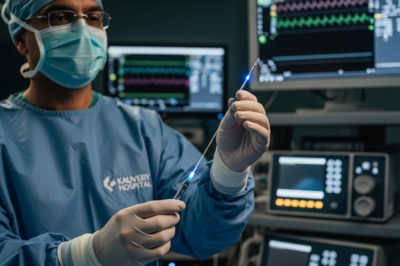
A Transformative Milestone in Indian Electrophysiology
In a significant leap forward for cardiovascular medicine in South Asia, Kauvery Hospital in Chennai has officially announced the introduction of advanced Pulsed Field Ablation (PFA) technology. This groundbreaking move positions the hospital at the forefront of cardiac care, offering a sophisticated alternative to traditional methods for treating cardiac arrhythmias, specifically Atrial Fibrillation (AFib). For decades, patients suffering from irregular heartbeats relied on thermal-based energy sources to restore normal rhythms. However, the arrival of PFA marks a paradigm shift, moving away from extreme temperatures toward a non-thermal, precision-focused approach. This development is not merely a technical upgrade; it represents a commitment to patient safety, procedural efficiency, and the reduction of post-operative complications that have long been the Achilles’ heel of cardiac electrophysiology. As Chennai continues to solidify its reputation as the ‘Healthcare Capital of India,’ the integration of PFA at Kauvery Hospital underscores the city’s ability to adopt and implement cutting-edge medical innovations that meet global standards.
Understanding the Science: How Pulsed Field Ablation Works
To appreciate the significance of this technology, one must understand the mechanics of conventional ablation versus Pulsed Field Ablation. Traditional ablation techniques, such as radiofrequency (RF) ablation and cryoablation, utilize extreme heat or extreme cold to create scar tissue on the heart. This scar tissue blocks the irregular electrical signals causing the arrhythmia. While effective, these thermal methods carry a small but significant risk of ‘collateral damage.’ Because heat and cold are non-selective, they can inadvertently damage adjacent structures like the esophagus, the phrenic nerve, or the pulmonary veins. Pulsed Field Ablation, however, utilizes a process known as irreversible electroporation. This technique involves delivering short-duration, high-voltage electrical pulses to the targeted heart tissue. These pulses create microscopic pores in the cell membranes of the cardiomyocytes (heart muscle cells), leading to programmed cell death without generating heat. The brilliance of PFA lies in its tissue-specific threshold; heart cells are much more sensitive to these electrical fields than the surrounding nerves or the esophagus. This allows electrophysiologists to effectively ‘disable’ the source of the arrhythmia while leaving the surrounding vital structures completely untouched.
The Clinical Advantages: Safety, Speed, and Success
The clinical implications of adopting PFA are profound. First and foremost is the enhanced safety profile. In various global clinical trials, PFA has shown a near-zero incidence of esophageal injury or phrenic nerve palsy, which are feared complications of thermal ablation. This safety margin is a game-changer for both the surgeon and the patient. Secondly, PFA significantly reduces the duration of the procedure. Where traditional RF ablation might take several hours to meticulously map and burn tissue, PFA can often achieve the same or better results in a fraction of the time. Reduced procedure time translates to less time under anesthesia for the patient and higher turnover for the hospital’s specialized labs, allowing more patients to be treated. Furthermore, the recovery period is often smoother. Patients treated with PFA typically experience less post-procedural discomfort because there is no thermal injury to the surrounding tissues. The success rate for maintaining a normal sinus rhythm also appears to be highly competitive, with early data suggesting that the lesions created by PFA are more durable and continuous than those created by traditional means.
Addressing the Growing Burden of Atrial Fibrillation in India
The introduction of PFA at Kauvery Hospital comes at a critical time when the prevalence of Atrial Fibrillation is on the rise in India. AFib is the most common type of treated heart arrhythmia and, if left unmanaged, can lead to blood clots, heart failure, and a five-fold increase in the risk of stroke. In India, the aging population combined with a high prevalence of hypertension and diabetes has created a ‘perfect storm’ for cardiac rhythm disorders. Many patients in India remain undiagnosed or are managed only through medication, which often fails to provide long-term rhythm control. By bringing PFA to Chennai, Kauvery Hospital is providing a much-needed solution for patients who have failed drug therapy or those who want a definitive treatment early in their diagnosis. This technology makes the prospect of an ablation procedure much less daunting for patients who were previously hesitant due to the risks associated with thermal energy. It essentially democratizes access to high-safety cardiac intervention.
Kauvery Hospital’s Strategic Role in Medical Innovation
Kauvery Hospital has long been a pioneer in the Indian private healthcare sector, known for its multi-specialty expertise and patient-centric approach. By investing in Pulsed Field Ablation, the institution is not just buying a piece of equipment; it is investing in a specialized ecosystem. This includes training a dedicated team of electrophysiologists, nurses, and technicians to handle the unique nuances of PFA. The hospital’s Electrophysiology (EP) department is now equipped to handle complex cases that might have been deemed too risky for traditional ablation in the past. This move also highlights the competitive nature of the healthcare market in Chennai. As hospitals vie to provide the best outcomes, the ultimate winner is the patient, who now has access to the same level of care found in the top medical centers of the United States or Europe. The leadership at Kauvery Hospital has emphasized that their goal is to combine this high-tech intervention with their hallmark of compassionate care, ensuring that the technology serves to enhance the human element of healing.
The Future Outlook: The Evolution of Cardiac Care
Looking ahead, the introduction of PFA is likely just the beginning of a broader trend toward non-thermal energy in various surgical fields. In the realm of cardiology, we can expect to see PFA integrated with advanced 3D mapping systems and artificial intelligence to further refine the precision of the electrical pulses. There is also the potential for PFA to be used in treating other types of arrhythmias beyond AFib, such as ventricular tachycardia. As more data is gathered from the Indian patient population, researchers will be able to fine-tune the delivery protocols to optimize outcomes for local demographics. For the medical community in Chennai and across India, this milestone is an invitation to innovate further. It sets a new benchmark for what is possible in cardiac intervention. As costs eventually stabilize and the technology becomes more widespread, PFA has the potential to become the standard of care, rendering older, riskier methods obsolete. For now, Kauvery Hospital stands as a beacon of progress, proving that the future of heart health is not just about living longer, but living better through safer, faster, and more effective medical science.
Conclusion: A New Standard for Patient Outcomes
In conclusion, the arrival of advanced Pulsed Field Ablation at Kauvery Hospital is a watershed moment for healthcare in Chennai and India at large. By prioritizing a technology that offers tissue-selective, non-thermal treatment, the hospital is addressing the core challenges of cardiac ablation: safety and procedural efficiency. As we move into an era where precision medicine is paramount, PFA stands out as a shining example of how engineering and medicine can converge to save lives and improve quality of life. For the thousands of patients suffering from the debilitating effects of Atrial Fibrillation, this technology offers more than just a treatment; it offers a safer path back to a normal, active life. The commitment shown by Kauvery Hospital in bringing this technology to the region reflects a broader vision of medical excellence that will undoubtedly inspire other institutions to follow suit, eventually elevating the entire standard of cardiac care across the nation.





































Leave a Reply