
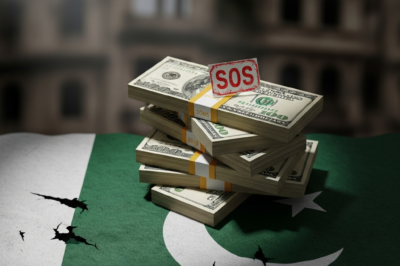
The Anatomy of a Crisis: Why Pakistan is Turning to Washington
In a move that highlights the sheer gravity of the fiscal catastrophe unfolding in Islamabad, reports have emerged indicating that Pakistan has formally reached out to the United States for a staggering $10 billion financial lifeline. This development, first highlighted by reports from sources including The Times of India, underscores a desperate bid by the Pakistani leadership to prevent a sovereign default that has been looming over the nation like a dark cloud for the better part of two years. The request is not merely a routine diplomatic engagement; it represents a critical pivot point for a country that has historically balanced its relationship between Western powers and its ‘all-weather’ friend, China. As foreign exchange reserves hover at precariously low levels—barely enough to cover a few weeks of essential imports—the government in Islamabad finds itself with its back against the wall, seeking a massive cash injection to stabilize its currency and meet its immediate international debt obligations.
The current economic landscape in Pakistan is characterized by a triple-digit inflation rate in certain sectors, a rapidly devaluing Rupee, and a manufacturing sector that has been largely paralyzed by high energy costs and a lack of raw materials. While the International Monetary Fund (IMF) has been providing periodic tranches of support through various Extended Fund Facilities (EFF), the conditions attached to these loans have been politically suicidal for the ruling coalition. From removing fuel subsidies to increasing electricity tariffs, the IMF’s ‘tough love’ approach has triggered widespread public discontent. In this context, a direct $10 billion lifeline from the United States is seen as a way to gain ‘breathing room’ without the immediate, excruciating austerity measures that the IMF demands. However, the request also raises profound questions about what the United States might expect in return, especially given the complex geopolitical realignment occurring in South Asia.
The $10 Billion Lifeline: Breaking Down the Request
The reported $10 billion request is multifaceted. It is understood that Islamabad is not just looking for a simple cash handout, but rather a combination of debt restructuring, low-interest loans, and perhaps most importantly, the utilization of American influence to unlock other avenues of credit. Historically, the United States has been a major provider of security assistance to Pakistan, particularly during the Cold War and the subsequent War on Terror. However, the nature of this current request is purely economic, signaling that Pakistan’s primary threat is no longer internal insurgency alone, but total systemic financial failure. The $10 billion figure is calculated to cover the immediate external financing gap for the current fiscal year, allowing the country to avoid the humiliation and economic paralysis of a formal default.
Economic analysts point out that for the US to facilitate such a large sum, the Biden administration would have to navigate a complex set of legislative and diplomatic hurdles. Since the US withdrawal from Afghanistan, the strategic ‘rent’ that Pakistan used to receive for its logistical support has dried up. Now, Islamabad must make a case based on regional stability. The argument is simple yet terrifying: a nuclear-armed Pakistan in the throes of a total economic collapse is a global security risk that the world cannot afford to ignore. This ‘too big to fail’ narrative is at the heart of the current diplomatic push in Washington.
Macroeconomic Turmoil: Inflation, Reserves, and Devaluation
To understand the urgency of the $10 billion request, one must look at the harrowing statistics currently defining Pakistan’s economy. The Consumer Price Index (CPI) has seen historic highs, at times exceeding 30-40% year-on-year. This has decimated the purchasing power of the middle and lower classes, leading to a humanitarian crisis where basic food staples like flour and sugar have become luxury items for many. The Pakistani Rupee (PKR) has lost significant value against the US Dollar, making the repayment of dollar-denominated debt even more expensive. Every time the Rupee falls, the total volume of Pakistan’s external debt in local terms swells, creating a vicious cycle that is nearly impossible to break without external intervention.
Foreign exchange reserves are another critical pain point. Despite recent inflows from friendly nations like Saudi Arabia and the UAE, the reserves remain insufficient to provide a long-term buffer. The country is essentially living ‘hand to mouth,’ using new loans to pay off the interest on old loans. This ‘debt treadmill’ has exhausted the patience of the Pakistani public and international investors alike. The $10 billion lifeline is envisioned as a circuit breaker—a way to inject liquidity into the system, stabilize the Rupee, and provide the central bank with the ammunition needed to manage the currency’s volatility. Without it, the specter of hyperinflation and a total breakdown of the supply chain remains a very real possibility.
The Geopolitical Chessboard: Balancing China and the US
One of the most complex layers of this economic saga is Pakistan’s relationship with China. Over the last decade, the China-Pakistan Economic Corridor (CPEC) has seen billions of dollars poured into infrastructure and energy projects. However, much of this investment came in the form of commercial loans with relatively high interest rates compared to multilateral lenders. Washington has been vocal in its criticism of CPEC, often describing it as ‘debt-trap diplomacy.’ For the US to provide a $10 billion lifeline, there will likely be stringent requirements for transparency regarding Pakistan’s debt to China. Washington is wary of providing funds that might indirectly be used to repay Chinese creditors.
This puts Islamabad in a delicate position. It cannot afford to alienate China, which remains its most consistent partner, yet it desperately needs the US to unlock the doors of the IMF and the World Bank. The $10 billion request is, therefore, a litmus test for Pakistan’s ‘Pivot to the West.’ It remains to be seen if the US will demand a rollback of certain CPEC projects or a more explicit alignment with Western security interests in exchange for the financial package. The geopolitical price of this lifeline could be as high as the monetary value itself.
The IMF Factor: Stringent Conditions vs. Sovereign Support
While the news of the $10 billion request to the US is significant, it cannot be viewed in isolation from Pakistan’s ongoing relationship with the IMF. The IMF is currently the gatekeeper of Pakistan’s economic credibility. Without an IMF program in place, other lenders—including the US and Middle Eastern allies—are reluctant to provide substantial funds. The current IMF program requires Pakistan to implement deep structural reforms, including widening the tax base, privatizing loss-making state-owned enterprises (SOEs), and ending subsidies for the wealthy. These reforms are necessary but incredibly painful in the short term.
The request to the US may be seen as an attempt to find a ‘third way’—a source of funding that is more flexible than the IMF’s rigid frameworks. However, the reality is that the US often aligns its bilateral aid with IMF benchmarks. If the US does grant the $10 billion, it will likely be tied to the successful completion of IMF reviews. This ensures that the money is not just a temporary fix but part of a broader move toward fiscal discipline. The tension between the need for immediate relief and the requirement for long-term reform is the central theme of Pakistan’s current economic management strategy.
Social Impact and the Threat of Civil Unrest
Beyond the spreadsheets and high-level diplomatic cables, the economic crisis is a human tragedy. The lack of foreign exchange has led to restrictions on imports, which in turn has caused a shortage of essential medicines and industrial raw materials. Factories have shut down, leading to massive layoffs and a surge in unemployment. For a country with a large, young population, the lack of economic opportunity is a recipe for social volatility. Protests over rising electricity bills and fuel prices have already become common across major cities like Karachi, Lahore, and Islamabad.
The government is acutely aware that if it cannot secure a lifeline soon, the economic frustration could boil over into a full-scale political uprising. This internal pressure is perhaps the strongest driver behind the $10 billion plea. The ruling elite knows that their political survival depends on stabilizing the economy before the next election cycle. The $10 billion is not just an economic necessity; it is a political insurance policy intended to prevent the kind of chaos seen in Sri Lanka during its recent economic collapse. The fear of ‘Srilankanization’ of the Pakistani state is a very real motivator for the current administration.
Conclusion: A Precarious Path to Stability
Pakistan’s request for a $10 billion lifeline from the United States is a watershed moment in the nation’s history. It is a candid admission of the severity of the economic crisis and a recognition that traditional sources of support may no longer be sufficient. While the US has reasons to assist Pakistan—mainly to prevent regional instability and keep a lid on the risks associated with a nuclear state—the price of such aid will likely be high. It will require Pakistan to navigate a minefield of geopolitical tensions, structural economic reforms, and domestic political opposition.
In the final analysis, a $10 billion injection may save Pakistan from immediate default, but it will not solve the underlying structural issues that have plagued the economy for decades. Without a genuine commitment to increasing exports, broadening the tax base, and reducing the military’s footprint in economic affairs, Pakistan will likely find itself making a similar request a few years down the line. For now, all eyes are on Washington to see if the Biden administration is willing to throw a rope to a drowning ally, or if Pakistan will be forced to face the harsh reality of a sovereign default. The stakes could not be higher, not just for the 240 million people of Pakistan, but for the stability of the entire South Asian region.



































Leave a Reply