
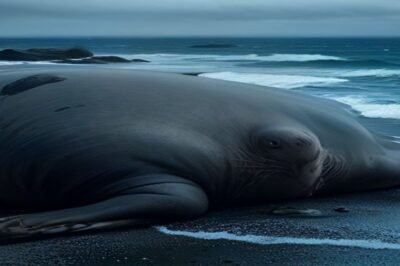
The Rise of a Coastal Icon: Who is Sammy the Elephant Seal?
In the tranquil coastal towns of the Mornington Peninsula in Victoria, Australia, one resident stands out—not just for his massive four-ton presence, but for his surprisingly social nature. Sammy, a southern elephant seal, has transcended his status as a mere wild animal to become a bona fide local celebrity. For years, Sammy has frequented the beaches of Blairgowrie and Sorrento, often hauling his immense body onto the sand to rest, moult, or simply observe the human crowds that gather at a respectful distance. Unlike many of his species, which typically inhabit sub-Antarctic islands like Macquarie Island, Sammy is what biologists call a ‘vagrant’—a creature that has strayed far from its traditional range to find a home in the temperate waters of mainland Australia. His recurring appearances have fostered a deep emotional bond with the local community, making him a symbol of the region’s rich marine biodiversity.
The H5N1 Threat: A New Frontier in Australian Biosecurity
The current anxiety surrounding Sammy’s well-being is not born of a change in his behavior, but rather a shift in the environment around him. The H5N1 strain of highly pathogenic avian influenza (HPAI), commonly known as bird flu, has reached a critical tipping point in Victoria. While bird flu has been a global concern for decades, the current clade 2.3.4.4b has proven exceptionally virulent and adaptable. Recent detections in poultry farms and wild bird populations across Victoria have put wildlife authorities on high alert. This specific strain has caused unprecedented mortality rates in bird populations worldwide, but its recent jump to mammalian species has transformed it from an agricultural headache into a full-scale ecological emergency. For a coastal celebrity like Sammy, who lives at the intersection of land and sea, the proximity to infected bird colonies presents a clear and present danger.
Why Pinnipeds are at the Forefront of the Avian Flu Crisis
Scientific data from the past two years paints a grim picture for pinnipeds—the group of marine mammals that includes seals, sea lions, and walruses. In South America, particularly along the coasts of Peru and Chile, H5N1 has been responsible for the deaths of tens of thousands of southern elephant seals and sea lions. Experts believe the virus is transmitted to seals through direct contact with infected birds or their droppings, which are ubiquitous in shared coastal habitats. Once the virus enters a seal colony, it can spread rapidly, leading to neurological symptoms, respiratory distress, and high mortality. The biological vulnerability of seals lies in their social structures and their tendency to congregate in large numbers. While Sammy often resides alone on Victorian beaches, his immune system may not be prepared for a virus that has devastated his kin in other parts of the world. The risk is compounded by the fact that elephant seals are deep-sea divers with specialized respiratory systems, which the HPAI virus is known to attack with lethal efficiency.
The Risks of Being ‘Gregarious’: Sammy’s Interactions with the Public
The term ‘gregarious’ has often been used to describe Sammy’s personality. He is known to be curious about humans, sometimes venturing close to boat ramps or resting on busy stretches of sand. However, in the context of an avian flu outbreak, this lack of wariness is a double-edged sword. Increased proximity to humans also means increased proximity to domestic pets and urban runoff, both of which can carry various pathogens. Wildlife experts from the Department of Energy, Environment and Climate Action (DEECA) have emphasized that the public must maintain a minimum distance of 30 meters from Sammy—not just for their safety, but for his. Human interference can cause stress, which weakens an animal’s immune response, making them more susceptible to infections like H5N1. Furthermore, there is the theoretical risk of zoonotic transmission, where a virus could jump from a seal back to a human, although such cases remain rare. The message from authorities is clear: Sammy’s fame must not become his downfall through well-intentioned but dangerous human interaction.
Government Response and the Biological Monitoring of Victorian Waters
In response to the escalating threat, Victorian biosecurity agencies have ramped up their monitoring programs. Surveillance of wild bird mortality is being conducted daily, and any reports of sick or dead seals are treated with the highest level of urgency. For Sammy, this means he is under constant, albeit non-invasive, observation. Rangers and volunteers monitor his movements, looking for signs of lethargy, tremors, or unusual discharge—symptoms that could indicate the onset of bird flu. The Victorian government has also integrated H5N1 preparedness into its broader environmental strategy, recognizing that the arrival of the virus in local marine mammals could signal a catastrophic shift in the ecosystem. This involves testing water samples for viral loads and ensuring that diagnostic facilities are ready to process wildlife swabs at a moment’s notice. The logistical challenge is immense, as the Victorian coastline is vast, but the protection of high-profile individuals like Sammy serves as a vital component of public engagement in conservation.
The Broader Ecological Stakes: Beyond a Single Seal
While the focus remains on Sammy, his plight highlights the broader vulnerability of Australia’s unique wildlife. The arrival of H5N1 in the Southern Ocean and mainland Australia represents a significant threat to biodiversity. Species such as the Australian fur seal and the little penguin, which share habitats with Sammy, are also at risk. The loss of a top predator or a significant marine mammal could lead to a trophic cascade, disrupting the delicate balance of the Victorian marine environment. Furthermore, the economic impact on tourism cannot be ignored. The Mornington Peninsula thrives on its reputation as a haven for nature lovers; the loss of its most famous marine resident would be a blow to the community’s identity and its economy. The situation serves as a stark reminder of the interconnectedness of global health—where a virus in a migratory bird can threaten the life of a seal thousands of miles away. As the spring season approaches and bird migrations increase, the vigilance of the Victorian public and the dedication of scientists will be the only line of defense for Sammy and the ecosystem he represents.
Conclusion: A Community on Edge
The story of Sammy the elephant seal is more than just a local news item; it is a microcosm of the global battle against emerging infectious diseases. As Victorian authorities navigate the complexities of an avian flu hotspot, the safety of this ‘gregarious’ giant remains a top priority. Sammy has survived the perils of the deep ocean for many years, but his greatest challenge may now come from the microscopic threat lurking in the birds that share his shore. For now, the Mornington Peninsula waits with bated breath, hoping that its favorite visitor continues to grace its sands, healthy and unharmed, for seasons to come. The situation underscores the necessity of proactive conservation and the undeniable truth that in the face of a global pandemic, no species—not even a four-ton celebrity seal—is truly isolated.




































Leave a Reply