
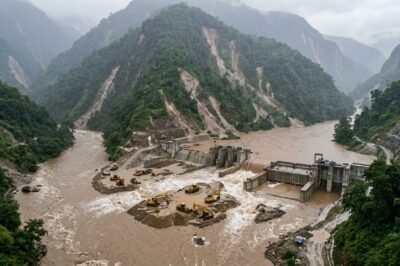
The relentless fury of the South Asian monsoon has once again descended upon the peaks and valleys of Nepal with a devastating intensity, transforming tranquil Himalayan river valleys into corridors of chaotic destruction. In a harrowing turn of events reported by international news outlets including The Hindu, the small landlocked nation is currently grappling with a humanitarian and logistical nightmare as at least 933 workers have become trapped in various hydropower projects across the country. This crisis is not merely a localized weather event but a stark reminder of the escalating volatility of the climate in the Hindu Kush-Himalayan region. The roaring waters, fueled by unprecedented rainfall, have breached embankments and swallowed construction sites whole, leaving hundreds of engineers, laborers, and support staff stranded in precarious locations where help is often hours or days away due to terrain challenges. As the government of Nepal scrambles to deploy security forces and emergency responders, the situation underscores a critical intersection of infrastructure vulnerability, environmental instability, and the human cost of rapid industrial development in ecological hotspots. The scale of the flooding has essentially paralyzed the central and eastern regions of the country, turning the vital energy sector into a flashpoint of tragedy and uncertainty. Underpinning this disaster is the Anatomy of a Meteorological Nightmare. The current flash floods are the result of a concentrated low-pressure system colliding with the steep topography of the Himalayas. This year, the monsoon has behaved with a level of unpredictability that has baffled even seasoned regional meteorologists. Within a window of just 48 hours, certain districts in Nepal received rainfall equivalent to nearly half of their annual average. This volume of water descending from high altitudes creates a kinetic force that carries massive amounts of debris, including boulders and uprooted trees, which act as battering rams against any man-made structures in their path. The geological fragility of Nepal, characterized by relatively young mountains and frequent seismic activity, means that the soil is easily saturated, leading to widespread landslides that further block river channels. When these natural dams eventually burst, they release a ‘wall of water’ that is significantly more destructive than a standard flood. This phenomenon, often referred to as a Glacial Lake Outburst Flood (GLOF) or a debris-flow flood, is exactly what has caught the hydropower sector off guard. The Strategic Vulnerability of Nepal’s Hydropower Sector. Nepal has long pinned its economic hopes on its vast river systems, aiming to become the ‘battery of South Asia’ by exporting clean energy to neighbors like India and Bangladesh. However, the current crisis reveals the inherent risks of building massive concrete structures in narrow river basins. The 933 workers currently trapped are spread across multiple project sites, many of which are located in remote canyons where the only access road has been washed away. Projects under construction, such as those on the Sunkoshi and Tamakoshi river basins, are particularly vulnerable because their diversion tunnels and coffer dams are designed for historical water levels, not the ‘thousand-year flood’ events that are becoming more common. The entrapment of nearly a thousand workers suggests that the early warning systems and evacuation protocols either failed or were insufficient for the speed at which the waters rose. For many of these laborers, the hydropower tunnels, once seen as feats of engineering, have turned into potential traps as water levels rise at the entrances, cutting off oxygen and light. The Human Crisis and Search and Rescue Challenges. The rescue operation is a race against time, hampered by the very weather conditions that caused the disaster. The Nepali Army and Armed Police Force have been mobilized, but the use of helicopters is severely restricted by low visibility and persistent rain. Ground teams are forced to trek through sludge and over landslide-affected paths to reach the stranded workers. There are reports of workers huddling on the roofs of makeshift barracks or perched on the higher tiers of dam structures as the muddy torrents swirl below them. The psychological toll on the families of these workers is immense, as communication lines in many remote districts have been severed. The government has prioritized the rescue of those in the most immediate danger, but the sheer number of people trapped across diverse geographical points is stretching the nation’s emergency resources to their breaking point. Furthermore, the lack of heavy-duty specialized rescue equipment capable of operating in such turbulent waters means that many rescues must be performed using basic ropes and pulleys, a slow and dangerous process for both the victim and the rescuer. Economic Repercussions and Energy Security. Beyond the immediate human tragedy, the financial impact on Nepal’s economy is staggering. The hydropower sector represents billions of dollars in both domestic and foreign investment. Initial assessments suggest that several turbines and powerhouses have been silted up or structurally damaged. Replacing specialized components like generators and transformers can take months, if not years, especially when the logistics of moving such heavy equipment over destroyed roads are considered. This will inevitably lead to power shortages in the capital, Kathmandu, and delay Nepal’s plans to increase its energy exports. The insurance industry is also bracing for massive claims, which could lead to higher premiums for future projects, making hydropower development more expensive and less attractive to private investors. The ripple effect will be felt across the regional energy market, potentially forcing a temporary return to more carbon-intensive energy sources to fill the gap left by the offline Nepali plants. Regional Implications and the Need for Cross-Border Cooperation. Nepal’s river systems are part of the larger Ganges basin, meaning that the floods in the highlands have direct consequences for downstream regions in India, particularly Bihar and Uttar Pradesh. The management of these rivers is a sensitive political issue, often involving complex treaties and agreements regarding water release and dam management. The current disaster highlights the need for a more integrated regional approach to disaster management. If sensors in Nepal’s mountains can transmit real-time data to both Kathmandu and New Delhi, the lead time for evacuations could be increased. There is also a growing call for a regional ‘disaster response force’ that can pool the resources of SAARC nations to provide high-altitude rescue capabilities that no single nation in the region can maintain alone. The shared vulnerability of the Himalayan ecosystem makes it imperative that data on weather patterns and river levels be shared without political friction. Climate Change and the ‘New Normal’. Scientists have long warned that the Himalayas are a ‘climate hotspot.’ As global temperatures rise, the melting of glaciers combined with intensified monsoon cycles creates a double-edged sword for infrastructure. The trapping of 933 workers should be viewed as a clarion call for a radical shift in how infrastructure is designed in mountainous regions. The ‘New Normal’ dictates that historical data is no longer a reliable guide for the future. Engineers must now account for extreme peak flows that were previously considered impossible. This might include building higher, using more resilient materials, or even reconsidering the placement of powerhouses to be further away from the immediate flood zones. Resilience must be prioritized over cost-efficiency if the sector is to survive the coming decades of climate instability. Conclusion on Future Implications. As the waters eventually recede and the fate of the trapped workers becomes clear, Nepal will face a long road to recovery. This incident will likely lead to a nationwide audit of safety protocols at industrial sites. There will be increased pressure on the government to invest in better meteorological technology and to enforce stricter building codes. For the global community, the situation in Nepal is a microcosm of the broader challenges posed by the climate crisis—where those who have contributed the least to global emissions are often the ones paying the highest price in lives and livelihoods. The survival of the trapped workers remains the immediate priority, but the survival of the nation’s developmental dreams depends on how it adapts to an increasingly angry and unpredictable environment.
Crisis in the Himalayas: Analyzing the Impact of Nepal’s Devastating Flash Floods on Hydropower Infrastructure
Posted by
Stories





-

Hunkkaar Teaser Analysis: Aneet Padda’s Gritty Transformation and the Evolving Landscape of Indian Thrillers
-

Mithila Palkar: The Relatable Queen of Indian Web Series and Her Meteoric Rise
-

Wamiqa Gabbi: The Meteoric Rise of Indian Web Series’ Most Versatile Leading Lady
-

Triptii Dimri Biography: The Evolution of India’s Newest Cinematic Sensation and Web Series Star
-

Wamiqa Gabbi: The Rise of India’s New Digital Icon and the Future of OTT Stardom
-

Mithila Palkar: The Unstoppable Evolution of India’s Digital Darling and Her Journey to the Silver Screen
-

Mithila Palkar: The Comprehensive Journey of India’s Web Series Sensation and Digital Pioneer
-

Mithila Palkar: The Relatable Queen of Indian Web Series and Her Inspiring Journey to Stardom
-

Sobhita Dhulipala Biography: The Meteoric Rise of India’s Most Versatile Web Series Star
-

Mithila Palkar: The Unstoppable Journey of India’s Digital Darling and Web Series Queen
-

Triptii Dimri: The Complete Biography of India’s Newest Cinematic Sensation and Web Series Icon
-

Wamiqa Gabbi: The Ethereal Rise of India’s Most Versatile Web Series Star
-

Sobhita Dhulipala: The Unstoppable Rise of India’s Most Versatile Web Series Icon
-

Wamiqa Gabbi: The Meteoric Rise of the New Queen of Indian Web Series and Her Unstoppable Journey to Stardom
-

Triptii Dimri: The Meteoric Rise of India’s New Cinema Sweetheart and Web Series Icon
-

Wamiqa Gabbi: The Versatile Queen of Indian OTT and Her Phenomenal Rise to Stardom
-

Tripti Dimri Biography: The Rise of India’s New National Crush and Her Journey from Laila Majnu to OTT Stardom
-

Wamiqa Gabbi Biography: The Meteoric Rise of India’s Newest OTT Sensation and Versatile Powerhouse
-

Wamiqa Gabbi Biography: The Meteoric Rise of the Digital Queen of Indian Web Series
-

The Rise of Wamiqa Gabbi: A Deep Dive into the Journey of India’s Most Versatile OTT Sensation
-

The Meteoric Rise of Triptii Dimri: Biography, Acting Prowess, and the Journey of India’s Newest Cinema Sensation

Launching Soon: The Future of News with Our E-Newspaper
In the ever-evolving landscape of media and technology, we are thrilled to announce the upcoming launch of our innovative e-newspaper, set to redefine the way news is consumed in the digital age. Embracing the convenience and accessibility that the digital world offers, our e-newspaper aims to deliver real-time news updates, insightful articles, and interactive features directly to your devices. With a commitment to journalistic integrity and a passion for storytelling, we are dedicated to keeping you informed, engaged, and connected, no matter where you are. Stay tuned for the launch of our e-newspaper, where the future of news awaits at your fingertips.
Recent News
- The Viral Oversight: Delhi Police Constable Faces Inquiry Over BRICS Summit Social Media Reel

- Until it’s not possible, it’s possible – Zak Brown and McLaren’s Bold Title Ambitions After Barcelona

- Apple iPhone 17 Pro price drops to Rs 69,990 at Croma with exchange bonus; get free case and 10% off… – Moneycontrol.com

- The Audiophile’s Dilemma: Why the Galaxy Z Fold8 Still Trails the Ultra Series in Sonic Performance

- Joe Root Makes History: The First Batter to Breach the 2,000-Run Barrier Against Three Nations in 147 Years of Test Cricket

- India Secures Substantial 1.64 Million-Tonne Steel Quota in EU Markets: A Strategic Analysis of Trade and Growth

Politics
- Sanjeev Sanyal’s Stand: Why ‘Dhurandhar’ Is a Cultural Narrative, Not Propaganda

- Strategic Reshuffle: Analyzing the Impact of Sachin Pilot Replacing Bhupesh Baghel in Punjab

- The Pentagon’s High-Stakes Hunt: Mass Polygraph Tests and the Investigation into the Iran War Data Leak

- PM Modi Recycles Half Water-Half Air Line At Shri Ram College, 13 Years After Big Launch Speech – NDTV

- The India-Iran-USA Triad: Deciphering the Geopolitical Fallout of the Modi-Pezeshkian Meeting

- Rupee gains 47 paise as record FCNR inflows boost forex liquidity – The Times of India

Categories
- Art & Culture 101
- Auto 85
- Beauty 15
- Blog 270
- Books 7
- Business 359
- Celebrities 217
- Crime Files 139
- Democracy 308
- Education 84
- Entertainment 154
- Environment 133
- epaper 1
- Fashion 37
- Food 58
- Gadgets 86
- Guide 150
- Handicrafts 11
- Health 268
- Healthy Living 107
- History 5
- incidents 159
- Lifestyle 40
- Music 6
- Photography 15
- Politics 433
- Science & Technology 160
- Sports 245
- Tech 126
- Television 2
- Travel 68
- Travel & Tourism 30
- Trends 44
- Weather 8
- Web Series 97
- Workout 4
- World 656
Leave a Reply