
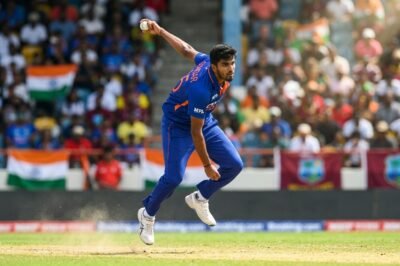
In the high-octane world of international cricket, where momentum is as fickle as the weather, Washington Sundar has often found himself at the crossroads of brilliance and misfortune. The news of his withdrawal from the upcoming T20I series against the West Indies has sent ripples through the Indian cricketing fraternity, not merely because of his individual talent, but because of the specific, multi-dimensional role he plays in the squad. Sundar, a player who famously announced his arrival with a gritty performance at the Gabba, has become a victim of a recurring narrative: the struggle to maintain physical peak during critical tournament windows. This latest setback, reported via Cricbuzz, serves as a sobering reminder of the fragile nature of an athlete’s career. For a player who provides the rare combination of powerplay finger-spin and left-handed batting stability, his absence creates a vacuum that is notoriously difficult to fill. The timing is particularly poignant as the Indian team management continues to experiment with combinations ahead of major ICC events, making every missed series a significant hurdle in a player’s quest for a permanent spot in the starting XI.
The withdrawal comes at a juncture where Sundar was expected to solidify his position as India’s premier spin-bowling all-rounder in the shortest format. His ability to stifle runs in the first six overs while providing a batting cushion in the lower-middle order makes him a tactical unicorn. As the news broke, fans and analysts alike began to dissect the implications of this development. It is not just about one player missing a series; it is about the disruption of a carefully curated team balance. The West Indies, known for their explosive power-hitters who thrive against pace, are often vulnerable to disciplined spin, and Sundar’s height and accuracy would have been the perfect antidote to their aggression. This analysis delves deep into the circumstances of his withdrawal, his unfortunate history with injuries, and what this means for the future of the Indian T20 setup as they navigate a busy international calendar.
The Details of the Withdrawal and Immediate Impact
According to the latest reports, Washington Sundar was forced to pull out of the T20I leg of the West Indies tour due to a fresh injury concern that emerged during the preceding matches or training sessions. While the specific nature of the injury—often a hamstring or a finger issue in Sundar’s case—was being assessed by the medical team at the National Cricket Academy (NCA), the decision to withdraw him was made to prevent further long-term damage. This cautious approach by the Board of Control for Cricket in India (BCCI) highlights the value they place on Sundar, yet it also underscores the frustration of his frequent stints on the sidelines. The immediate impact is felt in the bowling department, where the captain now loses a reliable option to bowl in the powerplay, a phase where Sundar has historically excelled with an economy rate that rivals the best in the world.
Without Sundar, the Indian team must now pivot to alternative strategies. His presence allowed the team to play an extra seamer or a specialist batsman, knowing that the spin-bowling all-rounder could bridge the gap between the two departments. The sudden vacancy necessitates a call-up for a replacement who might not possess the same unique skill set. It forces the coaching staff, led by Rahul Dravid, to rethink their approach to the West Indian conditions, which often demand a mix of craft and control. The loss of his batting is equally significant; in the T20 format, having a player at number seven or eight who can clear the ropes and play according to the situation is a luxury that India will now have to do without during this series.
The Recurring Injury Nightmare: A Pattern of Misfortune
To understand the gravity of this withdrawal, one must look at Washington Sundar’s career trajectory over the last three years. It has been a series of ‘what ifs.’ Since his heroic performance in the 2020-21 Border-Gavaskar Trophy, Sundar has missed more matches than he has played for the national side. In 2021, a freak finger injury during a practice match in England ruled him out of the high-profile Test series and the subsequent IPL leg. Just as he recovered, a bout of Covid-19 and further muscle strains kept him out of the limited-overs tour of South Africa in early 2022. This pattern of missing out on key assignments has prevented him from establishing the kind of rhythm required to dominate at the international level.
Experts suggest that Sundar’s tall frame and the mechanics of his bowling action might be putting undue stress on specific muscle groups. However, others point toward a lack of consistent match fitness due to these interruptions. Every time he makes a comeback, he shows flashes of his immense potential, only to be dragged back into rehabilitation. This cycle is mentally taxing for any athlete. For Sundar, who is still in his early twenties, these formative years are crucial for developing the tactical nuances of his game. Instead, he finds himself spending significant time at the NCA, working with physiotherapists rather than testing his skills against the world’s best batsmen. The cricketing world watches with a sense of empathy, hoping that this latest setback is not a harbinger of a career defined by injury rather than achievement.
Tactical Voids: Why Sundar is Hard to Replace
Washington Sundar is what analysts call a ‘system player.’ He isn’t necessarily a big turner of the ball like Yuzvendra Chahal, nor is he a flamboyant stroke-maker like Hardik Pandya. However, he is the glue that holds the T20 XI together. His primary strength lies in his incredible control over line and length during the powerplay. In an era where batsmen look to exploit the field restrictions by clearing the inner circle, Sundar uses his height to extract extra bounce, making it difficult for openers to get under the ball. His economy rate in the first six overs is among the best in T20 international history for spinners, a stat that allows the captain to use his strike bowlers in more attacking roles later in the innings.
Offensively, Sundar provides a left-handed option in a predominantly right-handed batting order. His ability to be promoted up the order to negate opposition leg-spinners or to provide a quick-fire 20-30 runs at the death is invaluable. When you remove a player of this profile, you don’t just replace him with another player; you often have to change the roles of two or three other players to compensate. For instance, if India brings in a specialist spinner who cannot bat, the pressure increases on the top order to stay till the end, and the tail becomes significantly longer. This tactical imbalance is what makes Sundar’s withdrawal a headache for the team management.
The Search for Replacements: Who Steps Up?
With Sundar out, the selectors must look at the bench strength to find a suitable replacement. The names likely to be discussed include Axar Patel, who is perhaps the closest like-for-like replacement available in the Indian ecosystem. Axar offers similar left-handed batting utility and accurate spin, though he typically bowls in the middle overs rather than the powerplay. Another option could be the inclusion of a specialist wrist-spinner like Kuldeep Yadav, which would signal a shift toward a more aggressive, wicket-taking approach rather than the defensive, containing strategy that Sundar facilitates.
There is also the possibility of blooding new talent from the IPL pool. Players who have shown the ability to handle pressure in the domestic circuit might be fast-tracked to see how they fare in the Caribbean. However, the West Indies is a challenging place for debutants, with slow, turgid tracks that require a high degree of patience and technical proficiency. The decision will ultimately depend on whether the management wants to maintain the current team structure or if they are willing to experiment with a different balance. Regardless of who is chosen, the shadow of Sundar’s absence will loom large, as any replacement will be measured against the specific utility he provides.
The Road to the T20 World Cup: A Slippery Slope
The biggest concern regarding Sundar’s withdrawal is the long-term roadmap for the T20 World Cup. Every series leading up to a global tournament is a building block. The management uses these matches to define roles, build partnerships, and test players under various match scenarios. By missing the West Indies series, Sundar loses another opportunity to synchronize with the core group. In a competitive environment like Indian cricket, where new stars emerge every IPL season, being ‘out of sight’ often leads to being ‘out of mind’ for the selectors, regardless of previous pedigree.
Furthermore, the physical reliability of a player is a key criterion for World Cup selection. A team cannot afford to carry a player who might break down in the middle of a tournament, especially when squads are limited in size. Sundar now faces the uphill task of not just recovering, but proving that his body can withstand the rigors of back-to-back matches in a high-intensity tournament. The medical staff will likely put him through a rigorous fitness protocol to ensure that when he returns, it is for a sustained period. The clock is ticking, and for Sundar, the transition from being a ‘talented youngster’ to a ‘reliable veteran’ is currently being stalled by his own physical limitations.
Conclusion: Navigating the Path Forward
Washington Sundar’s withdrawal from the West Indies T20I series is more than just a personnel change; it is a significant disruption to India’s evolving tactical identity. While the team possesses enough depth to remain competitive, the loss of a powerplay specialist and a versatile lower-order batsman is a bitter pill to swallow. For Sundar, this is another chapter in a frustrating saga of injuries that threatens to overshadow his undeniable skill. The focus now shifts to his rehabilitation and the performance of his replacement. If the replacement excels, Sundar might find it harder to reclaim his spot. If the team struggles without his balance, the management will be even more desperate for his return.
In the larger context, this incident highlights the need for better workload management and perhaps a more specialized fitness regime for players with Sundar’s physical profile. Indian cricket needs Washington Sundar at his best if they are to dominate the T20 landscape. His journey back to the field will be watched closely by fans who remember his Gabba heroics and believe that his best is yet to come. For now, the Indian team must move forward, adapting their strategies and hoping that their star all-rounder finds a way to break the cycle of injuries once and for all. The upcoming matches against the West Indies will serve as a litmus test for India’s bench strength and their ability to stay resilient in the face of unexpected setbacks.






































Leave a Reply