
The Diplomatic Flashpoint: Tharoor Challenges the Visa Paradigm
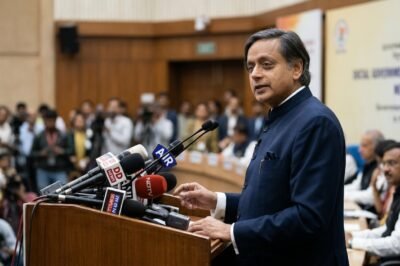
In a development that has sent ripples through both the corridors of power in New Delhi and the international academic community, Senior Congress leader and Member of Parliament Shashi Tharoor has leveled serious allegations against the Indian government. Tharoor claimed that as many as 115 international speakers, intended to participate in the prestigious Bharat Summit, were either denied entry into the country or had their previously approved visas summarily cancelled. This assertion, reported by The Hindu, highlights a growing friction between the executive’s security-centric immigration policies and the nation’s historical role as a hub for global intellectual exchange. As a former diplomat and United Nations Under-Secretary-General, Tharoor’s critique carries significant weight, suggesting that such actions could inadvertently damage India’s ‘soft power’ and its standing as a vibrant democracy that welcomes diverse viewpoints.
The controversy centers on the Bharat Summit, an event designed to bring together global thinkers, policy experts, and academic luminaries to discuss the trajectory of the world’s fastest-growing major economy. The alleged blockage of such a large contingent of speakers is unprecedented in recent years, raising questions about the criteria used by the Ministry of Home Affairs (MHA) and the Ministry of External Affairs (MEA) when vetting international delegates. For an administration that has frequently championed the concept of ‘Vishwa Guru’ (global teacher), the narrative of restrictive entry for scholars presents a complex contradiction that the opposition is keen to exploit. This situation is not merely a bureaucratic hurdle; it represents a strategic inflection point in how India balances its national security imperatives with its aspirations for global leadership.
The Core Allegations and the Scope of the Disruption
According to Shashi Tharoor, the scale of the visa denials is not just a case of administrative oversight but appears to be a systemic exclusion. By citing the number 115, Tharoor points to a significant portion of the summit’s intellectual roster being wiped out. This has immediate consequences for the quality of discourse and the international character of the event. When a speaker’s visa is cancelled at the eleventh hour, it sends a chilling signal to the global academic community, often leading to a ‘reputational tax’ that the host nation must eventually pay. The lack of transparency regarding the reasons for these denials often fuels speculation, ranging from concerns over the speakers’ previous political stances to broader institutional biases against certain international organizations.
The mechanics of Indian visa processing for conferences are notoriously rigorous. Organizers are typically required to obtain security clearances from the Ministry of Home Affairs and political clearances from the Ministry of External Affairs. This dual-layered vetting process is designed to ensure that no individuals with links to anti-India activities or those who might pose a security risk are granted entry. However, when the list of those denied includes recognized academics and thought leaders, the line between security vetting and political screening becomes blurred. Tharoor’s allegations suggest that the current administration might be utilizing these procedural frameworks to curate the type of discourse that occurs within the country, potentially stifling critical or independent international voices.
Geopolitical and Diplomatic Implications of Entry Denials
From a geopolitical perspective, the denial of visas to over a hundred international delegates can be seen as a defensive posture. In an era where information warfare and foreign influence operations are of paramount concern to sovereign states, India has tightened its borders against what it perceives as ‘intellectual interference.’ However, the diplomatic cost of such a stance is substantial. Relations with the home countries of these 115 speakers—often Western democracies with whom India seeks closer ties—can be strained by such actions. When scholars from the UK, USA, or EU are denied entry without clear justification, it provides fodder for international reports that critique India’s record on academic freedom and democratic openness.
Furthermore, this incident impacts India’s ‘Soft Power’ strategy. Soft power is built on the attractiveness of a country’s culture, political values, and foreign policies. By hosting global summits, India positions itself as a central node in the global marketplace of ideas. If the perception takes root that India is becoming an ‘exclusive’ rather than an ‘inclusive’ destination for international dialogue, it may lose its competitive edge to other regional hubs like Singapore or Dubai. Tharoor’s intervention serves as a warning that the short-term goal of controlling the narrative might lead to long-term erosion of India’s prestige in international forums.
Economic and Market Impacts on the MICE Sector
The implications of this controversy extend beyond politics and into the realm of Business and Economics. India has been making concerted efforts to boost its MICE (Meetings, Incentives, Conferences, and Exhibitions) tourism sector. Huge investments have been made in infrastructure, such as the Bharat Mandapam and Yashobhoomi, to attract large-scale international events. Instances where a significant percentage of speakers are barred from entry create a climate of uncertainty for event organizers. If international bodies perceive the Indian visa process as unpredictable or politically motivated, they are less likely to choose India as a host venue for high-profile summits, potentially diverting billions in revenue to other nations.
Moreover, the education and research sectors are directly affected. Collaborative research and international seminars are vital for the growth of Indian universities and think tanks. When the flow of international experts is restricted, it hampers the exchange of knowledge and technology. This can have a secondary impact on sectors like Information Technology and Biotechnology, which rely heavily on global networking and intellectual mobility. The business community often views such visa hurdles as ‘non-tariff barriers’ to the exchange of services and expertise, which can dampen investor sentiment regarding the ease of doing business in India.
The Evolving Landscape of India’s Visa Policy
Historically, India has maintained a cautious approach to visas, a legacy of various security challenges. However, the last decade has seen both a push for digitization (e-visas) and a simultaneous tightening of scrutiny for specific categories such as ‘Conference Visas.’ The MHA’s guidelines for international conferences require detailed lists of participants to be submitted months in advance, particularly if they are from ‘Prior Reference Category’ countries or if the subject matter is deemed sensitive. The Bharat Summit incident suggests that the definition of ‘sensitive’ may be expanding to include a wider array of socioeconomic and political topics.
Critics argue that the current administration has become increasingly sensitive to international criticism, leading to a more restrictive entry policy for those who might hold dissenting views. Supporters of the government, conversely, argue that protecting the national narrative and preventing foreign entities from influencing domestic discourse is a legitimate exercise of sovereignty. This ideological divide is at the heart of the debate sparked by Tharoor. As India continues to rise on the global stage, the tension between its domestic political culture and the expectations of the international community regarding transparency and openness will likely intensify.
Conclusion: Navigating the Future of Global Engagement
The allegations by Shashi Tharoor regarding the 115 denied speakers for the Bharat Summit serve as a critical wake-up call for India’s diplomatic and security establishment. As the nation moves toward its ‘Amrit Kaal’ goals, the ability to host and engage with the world’s most influential minds is not a luxury but a necessity. To maintain its trajectory as a global leader, India must find a way to streamline its visa processes and ensure that security clearances are based on objective, transparent criteria rather than perceived ideological alignment. Failure to do so could result in an isolationist reputation that contradicts the very essence of ‘Vasudhaiva Kutumbakam’—the world is one family.
Looking ahead, the government may need to revisit its conference visa protocols to prevent such high-profile disruptions. Providing clear reasons for denials and creating a more efficient appeal or review mechanism would go a long way in restoring the confidence of the international academic and business communities. For Shashi Tharoor and the opposition, this issue remains a potent tool to question the government’s commitment to democratic pluralism. Ultimately, the resolution of this controversy will depend on whether India chooses to see international speakers as potential allies in its growth story or as risks to be managed behind a bureaucratic wall.
































Leave a Reply