
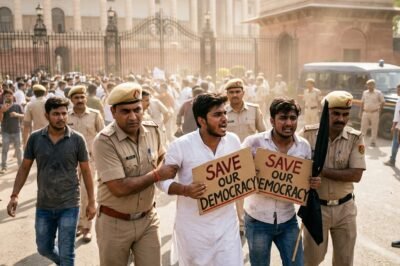
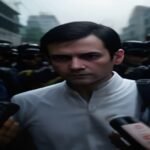
The democratic fabric of India, often hailed as the world’s largest laboratory of electoral participation, is currently facing a litmus test of institutional resilience that has captured global attention. The recent detention of dozens of protesters seeking the ouster of the Indian election chief marks a significant escalation in the ongoing friction between civil society and state-appointed regulatory bodies. This development comes at a critical juncture when the transparency of the electoral process is being scrutinized more intensely than at any point in the nation’s post-independence history. The protesters, comprising a diverse coalition of activists, students, and opposition sympathizers, argue that the neutrality of the Election Commission has been fundamentally compromised, leading to an inherently unfair playing field. The situation was further complicated by the release of several high-profile leaders who had previously been embroiled in controversies involving dehumanizing language, specifically the ‘cockroach’ epithet that has sparked a nationwide debate on political ethics. This stark contrast—the detention of peaceful protesters versus the release of controversial figures—highlights a perceived imbalance in the application of law and order, raising fundamental questions about the future of democratic dissent and the preservation of institutional integrity in a rapidly polarizing society.
The Core Grievances Against the Election Commission’s Neutrality
The primary catalyst for these recent protests is a deep-seated and growing suspicion regarding the independence of the Election Commission of India (ECI). Historically, the ECI has been viewed as a pillar of integrity and a global gold standard for election management, but recent years have seen a surge in allegations of partisan bias. Protesters point to several instances where they believe the commission failed to act against blatant code-of-conduct violations by the ruling party while being disproportionately strict with opposition candidates. The demand for the ouster of the election chief is not merely about a single individual but symbolizes a broader, more urgent plea for systemic reform. Critics argue that the current appointment process for election commissioners lacks the necessary checks and balances to ensure complete independence from executive influence, potentially turning a neutral referee into a participant in the political contest.
Furthermore, the logistical aspects of the elections, including the controversial use of Electronic Voting Machines (EVMs) and the scheduling of multi-phase elections, have become significant points of contention that fuel public distrust. Protesters argue that the ECI has been consistently unresponsive to technical concerns raised by cybersecurity experts and political scientists who advocate for a more robust verification system. The refusal to provide more comprehensive VVPAT (Voter Verifiable Paper Audit Trail) verification has fueled a narrative of opacity and resistance to accountability. By detaining those who raise these legitimate questions, the state risks reinforcing the idea that valid concerns are being met with suppression rather than meaningful dialogue. The sheer scale of the detentions in New Delhi and other major urban centers suggests a highly coordinated effort to stifle what the authorities label as ‘unauthorized’ assemblies, yet many observers see it as a direct blow to the constitutional right to assemble and protest.
The ‘Cockroach’ Controversy and the Optics of Selective Justice
One of the most polarizing and emotionally charged aspects of the current political climate is the use of inflammatory rhetoric and the subsequent legal responses that many perceive as uneven. The ‘cockroach’ comment, directed at certain political or social groups, has been widely condemned by civil rights organizations as dehumanizing language that can incite physical violence and social ostracization. The release of leaders who have used such language, while simultaneously detaining those protesting for electoral transparency, has created a powerful narrative of ‘selective justice’ that resonates across the country. In a healthy and functioning democracy, the law is expected to be blind, yet the optics of these recent events suggest a hierarchy of protection where some are shielded by their political proximity while others are penalized for their dissent.
Legal experts and constitutional scholars have weighed in on this disparity, noting that the invocation of specific laws, such as Section 144 of the Code of Criminal Procedure which prohibits public gatherings, is often used selectively to target anti-government sentiment. While the ‘cockroach’ leaders were released based on legal technicalities or a judicial assessment of a lack of immediate threat, the protesters are often held for extended periods under the guise of maintaining public order and preventing communal disharmony. This perceived inequality in legal treatment has served only to radicalize the protest movement further, creating a sense of desperation among activists. Instead of de-escalating the situation, the release of controversial figures has acted as a catalyst for more intense demonstrations, as citizens increasingly feel that the moral and legal compass of the current administration is skewed toward silencing its critics while tolerating hate speech from its allies.
Institutional Integrity and India’s Global Perception
India’s status as a ‘Global South’ leader and a democratic bastion is closely tied to the perceived fairness and transparency of its elections. International human rights organizations and democratic watchdogs have begun to flag the detention of activists and the pressure on the Election Commission as worrying trends that could impact India’s global standing. The ECI’s reputation is not merely an internal administrative matter; it is a vital component of India’s soft power and its ability to advocate for democratic values on the world stage. When the election chief’s impartiality is called into question by thousands of citizens on the streets, it sends a signal to the international community about the potential erosion of India’s democratic foundations. The detention of protesters seeking reform is often framed in global media as an indicator of a shrinking space for civil society, potentially impacting long-term foreign relations and economic partnerships with Western democracies.
Inside the country, the debate is equally fierce and divided. Supporters of the government argue that the protests are politically motivated attempts to discredit a legitimate and highly functional institution just before the next general election. They view the ECI as a resilient body that has successfully managed the world’s most complex electoral processes and believe that attacks on the commission are indirect attacks on the democratic process itself. However, the counter-argument posits that institutions are only as strong as the public trust they command and the transparency they provide. If a significant portion of the population feels unheard and sees institutional bias as a reality, the institutional shell may remain intact, but its democratic soul is at risk. The ECI must now navigate this crisis by either engaging in transparent reforms or risking a total and irreversible breakdown of trust with the electorate.
The Impact of Social Media and the Digital Information War
The battle for public opinion is increasingly being fought on digital platforms, where the ‘cockroach’ comments and videos of the detentions have gone viral, creating a fragmented information environment. Social media has allowed the protesters to organize quickly, share real-time updates, and reach a global audience, bypassing traditional media channels that some perceive as being under state pressure or self-censorship. Conversely, the release of certain leaders is often celebrated in digital echo chambers as a victory against what they call ‘biased’ or ‘activist’ legal proceedings. This intense polarization makes it nearly impossible to have a nuanced, fact-based discussion about electoral reform or the ethical boundaries of political rhetoric.
Data shows that digital engagement surrounding the ECI protests is at an all-time high, with millions of interactions across platforms like X, Facebook, and WhatsApp. Hashtags related to the election chief’s resignation and the ‘cockroach’ controversy have trended for days, drawing in participants from the vast Indian diaspora as well as local citizens. This digital mobilization has real-world consequences, as it keeps constant pressure on the government and the judiciary to act. However, it also leads to the rapid spread of misinformation, where every action of the police or the commission is interpreted through a highly partisan lens. The challenge for the Indian state is to manage this digital discourse without resorting to heavy-handed tactics like internet shutdowns or digital censorship, which would only further damage its democratic credentials and international image.
The Judiciary as the Final Arbiter of Democratic Morality
As both the executive and the legislature face criticism for their handling of the protests, all eyes are on the Indian judiciary as the final protector of constitutional rights. The courts are being asked to intervene in matters ranging from the legality of the recent detentions to the very appointment process of the Election Commission itself. Historically, the Supreme Court of India has been a robust arbiter of constitutional morality, often stepping in to check executive overreach. Recent judgments have shown a continued willingness to protect democratic rights, but the speed and consistency of the judicial process remain concerns for activists on the ground. By the time a detention is ruled illegal or a protest is sanctioned, the political momentum of a movement might have already been broken by the state’s intervention.
The judiciary also faces the daunting task of defining the limits of free speech and criminal incitement in the context of the ‘cockroach’ remarks. Deciding where political rhetoric ends and hate speech begins is a delicate legal balance that will have long-term consequences for Indian jurisprudence. If the courts are perceived as being too lenient on one side while the police are seen as too harsh on the other, the judicial system itself could face a crisis of legitimacy similar to that of the ECI. Therefore, the coming months will be crucial for the Indian legal system to demonstrate its absolute independence and provide a clear, unambiguous framework for how electoral disputes and political protests should be handled in a modern, diverse democracy.
Conclusion: Navigating the Future of the World’s Largest Democracy
The detention of protesters and the controversy surrounding the election chief represent a pivotal, defining moment for modern India. These events are not isolated incidents but are symptoms of a much deeper national debate about the nature of power, the necessity of accountability, and the fundamental rights of the citizen in a digital age. For the democratic process to remain credible and legitimate in the eyes of its people, there must be a genuine, multi-partisan effort to address the concerns of those who feel disenfranchised or suspicious of institutional bias. Silencing dissent through mass detentions may provide a veneer of short-term stability, but it creates profound long-term instability by eroding the very foundation of public trust and civic engagement.
Moving forward, India must consider comprehensive electoral reforms that ensure the Election Commission remains beyond any shadow of reproach. This includes implementing a more transparent and consultative appointment process, improving communication with the public regarding technical concerns like EVM security, and ensuring a consistent, fair application of the law regarding inflammatory and dehumanizing speech. The ‘cockroach’ controversy serves as a stark, uncomfortable reminder of how quickly political discourse can degrade when not held to high ethical standards. Ultimately, the strength of a democracy is measured not by the silence of its citizens, but by the robustness and openness of its institutions in the face of rigorous criticism. As the country prepares for its next major electoral cycle, the world will be watching to see if India can heal these deep divisions and reaffirm its commitment to the democratic ideals upon which it was founded over seven decades ago.
































Leave a Reply