
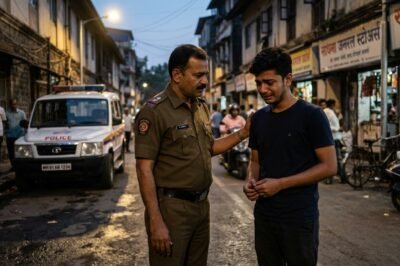
In an age where social media is frequently dominated by clips of institutional friction, a singular video involving the Pune Police and social media activist Abhijeet Dipke has managed to pierce through the digital noise, offering a rare and profoundly humanizing look at law enforcement. The footage, which has since gone viral across platforms like X (formerly Twitter) and featured prominently on NDTV, depicts a moment that stands in stark contrast to the often-adversarial relationship between activists and the state. It shows police officers delivering the tragic news of Dipke’s grandmother’s passing with a level of gentleness and sincere apology that has sparked a nationwide conversation about the role of empathy in policing. This incident is not merely a viral trend but a significant cultural touchstone that challenges our preconceived notions about authority and the delivery of sensitive information in a high-pressure society. By examining the nuances of this interaction, we can better understand the evolving landscape of community policing in India and the potential for a more compassionate approach to public service.
The video serves as a poignant reminder that behind the khaki uniforms are individuals capable of deep compassion. As the footage unfolds, the viewer witnesses the officers approaching Dipke not with the sternness associated with legal procedures, but with the heavy hearts of messengers bearing bad news. The phrase “We’re sorry” becomes a powerful refrain, bridging the gap between the official capacity of the police and the shared human experience of loss. In a country where the police force is often viewed through a lens of suspicion or fear, this act of vulnerability by the officers provides a necessary counter-narrative. It highlights a shift in training or perhaps a natural inclination toward emotional intelligence that is rarely captured on camera. For Abhijeet Dipke, a man known for his vocal activism, the moment was undoubtedly overwhelming, yet the presence of a supportive environment facilitated by the very authorities he often scrutinizes adds a layer of complex irony and profound grace to the situation.
The Human Side of Law Enforcement: A Viral Turning Point
The viral nature of the video featuring the Pune Police and Abhijeet Dipke marks a significant turning point in how the public consumes news regarding law enforcement. Historically, police-related content that gains traction often involves controversy, misconduct, or high-stakes chases. However, this interaction highlights the “soft power” of policing—the ability to manage public emotions and provide social support during moments of crisis. By choosing to deliver the news of a family death in person and with visible empathy, the officers involved moved beyond their mandates of law and order into the realm of community care. This shift is crucial for building trust in a society where the police-citizen ratio is often skewed and resources are stretched thin.
Statistics from various sociological studies on policing suggest that when law enforcement officers exhibit empathy, community cooperation increases significantly. In the Indian context, where the colonial-era legacy of the police as an instrument of control still lingers, such moments of genuine human connection are transformative. They serve as a form of “emotional labor” that is often overlooked in official performance metrics but is vital for the psychological well-being of both the officers and the civilians they serve. The widespread sharing of this video indicates a public hunger for more stories that celebrate the humanity within our institutions, suggesting that the path to reform may lie as much in behavioral shifts as in structural changes.
De-escalation and Empathy: New Frontiers in Training
While the interaction with Abhijeet Dipke was not a traditional de-escalation scenario, it utilized many of the same psychological principles. The officers’ decision to lower their voices, maintain a respectful distance, and use softening language are all hallmarks of effective crisis communication. Training programs across various Indian states have begun to incorporate modules on emotional intelligence and soft skills, recognizing that a significant portion of police work involves dealing with people in their most vulnerable states. The Pune Police have often been at the forefront of such initiatives, utilizing social media and community outreach to humanize their force. This specific incident validates those efforts on a national stage.
The effectiveness of such empathetic communication cannot be overstated. When a citizen feels respected and heard, even in a moment of tragedy, their perception of the entire institution changes. This has long-term implications for public safety, as a trusted police force is much more effective at gathering intelligence, preventing crime, and maintaining social harmony. The video provides a template for how sensitive information should be handled, moving away from a clinical or bureaucratic approach toward one that prioritizes the dignity of the individual. Experts suggest that integrating these “people-first” strategies into standard operating procedures could lead to a more resilient and harmonious relationship between the state and its citizens.
The Role of Social Media in Shaping Public Perception
Social media acted as a catalyst in this story, turning a private moment of grief into a public lesson in empathy. Abhijeet Dipke’s decision to share or acknowledge the video allowed the public to see a side of the police that is rarely documented. In the digital age, the reputation of an institution is often built or destroyed in the comments section of a viral post. In this case, the response was overwhelmingly positive, with thousands of users praising the officers for their conduct. This organic endorsement is more powerful than any government-funded PR campaign because it is rooted in a real, unscripted human interaction.
However, the role of social media also brings up questions about privacy and the ethics of filming such sensitive moments. While the video served a positive purpose in this instance, it also underscores the constant surveillance under which both public figures and police officers now operate. The fact that the interaction was recorded and shared speaks to the modern reality where every action is a potential piece of content. For the Pune Police, this viral moment serves as a “best-case scenario,” but it also sets a high bar for future interactions. The public now expects this level of sensitivity as the standard, rather than the exception, placing a renewed emphasis on the need for consistent behavioral standards across the force.
Navigating Grief in the Public Eye: The Experience of Abhijeet Dipke
For Abhijeet Dipke, the intersection of his public life as an activist and his private life as a grandson became blurred in this viral moment. Grieving is a deeply personal process, yet doing so in the public eye adds a layer of complexity that few are prepared for. The police officers, by acknowledging the weight of their message, provided a small buffer of respect for that grief. This incident highlights the challenges faced by activists who, while often at odds with the state, must also navigate the same social and familial structures as everyone else. The empathy shown by the police suggests a recognition of Dipke as a person first and an activist second, a distinction that is vital for healthy civic discourse.
Furthermore, the support Dipke received from the online community following the video’s release illustrates the dual nature of social media as both a platform for criticism and a source of communal comfort. The messages of condolence mixed with praise for the police created a unique space where political differences were momentarily set aside in favor of shared human values. This suggests that even in a highly polarized environment, there are universal experiences—like the loss of a loved one—that can bring disparate groups together. Dipke’s experience serves as a case study in how the digital world can facilitate a collective mourning process, provided the initial interaction is handled with the necessary care and respect.
Comparative Analysis: Global Trends in Empathetic Policing
The incident in Pune mirrors a growing global trend where police departments are reimagining their roles within the community. From “neighborhood policing” in the UK to “community-oriented policing” in the US, there is an increasing recognition that the traditional “warrior” mindset of law enforcement is less effective than a “guardian” mindset. The interaction between the Pune Police and Dipke is a perfect example of the guardian approach, where the primary goal is the protection and support of the community members. This global shift is driven by the realization that trust is the most valuable currency a police force can possess.
In many Western countries, police are now trained specifically in “death notification” procedures, which emphasize the importance of privacy, clear communication, and emotional support. The fact that the Pune officers naturally exhibited these traits without necessarily following a rigid Western script suggests that empathy is a universal skill that transcends borders. However, the challenge remains in scaling these individual moments of brilliance into institutional norms. By comparing this incident with international best practices, Indian law enforcement agencies can identify specific areas for growth, ensuring that every citizen receives the same level of compassion regardless of their status or the presence of a camera.
Conclusion: Future Implications for Institutional Reform
The viral video of the Pune Police and Abhijeet Dipke is more than a heartwarming story; it is a call to action for institutional reform. It demonstrates that when officers are empowered to lead with empathy, the benefits to the community and the institution are immense. Moving forward, the challenge for the Pune Police and other departments across India will be to institutionalize the behaviors seen in that video. This involves not only training but also a change in the culture of policing that rewards emotional intelligence and community engagement alongside traditional metrics of success.
As we look to the future, the integration of technology, social media, and human-centric policing will continue to evolve. The lessons learned from this viral moment should be integrated into police academies and used as a benchmark for excellence. For the public, this incident serves as a reminder to remain open to the possibility of positive change within our institutions. While there is still much work to be done in terms of police reform and accountability, the “We’re sorry” heard in that video offers a glimmer of hope for a future where the badge is seen as a symbol of both safety and sincere compassion. The impact of this single interaction will likely be felt for a long time, serving as a powerful example of how a few words of kindness can transform a moment of tragedy into a lesson for an entire nation.
- Key Takeaway 1: Empathy is a critical tool for modern law enforcement in building community trust.
- Key Takeaway 2: Social media can serve as a powerful platform for highlighting positive institutional behavior.
- Key Takeaway 3: The transition from a “warrior” to a “guardian” mindset is essential for police reform in India.
- Key Takeaway 4: Personal loss, when handled with institutional sensitivity, can bridge the gap between activists and authorities.





































Leave a Reply