
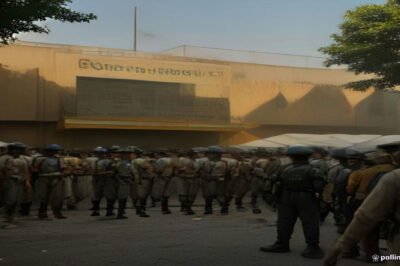
The political heart of Andhra Pradesh is beating with unprecedented intensity as the results of the Mandal Parishad Territorial Constituencies (MPTC) and Zilla Parishad Territorial Constituencies (ZPTC) elections unfold across the state. This massive democratic exercise, which has been the subject of intense legal scrutiny and political posturing for nearly two years, represents more than just a local administrative reshuffle; it is a definitive referendum on the incumbent YSR Congress Party (YSRCP) government and its ambitious welfare-centric agenda. As counting progresses across 365 designated centers, the sheer scale of the logistical and security apparatus deployed highlights the high stakes involved for every major stakeholder in the state. From the bustling streets of Vijayawada to the remote villages of Rayalaseema, the atmosphere is electric with anticipation, as these results will undoubtedly set the tone for the remaining term of the current administration and redefine the strategies of an embattled opposition. The counting process, conducted under the watchful eye of the State Election Commission and thousands of security personnel, serves as a testament to the resilience of the democratic process despite numerous delays and controversies. As we delve into the numbers, the narrative emerging is one of significant political consolidation and a clear message from the rural electorate.
The Unprecedented Scale of the Counting Process and Security Infrastructure
The counting of votes for the MPTC and ZPTC elections is a gargantuan task, necessitating a sophisticated logistical framework. Across the 13 districts of Andhra Pradesh, the State Election Commission has established 365 counting centers, each equipped with robust infrastructure to ensure transparency and accuracy. To maintain law and order, a multi-tier security system has been implemented, involving thousands of police personnel, including special task forces and state armed reserve units. In sensitive and hyper-sensitive zones, the surveillance is even more rigorous, with CCTV cameras monitoring every move within the counting halls and drone surveillance overseeing the perimeter. The sheer volume of ballot papers to be processed—given that these elections were largely conducted through traditional means—requires meticulous handling and a significant investment of time. State Election Commissioner Nilam Sawhney has emphasized that the priority is a peaceful and error-free tabulation of the mandate. The involvement of nearly 45,000 counting staff and additional thousands of security personnel underscores the gravity of this exercise. Each center is partitioned to accommodate counting agents from various political parties, ensuring that the process is witnessed by all stakeholders, thereby mitigating potential allegations of malpractice. This level of preparation is essential given the polarized nature of the state’s politics, where every vote counted is a potential point of contention.
Dominance of the YSRCP: A Validation of the Welfare State Model
Initial trends and early results suggest a sweeping dominance for the YSR Congress Party (YSRCP), led by Chief Minister Y.S. Jagan Mohan Reddy. This performance is widely interpreted as a massive endorsement of the government’s ‘Navaratnalu’—a suite of nine welfare schemes targeting education, health, and agriculture. The direct benefit transfer (DBT) mechanism, which has seen billions of rupees deposited into the accounts of rural citizens, appears to have built a formidable fortress of support for the ruling party. The YSRCP’s strategy of leveraging its grassroots network of village and ward volunteers has seemingly paid off, ensuring high voter turnout and a consolidated vote bank. In many districts, the party is not just winning; it is securing margins that indicate a virtual wipeout of the opposition. This dominance is particularly notable in the ZPTC results, where the ruling party is on track to secure a vast majority of the seats, granting it total control over the Zilla Parishads—the highest tier of rural local governance. For Jagan Mohan Reddy, these results provide the political capital necessary to continue his aggressive policy agenda, despite criticism from urban intellectuals regarding the state’s fiscal health. The rural mandate suggests that for the average voter, the immediate relief provided by welfare schemes outweighs the abstract concerns of long-term economic debt.
The Opposition’s Dilemma: TDP’s Boycott and the Search for Relevance
The primary opposition, the Telugu Desam Party (TDP) under N. Chandrababu Naidu, faces a critical juncture following these results. The party’s decision to officially boycott the ZPTC and MPTC elections—citing a lack of confidence in the State Election Commission and alleging widespread irregularities during the nomination process—has backfired in many regions. While some TDP candidates contested independently or with local support, the lack of a unified party machinery has led to a fragmented performance. This results-day reality highlights the growing gap between the TDP’s traditional strongholds and the current rural sentiment. The boycott strategy, intended to delegitimize the election, may have instead created a political vacuum that the YSRCP has filled with ease. Furthermore, the Jana Sena Party, led by actor-politician Pawan Kalyan, and its ally the BJP, are looking to capitalize on this vacuum. Although their gains are currently localized, their presence in the tally indicates a shift in the traditional bipolar contest of Andhra politics. For the TDP, the challenge is now existential; without a strong showing in local bodies, the party’s ability to mobilize for the next general election remains significantly hampered. The results serve as a wake-up call for the opposition to move beyond legal battles and reconnect with the rural electorate’s evolving needs.
Socio-Economic Implications and the Future of Rural Development
Beyond the political horserace, the MPTC and ZPTC results carry profound implications for the socio-economic development of rural Andhra Pradesh. The elected representatives of these bodies are responsible for the implementation of various state and central government schemes, including the MGNREGA, rural housing, and sanitation projects. A unified political alignment between the state government and the local bodies could lead to smoother fund flows and faster implementation of projects. However, it also raises concerns about the lack of checks and balances at the grassroots level. With the YSRCP poised to control most local bodies, the responsibility for development lies squarely on their shoulders. There is a pressing need for these bodies to look beyond welfare and focus on sustainable asset creation, rural infrastructure, and local employment. The business community is also closely watching these developments, as political stability in rural areas is a prerequisite for investments in the food processing and agricultural sectors. The mandate reflects a desire for continuity, but the high expectations of the electorate mean that the newly elected members must deliver tangible results in terms of infrastructure and service delivery to maintain this trust. The integration of technology in rural governance, such as the village secretariat system, will be a key metric to watch in the coming years.
Security Challenges and the Integrity of the Democratic Mandate
The counting day has not been without its tensions. Reports of minor skirmishes between supporters of rival parties have surfaced near some counting centers, necessitating a quick response from the 365-strong security grid. The heavy deployment of the Andhra Pradesh State Police has been instrumental in preventing large-scale violence, which has unfortunately been a hallmark of local body polls in the past. The integrity of the mandate is also being scrutinized by legal experts, given the numerous petitions filed in the High Court regarding the election notification and the counting process itself. The judiciary’s role in ensuring that the democratic will is not subverted by administrative overreach remains a critical pillar of this entire saga. The high-security environment serves a dual purpose: it protects the physical safety of the counting staff and candidates, and it serves as a psychological deterrent against those who might wish to disrupt the process. As the final tallies are announced, the focus will shift from the security of the ballot boxes to the security of the political transition, ensuring that the winners are allowed to take their oaths and begin their duties without intimidation.
Conclusion: Future Implications for Andhra Pradesh’s Political Map
As the final results of the MPTC and ZPTC elections are solidified, the political map of Andhra Pradesh looks increasingly monochromatic. The YSRCP’s projected landslide victory is not just a win; it is a total realignment of power. This result confirms that the ‘Jagan Wave’ of 2019 has not yet receded and has, in fact, entrenched itself deeper into the rural psyche through persistent welfare outreach. For the TDP, the path forward is fraught with challenges, requiring a complete overhaul of their outreach strategy and a possible re-evaluation of their leadership’s approach to local issues. The Jana Sena and BJP alliance, while still a minor player, has shown it can disrupt the status quo in certain pockets, hinting at a potential third front in the future. In the long term, these results will influence the state’s bargaining power with the central government and dictate the fiscal priorities of the state budget. The clear mandate allows the government to proceed with its controversial decentralization plan (the three-capitals proposal) with renewed vigor, citing rural support. Ultimately, the successful completion of this massive counting exercise, despite the security and legal hurdles, reinforces the strength of India’s democratic foundations at the local level. The people have spoken, and their voice, echoed through 365 counting centers, will resonate in the corridors of power for years to come.



































Leave a Reply