
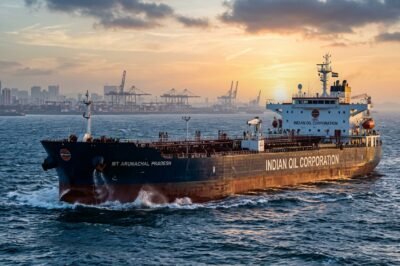
The global energy landscape is currently navigating a period of unprecedented turbulence, where the intersection of geopolitical volatility and maritime logistics has created a high-stakes environment for major oil importers. Indian Oil Corporation (IOC), India’s largest state-refined energy giant, finds itself at a critical crossroads as the cost of transporting crude oil has surged to a staggering $10 per barrel. This spike is not merely a statistical anomaly but a direct consequence of the escalating tensions between Iran and the United States, which have once again cast a shadow over the vital shipping lanes of the Middle East. As freight rates continue to gnaw at refining margins and threaten domestic price stability, IOC is making a bold strategic pivot: moving away from a total reliance on chartering vessels to owning its own fleet of Very Large Crude Carriers (VLCCs). This decision marks a significant shift in India’s energy procurement strategy, aiming to insulate the national economy from the whims of international freight markets and the recurring disruptions in the Strait of Hormuz and the Red Sea. In an era where energy security is synonymous with national security, IOC’s plan to acquire its own maritime assets is a calculated move to secure the supply chain from wellhead to refinery.
The Escalating Cost of Volatility: Understanding the $10 Threshold
For decades, freight costs for crude oil typically fluctuated within a manageable range, often accounting for a small fraction of the overall landed cost of a barrel. However, the recent surge to $10 per barrel represents a dramatic departure from historical norms. This increase is driven by a combination of factors, primarily the rising insurance premiums for vessels navigating high-risk zones and the premium demanded by shipowners for operating in the vicinity of geopolitical hotspots. When freight costs hit the double-digit mark, it fundamentally alters the economics of oil refining. For a country like India, which imports over 85% of its crude requirements, such a spike translates into billions of dollars in additional outflow, putting immense pressure on the current account deficit and the operational profitability of state-run oil marketing companies.
The $10 threshold is particularly concerning because it narrows the gross refining margins (GRMs) of companies like IOC. In a competitive global market, the ability to process crude efficiently is negated if the logistics of bringing that crude to the shore become prohibitively expensive. This situation has been exacerbated by the strategic shift in global oil flows following sanctions on various entities, leading to longer voyage times and a tighter supply of available tankers. By owning its vessels, IOC aims to eliminate the middleman and the volatility of the spot charter market, ensuring that its cost of transportation remains predictable even when global geopolitical temperatures rise.
Geopolitical Chessboard: Iran-US Tensions and the Strait of Hormuz
The primary catalyst for the current freight crisis is the simmering tension between Tehran and Washington. The Strait of Hormuz, a narrow waterway through which approximately one-fifth of the world’s oil consumption passes, has once again become a flashpoint. Threat of closures, seizures of tankers, and the deployment of naval assets in the region have created a ‘war risk’ environment. This geopolitical chess match has led to a massive spike in ‘War Risk Insurance’ premiums, which shipowners pass directly to the charterers like Indian Oil. The uncertainty is not just about physical blockades but also about the diplomatic fallout that can lead to sudden sanctions or shifts in maritime regulations.
Furthermore, the US-Iran friction has broader regional implications, affecting the safety of vessels in the Gulf of Oman and the wider Arabian Sea. For Indian refiners, who are major buyers of Middle Eastern crude, any disruption in these waters is an immediate threat to supply continuity. The move to buy ships is therefore not just a financial decision but a strategic defense mechanism. Owning a fleet allows IOC to have better control over the flagging and staffing of vessels, potentially navigating diplomatic channels more effectively than a third-party chartered ship might. It provides a layer of sovereignty over the energy supply chain that is essential during times of international conflict.
From Charter to Ownership: A Paradigm Shift in IOC Strategy
Historically, Indian state-run oil companies have preferred the flexibility of the chartering model, which allowed them to hire ships based on immediate needs without the long-term capital expenditure associated with vessel ownership. However, the current market dynamics have exposed the vulnerabilities of this asset-light approach. When freight rates are low, chartering is efficient; when rates skyrocket due to geopolitical events, the charterer is at the mercy of the market. IOC’s new plan involves a multi-billion dollar investment into acquiring its own fleet, a move that aligns with the broader national goal of ‘Atmanirbhar Bharat’ or self-reliance.
This paradigm shift involves significant logistical planning. Building or buying VLCCs is a time-consuming process that requires specialized maritime expertise. IOC is reportedly looking at both newbuilds and second-hand acquisitions to quickly scale its capacity. By owning the assets, IOC can also optimize its scheduling and reduce ‘demurrage’ costs—charges paid to shipowners for delays in loading or unloading. This integrated approach allows for a more seamless coordination between the procurement department and the refinery operations, ensuring that the right grade of crude arrives at the right time without the unpredictability of the global tanker market.
Impact on Refining Margins and Consumer Economics
The financial implications of high freight costs are felt throughout the Indian economy. When IOC pays $10 a barrel for shipping, that cost must eventually be recovered. While the government often intervenes to shield consumers from extreme volatility in petrol and diesel prices, the underlying financial health of the oil companies is at stake. High logistics costs lead to lower dividends for the government and reduced capital for future investments in green energy and refinery upgrades. By stabilizing freight costs through ownership, IOC can protect its GRMs, which are a key indicator of its financial performance and its ability to fund expansion projects.
Moreover, the move to own ships provides a hedge against currency fluctuations. International freight is typically priced in US dollars. By owning vessels and managing operations internally, IOC can mitigate some of the risks associated with the weakening of the Indian Rupee against the Dollar. This holistic cost management strategy is essential for maintaining the affordability of energy in a developing economy like India, where fuel prices have a direct impact on inflation and the cost of living for millions of citizens.
Indias Maritime Ambitions: Strengthening National Energy Security
IOC’s plan to buy ships is also a significant boost for India’s maritime sector. For too long, India has relied on foreign-flagged vessels to carry its essential energy imports. By expanding the national fleet, India enhances its maritime footprint and develops local expertise in ship management and maintenance. This move is expected to create jobs in the maritime sector and encourage the growth of ancillary industries such as ship repair and marine insurance within India. It is a step toward making India a global maritime power, capable of protecting its own trade interests in international waters.
Key Benefits of Fleet Ownership for IOC:
- Cost Predictability: Insulation from the extreme volatility of the spot freight market.
- Strategic Autonomy: Reduced dependence on foreign shipowners who may avoid certain regions during conflicts.
- Operational Efficiency: Better control over vessel scheduling and port turn-around times.
- Financial Gains: Capturing the profit margins that would otherwise go to external shipping companies.
The Future Outlook: Navigating Uncharted Waters
The decision by Indian Oil to enter the shipping market in a big way is a clear signal that the era of cheap and easy energy logistics is over. As the world transitions through a complex geopolitical and energy landscape, the control of the midstream assets—the ships that carry the oil—becomes just as important as the oil itself. IOC’s move is likely to be followed by other state-run refiners like BPCL and HPCL, potentially leading to a consolidated national energy fleet. This would provide India with a formidable tool to negotiate better terms in the global market and ensure that its energy security is not held hostage by regional tensions or shipping cartels.
In the long run, the success of this strategy will depend on IOC’s ability to manage the technical and operational complexities of a large maritime fleet. Shipping is a notoriously cyclical and capital-intensive industry. However, given the current geopolitical climate and the strategic necessity of securing crude supplies, the risks of inaction far outweigh the risks of investment. As IOC navigates these uncharted waters, its transition from a pure refiner to an integrated energy and logistics giant will be a defining chapter in India’s journey toward economic resilience and energy independence. The $10 freight cost was a wake-up call; the response is a structural transformation that will benefit the Indian economy for decades to come.





































Leave a Reply