
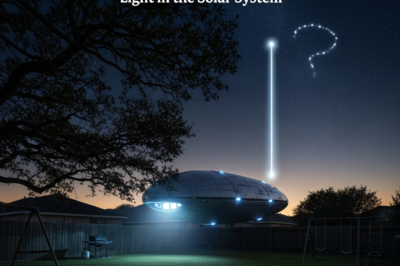
Harvard astrophysicist Avi Loeb is once again challenging the boundaries of conventional space exploration. In a recent proposal based on the Loeb-Turner test, the renowned professor highlights a revolutionary method to identify artificial light sources across the vast reaches of our solar system. Instead of scanning for distant radio signals, this technique looks for the tell-tale glow of technological civilizations that might be hiding in plain sight.
The Loeb-Turner Test: A New Beacon in SETI
The Loeb-Turner test operates on a simple yet profound principle involving the inverse-square law of light. By comparing the light flux of an object at different distances from the Sun, astronomers can distinguish between reflected sunlight and self-generated artificial light. If an object remains consistently bright regardless of its distance from the sun, it suggests the presence of an internal light source, such as massive urban centers or industrial complexes. This method provides a direct way to detect ‘technosignatures’ without needing the alien civilization to intentionally beam a message toward Earth.
Probing the Dark: Looking Beyond the Earth
This method is particularly potent for scanning the Kuiper Belt and other outer regions of our solar system where natural sunlight is incredibly weak. Loeb suggests that if an Earth-like city existed on a distant Kuiper Belt object, upcoming facilities like the Vera C. Rubin Observatory could potentially detect its artificial glow. This shifts the Search for Extraterrestrial Intelligence (SETI) from a passive game of listening to an active observation of the optical signatures left by advanced technology. Furthermore, the test could be applied to unusual interstellar objects, similar to the mysterious ‘Oumuamua, to determine if they carry their own illumination.
As we refine our observational tools, the Loeb-Turner test represents a paradigm shift in how we seek out neighbors in the dark. It moves the conversation from theoretical radio waves to the tangible, visible evidence of light, suggesting that the first sign of alien life might not be a cosmic shout, but a simple lamp left on in the window of the universe.






































Leave a Reply