
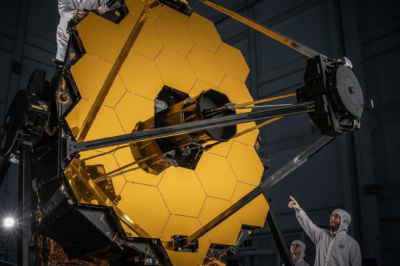
NASA is on the brink of a scientific revolution as its most advanced space observatory nears its final stages of preparation. Often referred to as the ‘ultimate eye in the sky,’ this technological masterpiece is designed to peer deeper into the cosmos than ever before, capturing light from the very first stars and galaxies. The anticipation within the global scientific community has reached a fever pitch, with experts suggesting this mission will redefine our understanding of time and space.
The Engineering Marvel Behind the Next-Gen Eye
Building an instrument capable of surviving the harsh environment of space while maintaining pinpoint accuracy is no small feat. This upcoming observatory features state-of-the-art infrared sensors and a massive, gold-coated primary mirror designed to detect the faint heat signatures of distant celestial bodies. Engineers have spent years perfecting the deployment sequence, ensuring that every component—from the sunshield to the complex optical array—functions with absolute precision once it reaches its orbital destination.
Why Scientists and Defense Experts Are Watching Closely
Beyond its astronomical goals, the project represents a pinnacle of international collaboration and engineering prowess. The Indian Defence Review and other global analysts have noted the strategic importance of such high-resolution imaging capabilities. While its primary mission is scientific exploration, the technology developed for this mission—ranging from advanced propulsion systems to high-speed data transmission—often finds applications in broader aerospace and defense sectors. The ability to monitor deep space with such clarity provides a benchmark for future satellite technologies.
As the final countdown approaches, the world watches with bated breath. This mission is more than just a telescope; it is a testament to human curiosity and our relentless pursuit of the unknown. Once operational, it will provide a window into the origins of our universe, potentially answering the age-old question of whether we are alone in the vast expanse of the cosmos.






































Leave a Reply