
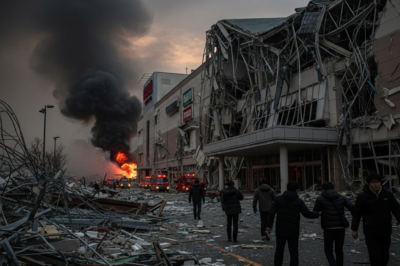
The island nation of Japan, a land synonymous with both technological advancement and the volatile power of the Pacific Ring of Fire, was once again thrust into a state of emergency on Thursday following a powerful magnitude 7.1 earthquake. The tremor, which struck off the coast of Kyushu, has sent shockwaves through the international community not just because of its magnitude, but due to the secondary disasters it triggered. Reports emerging from Miyazaki Prefecture and surrounding areas indicate a harrowing scene: structural collapses, a massive explosion at a local shopping mall, and the grim reality of feared fatalities. As the Japan Meteorological Agency (JMA) issues unprecedented warnings regarding potential subsequent ‘megaquakes,’ the nation stands at a critical juncture of rescue, recovery, and heightened vigilance. This event serves as a chilling reminder of the geological vulnerability that defines life in the Japanese archipelago and the incredible resilience required to navigate such recurring catastrophes.
The Seismic Event: Unpacking the 7.1 Magnitude Tremor
The earthquake occurred at approximately 4:42 PM local time, with its epicenter located in the Hyuga-nada Sea, off the eastern coast of Kyushu, at a depth of about 30 kilometers. While Japan is no stranger to seismic activity, the intensity of this particular 7.1 magnitude quake was felt acutely across southwestern Japan. In Miyazaki Prefecture, the shaking reached a lower 6 on the Japanese seismic intensity scale of 7, a level at which it becomes difficult to remain standing. The immediate aftermath saw the issuance of tsunami advisories for the coasts of Miyazaki, Kochi, Oita, and Kagoshima, with waves of up to one meter expected. Seismologists are particularly concerned because the location of this quake sits on the edge of the Nankai Trough, a subduction zone that has historically produced devastating earthquakes every 100 to 150 years. The precision of the JMA’s monitoring allowed for early warnings to be broadcast on mobile phones and television screens seconds before the strongest waves arrived, likely saving countless lives, yet the sheer force of the energy released ensured that damage was inevitable.
The Mall Explosion: Chaos in the Commercial Heartland
Perhaps the most shocking development following the initial tremors was the report of a massive explosion at a shopping mall in Miyazaki. According to witnesses and local news outlets, including Al Jazeera, the shaking caused significant structural damage to the facility, which is believed to have led to a major gas leak. The subsequent blast sent plumes of smoke into the sky and caused further collapse of the building’s infrastructure. Emergency responders are currently working under the assumption that multiple individuals were trapped inside at the time of the explosion. The fear of death is high, as the combination of seismic crushing and thermal trauma from the blast creates a complex and dangerous environment for Search and Rescue (SAR) teams. Bystander footage shared on social media showed shoppers fleeing the building in panic as dust clouds engulfed the parking lots, highlighting the sudden transition from a routine afternoon to a life-threatening disaster. Specialized fire crews equipped with gas detection sensors and thermal imaging cameras have been deployed to the site, but the threat of aftershocks has frequently forced temporary pauses in their operations.
Emergency Response and Search and Rescue Operations
In response to the crisis, the Japanese government, led by Prime Minister Fumio Kishida’s office, immediately established a crisis management center. The Japan Self-Defense Forces (JSDF) have been mobilized to assist local police and fire departments in Miyazaki and neighboring prefectures. The ‘Golden Hour’—the critical period following a disaster where the chances of finding survivors are highest—is currently the primary focus. Rescue dogs and heavy machinery are being moved into the hardest-hit zones, though progress is hampered by buckled roads and debris. Hospitals in the region have been placed on high alert, treating scores of individuals for injuries ranging from glass cuts to broken limbs and smoke inhalation. The logistics of the rescue are further complicated by the ongoing tsunami warnings, which necessitated the evacuation of coastal lowlands even as responders tried to move inland toward the mall explosion site. This dual-threat scenario tests the limits of even the world’s most sophisticated disaster response framework.
The First-Ever ‘Megaquake’ Warning: A National Precaution
In a historic move, the Japan Meteorological Agency issued its first-ever ‘Megaquake Advisory’ in the wake of the 7.1 tremor. This advisory specifically concerns the Nankai Trough, suggesting that the probability of a new large-scale earthquake has become relatively higher than usual. While the JMA clarified that this does not mean an earthquake will definitely occur within a specific timeframe, it urges the public to be prepared for the possibility of a magnitude 8 or 9 event. This high-level alert has triggered a cascade of safety protocols across the country. High-speed Shinkansen trains have been ordered to operate at reduced speeds in certain sections, and some nuclear power plants in the region have undergone additional safety inspections, though no abnormalities have been reported thus far. The psychological impact of such an advisory is significant, as it keeps the population in a state of high tension, balancing the need for daily economic activity with the imperative of survival readiness.
Geopolitical and Economic Implications: Infrastructure on the Brink
Japan is a linchpin in the global supply chain, particularly in the sectors of semiconductors, automotive manufacturing, and high-tech electronics. Kyushu, often referred to as ‘Silicon Island,’ is home to numerous fabrication plants. Following the 7.1 quake, several major manufacturers temporarily suspended operations to assess structural integrity and potential damage to precision equipment. Any prolonged disruption could have ripple effects across global markets already sensitive to supply chain volatility. Furthermore, the damage to transport infrastructure—including cracked runways at regional airports and disrupted shipping lanes—poses a challenge for the rapid movement of goods and relief supplies. From a political perspective, the government’s handling of this disaster and the subsequent megaquake threat will be under intense scrutiny, as disaster management remains a top priority for the Japanese electorate. The economic cost of rebuilding, combined with the potential loss of life, represents a significant blow to the regional economy of southwestern Japan.
Conclusion: A Nation Defined by Resilience
As the sun sets over the damaged landscape of Miyazaki, the full extent of the tragedy remains to be seen. The feared death toll at the mall explosion site hangs heavy over the nation, serving as a somber focal point for the collective grief and anxiety of the Japanese people. However, Japan has historically shown an unparalleled ability to rise from the rubble. From the 1923 Great Kanto Earthquake to the 2011 Tohoku disaster, the country has continuously refined its engineering, its social protocols, and its heart to withstand the unyielding forces of nature. The 7.1 magnitude quake of today is a stern test of those refinements. While the threat of a Nankai Trough megaquake looms like a shadow on the horizon, the immediate focus remains on the individuals still missing and the families waiting for news. This event underscores the fragility of human structures in the face of tectonic shifts and the enduring strength of a community that refuses to be broken by the earth beneath its feet. The coming days will be critical for recovery, but the spirit of ‘Ganbare’—of persevering through adversity—remains the guiding light for Japan.







































Leave a Reply