
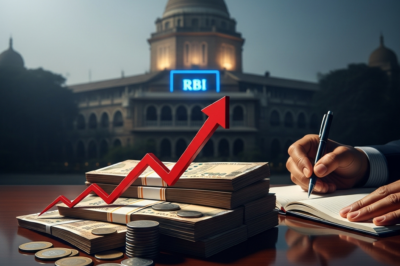
Introduction: A Sharp Turn in the Economic Narrative
In a development that has captured the attention of economists, investors, and the general public alike, India’s retail inflation, measured by the Consumer Price Index (CPI), accelerated to a notable 4.45% in July. This surge marks a significant departure from the cooling trend observed earlier in the year and has immediately ignited intense speculation regarding the Reserve Bank of India’s (RBI) next move. For months, the narrative surrounding the Indian economy had been one of cautious optimism, with inflation appearing to settle within the central bank’s comfort zone. However, the latest data from the National Statistical Office (NSO) suggests that the battle against price volatility is far from over. This 4.45% figure is not merely a statistic; it represents a tangible shift in the cost of living for millions and a complex challenge for policymakers who must balance the need for robust economic growth with the necessity of maintaining price stability. As global markets watch closely, the question on everyone’s mind is whether this spike is a transitory blip caused by seasonal disruptions or the beginning of a sustained inflationary trend that will force the RBI to abandon its pause and implement a rate hike later this year.
The Core Drivers: Why Inflation is Heating Up Again
To understand the sudden jump to 4.45%, one must look closely at the components of the CPI basket. The primary culprit behind this acceleration is undoubtedly the food and beverages segment. India has recently witnessed a dramatic spike in the prices of essential commodities, most notably vegetables like tomatoes and onions, as well as staples like pulses and cereals. Erratic monsoon patterns, characterized by heavy rainfall in some regions and prolonged dry spells in others, have severely disrupted supply chains and damaged standing crops. This ‘tomato fever’—where prices of the kitchen staple soared by triple digits in some cities—has had a disproportionate impact on the headline inflation number. Beyond food, the persistent high cost of fuel and energy continues to exert pressure on the manufacturing and logistics sectors. While global crude oil prices have seen some stabilization, the internal distribution costs within India remain high, filtering through to the prices of finished goods. Furthermore, the services sector, including healthcare and education, has seen a gradual uptick in costs as providers pass on higher operational expenses to consumers, creating a broad-based inflationary environment that is increasingly difficult to ignore.
The RBI’s Dilemma: Growth vs. Stability
The Reserve Bank of India and its Monetary Policy Committee (MPC) now find themselves at a critical crossroads. For the past few meetings, the RBI has maintained a status quo on the repo rate, which currently stands at 6.5%. This pause was intended to allow the cumulative effects of previous rate hikes to filter through the economy while supporting the post-pandemic recovery. However, with inflation now breaching the 4% median target—though still within the 2-6% tolerance band—the ‘hawkish’ members of the committee are likely to gain influence. A rate hike is a blunt instrument designed to dampen demand and cool prices, but it comes at a cost: it increases the cost of borrowing for businesses and individuals, potentially slowing down industrial investment and consumer spending. The RBI Governor, Shaktikanta Das, has repeatedly emphasized the bank’s commitment to bringing inflation down to the 4% target on a durable basis. If the August and September data continue to show elevated levels, the central bank may feel compelled to act as early as the October or December policy reviews to prevent inflationary expectations from becoming entrenched in the economy.
Global Context and the Shadow of the US Federal Reserve
India’s economic situation cannot be viewed in isolation. The global financial landscape is currently dominated by the actions of the US Federal Reserve and other major central banks, which have been aggressively raising interest rates to combat their own inflation woes. As the Fed maintains a restrictive monetary policy, it puts pressure on emerging market currencies, including the Indian Rupee. A weaker Rupee makes imports—particularly essential oil and electronics—more expensive, further fueling domestic inflation (a phenomenon known as imported inflation). Furthermore, the yield differential between Indian and US bonds affects capital flows. If the RBI fails to respond to rising domestic inflation while the US Fed remains hawkish, it could lead to capital outflows, putting further strain on the Rupee. Therefore, the RBI’s decision-making process involves a complex calculation of domestic necessities and global geopolitical and financial realities. The synchronicity of global central bank actions means that India must tread carefully to maintain its status as one of the fastest-growing major economies without letting price stability slip through its fingers.
Impact on the Common Man: From EMIs to Kitchen Budgets
For the average Indian household, the rise in inflation to 4.45% is not an abstract economic concept but a daily reality. The most immediate impact is felt in the kitchen budget. When vegetable and pulse prices rise, it forces lower and middle-income families to reallocate their spending, often cutting back on non-essential items or reducing the quality of their consumption. This reduction in disposable income can lead to a slowdown in the broader consumer goods sector. Beyond the kitchen, there is the looming threat of higher EMIs (Equated Monthly Installments). If the RBI decides to hike the repo rate, commercial banks will inevitably follow suit by raising interest rates on home, auto, and personal loans. For a middle-class family already grappling with higher grocery bills, an increase in their monthly mortgage payment can be a significant financial blow. This ‘double whammy’ of higher costs and higher borrowing rates is a major concern for social welfare and consumer sentiment, which are vital engines for India’s long-term growth trajectory.
Future Outlook: Will the Tide Turn by Year-End?
Predicting the trajectory of inflation for the remainder of the year requires looking at several moving parts. The first is the progress of the monsoon. If the latter half of the rainy season provides consistent and well-distributed rainfall, it could lead to a bumper harvest for the Kharif (summer) crops, which would naturally cool down food prices by October and November. Secondly, the government’s supply-side interventions—such as releasing buffer stocks of grains or imposing export restrictions on certain commodities—will play a crucial role in stabilizing prices in the short term. However, these are often temporary fixes. Economists will be looking for signs of ‘core inflation’ (inflation excluding food and fuel) stabilizing. If core inflation remains sticky, it suggests that the price hikes are becoming structural. Most analysts now expect the RBI to maintain a ‘withdrawal of accommodation’ stance, with a high probability of a 25-basis point rate hike in the third or fourth quarter if the CPI does not retreat toward the 4% mark soon. The resilience of the Indian economy is being tested, and the next few months will be pivotal in determining whether 2023 ends on a note of stability or with a tighter monetary squeeze.
Conclusion: A Call for Vigilance
The acceleration of India’s inflation to 4.45% in July serves as a stark reminder that the path to economic recovery is rarely linear. While India remains a bright spot in the global economy, the resurgence of price pressures necessitates a vigilant and proactive approach from both the government and the central bank. The prospect of a rate hike later this year is no longer a distant possibility but a looming reality that businesses and consumers must prepare for. Ultimately, the goal is to achieve ‘Goldilocks’ growth—an economy that is neither too hot to cause runaway inflation nor too cold to stagnate. As the Reserve Bank navigates these turbulent waters, its ability to anchor inflation expectations while fostering an environment conducive to investment will define India’s economic narrative for the coming year. Stakeholders across the spectrum must now keep a close watch on high-frequency data points, as every percentage point in the CPI will now carry immense weight in the hallowed halls of the Mint Street headquarters.






































Leave a Reply