
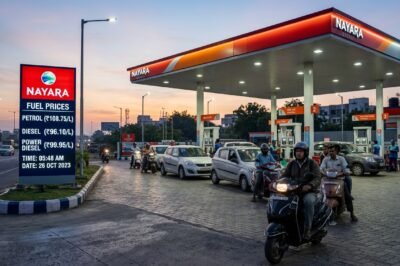
The dawn of October 3, 2026, brought a significant tremor to India’s energy landscape as Nayara Energy, the nation’s largest private-sector fuel retailer, announced a substantial hike in fuel prices. With petrol climbing by Rs 5 per liter and diesel by Rs 3 per liter, the notification has sent immediate shockwaves through the domestic market, impacting millions of consumers and thousands of logistics businesses. This move is not an isolated incident but rather a reflection of the tightening margins and the complex geopolitical pressures facing private oil marketing companies (OMCs) in India. As commuters woke up to the revised rates at Nayara pumps, the discourse quickly shifted from routine daily updates to a deeper concern regarding the cost of living and the potential for a cascading inflationary effect. The timing is particularly sensitive, coming just as the country enters a high-demand festive season, where transport and consumption typically peak. This analysis seeks to unpack the layers behind this decision, examining the global crude oil dynamics, the domestic competitive environment, and the long-term implications for the Indian economy as it navigates the volatile energy markets of the mid-2020s.
The Magnitude and Immediate Impact of Nayara’s Price Revision
Nayara Energy’s decision to hike petrol by Rs 5 and diesel by Rs 3 represents one of the steepest single-day increases seen in the private retail sector in recent history. Unlike Public Sector Undertakings (PSUs) like Indian Oil, BPCL, and HPCL, which often absorb shocks to keep prices stable under government guidance, private players like Nayara operate on leaner margins and are more sensitive to international price fluctuations. The immediate impact was felt most acutely in Tier-2 and Tier-3 cities where Nayara has a significant footprint. For a common citizen, a Rs 5 jump in petrol means a direct increase in the daily cost of commuting, while the Rs 3 hike in diesel hits the very backbone of India’s goods transport system.
Reports from various states suggest that queues at PSU-run petrol pumps lengthened almost immediately as consumers sought to avoid the higher rates at Nayara stations. This creates a supply-demand imbalance, as private retailers often fill the gaps in the distribution network that PSUs cannot always reach with the same agility. The price gap between private and state-owned pumps has now widened significantly, raising questions about the sustainability of the current dual-pricing model that exists in the Indian market. Industry experts suggest that if other private players like Reliance-bp follow suit, the pressure on the government to allow PSUs to raise prices will become nearly irresistible.
Global Crude Oil Volatility in the 2026 Context
To understand why Nayara took such a drastic step, one must look at the international oil market in October 2026. The global energy sector has been under immense strain due to a combination of production cuts from OPEC+ and regional instabilities in major oil-producing zones. As of late 2026, Brent crude has been hovering around the $95-$105 range, a level that puts immense pressure on refineries that do not have access to discounted feedstock. Nayara Energy, which operates the massive Vadinar refinery, is highly integrated into the global supply chain, and any increase in the cost of raw crude or insurance for shipping directly impacts their retail pricing strategy.
Furthermore, the strengthening of the US Dollar against the Indian Rupee in 2026 has made oil imports significantly more expensive. Since oil is traded globally in dollars, the depreciating rupee acts as a double-edged sword: not only is the oil more expensive at the source, but it also costs more in local currency to bring it to Indian shores. Nayara’s price hike is essentially a pass-through of these heightened landing costs. The company is likely attempting to protect its refining margins, which have been squeezed by the rising costs of secondary chemicals and the technological upgrades required to meet the 2026 environmental standards set by the Indian government.
Private vs. State-Owned: The Battle for Market Share
The fuel retail market in India has long been a battlefield between the government-backed giants and nimble private entities. In 2026, this divide has become even more pronounced. PSUs often operate under a ‘social mandate,’ where they are expected to keep prices stable to prevent public outcry and maintain economic stability. However, this often leads to ‘under-recoveries,’ where the government must eventually compensate these companies for their losses. Private players like Nayara do not have the luxury of state bailouts. Their pricing must reflect the reality of the market if they are to remain viable and continue their expansion plans.
This latest price hike highlights the vulnerability of private fuel retailers in a regulated or semi-regulated market. While Nayara offers premium services and technologically advanced fuel additives that promise better engine performance, the average Indian consumer remains highly price-sensitive. By raising prices so significantly, Nayara risks losing a portion of its market share to the PSUs. However, from a corporate perspective, the company may have prioritized financial health over volume, especially if the cost of sourcing crude has become prohibitive. This move could also be a signal to the Ministry of Petroleum and Natural Gas that the current pricing mechanism needs a comprehensive review to ensure a level playing field for all market participants.
Macroeconomic Implications: Inflation and the Consumer
Fuel is a universal input in the modern economy, and a hike of this magnitude inevitably leads to inflationary pressures. Diesel, in particular, is the fuel of choice for the trucks that carry vegetables, grains, and manufactured goods across the vast Indian landscape. A Rs 3 increase in diesel translates to higher freight rates, which are almost immediately passed on to the end consumer. As we move through October 2026, we can expect to see a marginal rise in the Consumer Price Index (CPI) as the costs of essential commodities reflect the new transportation reality.
The impact on the ‘Aam Aadmi’ or the common man is profound. For those using two-wheelers or small cars for their daily livelihood, such as delivery partners and ride-hailing drivers, the Rs 5 petrol hike represents a direct deduction from their take-home pay. In an era where the gig economy is a major employer, such volatility in fuel prices can lead to labor unrest or a demand for higher service fees, further fueling the inflationary cycle. Economists are already predicting that if these prices persist, the Reserve Bank of India (RBI) might have to reconsider its stance on interest rates to keep inflation within the target band.
Logistics and the Supply Chain Ripple Effect
The logistics sector is perhaps the most sensitive to diesel price movements. In 2026, India has made great strides in its National Logistics Policy, aiming to reduce the cost of moving goods from double digits to a single digit of the GDP. However, sudden hikes in fuel prices threaten to derail these efficiency gains. Transporters often operate on long-term contracts with fixed rates, and a sudden hike means they must bear the brunt of the cost until contracts can be renegotiated. This squeeze can lead to a slowdown in the movement of non-essential goods as smaller transport operators struggle to keep their fleets running.
Key Concerns for the Logistics Sector:
- Operational Margins: Small-scale truck owners operate on margins as thin as 5-8%, and a Rs 3 diesel hike can wipe this out entirely.
- Contractual Friction: Re-negotiating freight rates with manufacturers often takes weeks, leading to short-term financial losses.
- Secondary Costs: Increased fuel costs also lead to higher prices for lubricants and tires, which are petroleum-derived products.
The ripple effect extends to the manufacturing sector as well. Companies that rely on ‘just-in-time’ inventory systems are particularly vulnerable to any disruption in the logistics chain. If transporters go on strike or reduce their frequency of trips due to unviable fuel costs, the entire production line can come to a standstill, affecting India’s industrial output for the final quarter of the year.
Conclusion: Navigating a High-Cost Energy Future
The price hike by Nayara Energy on October 3, 2026, is a stark reminder of the fragile nature of energy security in an interconnected world. As India continues its journey toward becoming a global manufacturing hub, the volatility of fossil fuel prices remains a significant hurdle. This event underscores the urgent need for a more diversified energy basket. While the government has been pushing for Electric Vehicles (EVs) and Green Hydrogen, the reality of 2026 is that the vast majority of the nation still runs on petrol and diesel. The transition is ongoing, but the immediate economic health of the country is still tethered to the price at the pump.
Looking forward, the implications are clear: India must accelerate its domestic oil production and enhance its strategic petroleum reserves to mitigate such shocks. For the private sector, the challenge will be to balance profitability with consumer retention in a market that is increasingly demanding and price-conscious. For the consumer, the hike is a call to adapt, perhaps by shifting toward public transport or accelerating the adoption of alternative fuel vehicles. As we monitor the fallout of Nayara’s decision, it is evident that the energy policy of the next few years will be the single most important factor in determining the trajectory of India’s economic growth. The hike on this October morning is not just a change in numbers; it is a catalyst for a much broader conversation about sustainability, regulation, and the true cost of progress.




































Leave a Reply