
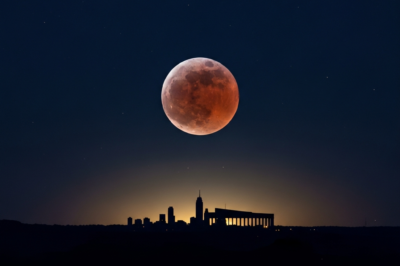
The Grand Celestial Theater: Preparing for the 2026 Total Lunar Eclipse
As we gaze toward the future of astronomical events, few occurrences capture the human imagination quite like a total lunar eclipse. On March 3, 2026, the night sky over the United States will transform into a stage for one of nature’s most breathtaking displays: a ‘Blood Moon.’ This event, widely anticipated by enthusiasts and professional astronomers alike, marks a significant moment in the current lunar cycle. For residents across the USA, the 2026 lunar eclipse represents a rare opportunity to witness the Earth’s shadow engulfing our natural satellite, turning it a deep, eerie crimson. This phenomenon is not merely a visual treat but a profound reminder of our place in the solar system, where the precise alignment of the Sun, Earth, and Moon creates a syzygy of cosmic proportions. In this deep-dive exploration, we will cover every facet of the March 2026 event, from the precise timing across different time zones to the scientific principles that dictate the Moon’s change in hue.
The Mechanics of the Shadow: Understanding the Science Behind the Eclipse
A lunar eclipse occurs only during a full moon, when the Earth is positioned exactly between the Sun and the Moon. This alignment, known as syzygy, results in the Earth casting its shadow onto the lunar surface. However, the Earth’s shadow is not a uniform darkness; it consists of two distinct parts: the penumbra and the umbra. The penumbra is the outer, lighter part of the shadow where only a portion of the Sun’s light is blocked. The umbra is the dark, central core of the shadow where the Sun is completely obscured by the Earth. During the March 3, 2026, eclipse, the Moon will pass through both regions, leading to a total lunar eclipse. The reason we see the Moon turn red rather than going completely black is due to an atmospheric effect called Rayleigh scattering. As sunlight passes through the Earth’s atmosphere, shorter wavelengths (blue) are scattered away, while longer wavelengths (red and orange) are refracted or bent toward the Moon. This is the same reason why sunrises and sunsets appear red. Effectively, the light hitting the Moon during totality is the combined light of every sunrise and sunset happening on Earth at that exact moment.
Chronology and Timing: When to Look Up Across the United States
For those planning to witness this event in the USA, timing is everything. The eclipse on March 3, 2026, will be visible in varying stages across the North American continent. Because the Earth is a sphere and rotates, the visibility and exact time of the phases will depend on your specific longitude and latitude. Generally, the event will begin in the late evening of March 2 for some western regions or the early morning hours of March 3 for eastern regions. In Eastern Standard Time (EST), the penumbral phase—where the Moon begins to dim slightly—will start around 4:12 AM. The partial eclipse, where the Moon starts entering the dark umbra, begins at 5:23 AM EST. Totality, the most sought-after phase where the Moon is completely submerged in the Earth’s shadow, is expected to start at approximately 6:43 AM EST. For those on the West Coast (PST), the event begins much earlier in the night, starting the penumbral phase at 1:12 AM and reaching totality at 3:43 AM. This timing makes the 2026 eclipse particularly accessible for night owls and early risers across the United States, providing ample time for observation and photography.
The Five Critical Phases of the March 2026 Lunar Eclipse
A total lunar eclipse is a slow-motion drama that unfolds over several hours. Understanding the five distinct phases will enhance your viewing experience. 1. **Penumbral Phase Begins:** This is the most subtle phase. The Moon enters the Earth’s outer shadow. To the naked eye, the Moon might look slightly less bright or somewhat ‘smudged’ on one side. 2. **Partial Phase Begins:** This is when the real show starts. The Moon’s edge enters the umbra, and it looks as though a bite is being taken out of the lunar disk. The shadow is dark and sharp. 3. **Totality Begins:** The moment of magic. The Moon is now entirely within the umbra. This is when the ‘Blood Moon’ effect is most prominent. The color can range from a bright copper-orange to a deep, dark brownish-red, depending on the amount of dust and clouds in Earth’s atmosphere at the time. 4. **Totality Ends:** The Moon begins to emerge from the umbra. The red hue starts to fade as the bright white light of the Sun’s direct reflection returns to one edge of the Moon. 5. **Penumbral Phase Ends:** The Moon completely leaves the Earth’s shadow, returning to its full, brilliant luster. The entire process for the 2026 event is expected to last over five hours from start to finish, with totality lasting for approximately one hour and two minutes.
Regional Visibility and Best Viewing Locations in the USA
While the eclipse is technically visible from anywhere in the USA where the Moon is above the horizon, some locations will offer a superior experience. The western half of the United States, including states like California, Oregon, Washington, and Nevada, will have an excellent view as the entire eclipse occurs well before moonset. In these regions, the Moon will be relatively high in the sky during totality, reducing the impact of light pollution and atmospheric haze near the horizon. In the Eastern United States, the timing is slightly more challenging, as the Moon will be setting in the west just as the eclipse reaches its peak. For observers in New York City or Miami, the Moon will be very low on the western horizon during totality, which can create stunning photo opportunities with city skylines or landscapes, but requires a clear, unobstructed view of the western horizon. National parks like Joshua Tree, the Grand Canyon, and Zion are expected to be hotspots for ‘astro-tourists’ due to their dark skies and dramatic geological backdrops which complement the deep red of the lunar surface.
The Danjon Scale: Predicting the Color of the 2026 Blood Moon
Astronomers use the Danjon Scale to describe the appearance and luminosity of the Moon during a total lunar eclipse. Named after André-Louis Danjon, the scale ranges from L=0 to L=4. L=0 describes a very dark eclipse where the Moon is almost invisible, often occurring after major volcanic eruptions that fill the atmosphere with ash. L=1 is a dark eclipse with gray or brownish hues. L=2 is a deep red or rust-colored eclipse with a dark central shadow. L=3 represents a brick-red eclipse, usually with a bright or yellow rim. L=4 is a very bright copper-red or orange eclipse. The appearance of the 2026 eclipse will depend heavily on the state of Earth’s atmosphere at that time. If there have been recent volcanic activities, we might see a darker L=1 or L=2 eclipse. If the atmosphere is clear, we could be treated to a brilliant L=4 orange glow. This unpredictability is part of what makes every total lunar eclipse a unique scientific and aesthetic event.
Photography Tips: How to Capture the Blood Moon
Capturing the 2026 lunar eclipse requires more than just a smartphone. Because the Moon is quite small in the frame and the light levels drop significantly during totality, specialized techniques are needed. First, a tripod is essential; the long exposure times required during totality (often several seconds) make handheld photography impossible. A telephoto lens with a focal length of at least 300mm is recommended to fill the frame with lunar detail. During the partial phases, the Moon is very bright, so you will need a fast shutter speed. However, as totality approaches, you must increase your ISO and open your aperture to account for the dramatic loss of light. It is also vital to turn off your flash and use a remote shutter release or a self-timer to prevent camera shake. For those using digital cameras, shooting in RAW format is crucial, as it allows for better color correction and detail recovery during post-processing, ensuring that the subtle gradients of the red shadow are preserved.
Cultural Significance and the Future of Lunar Observations
Beyond the science, the 2026 lunar eclipse holds cultural weight. Historically, eclipses were seen as omens, but today they serve as communal events that bring people together. Platforms like IndianEagle emphasize the importance of these global events for travelers and the diaspora, highlighting how celestial milestones can dictate travel plans and cultural gatherings. Following the March 2026 event, the next major lunar eclipse for the USA won’t occur for some time, making this a ‘must-see’ event. Furthermore, 2026 is a bumper year for astronomy, as it also features a total solar eclipse in August (visible in parts of Europe and the Arctic). The 2026 lunar eclipse serves as a prelude to a decade of increased lunar exploration, with NASA’s Artemis program aiming to return humans to the lunar surface. Observing the Moon during an eclipse reminds us of the Moon’s rugged geography—the craters, Maria, and highlands—that will soon be the site of human outposts. As we look toward March 3, 2026, we are not just watching a shadow; we are witnessing the ongoing story of our relationship with our closest celestial neighbor.





































Leave a Reply