
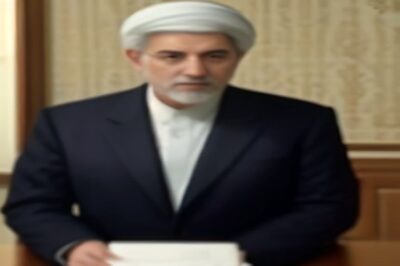
In a move that has sent shockwaves through the global geopolitical landscape, Iranian President Masoud Pezeshkian has officially signaled a desire for a fundamental shift in the long-standing antagonistic relationship between Tehran and Washington. Speaking ahead of the United Nations General Assembly, Pezeshkian articulated a vision that moves beyond the decade-long ‘Maximum Pressure’ campaign and the rhetoric of ‘Death to America,’ suggesting that Iran is ready to ‘lay down its arms’ if the United States and its allies reciprocate. However, this overture comes with a significant caveat: Pezeshkian insists that Iran is approaching this potential dialogue from a ‘position of power,’ rather than one of desperation or submission. This diplomatic gambit marks one of the most significant shifts in Iranian foreign policy discourse since the signing of the 2015 Joint Comprehensive Plan of Action (JCPOA). The President, often characterized as a reformist or moderate within the rigid framework of the Islamic Republic, is testing the waters of international diplomacy at a time when the Middle East is on the brink of wider conflict and the United States is embroiled in a high-stakes presidential election cycle. This article explores the nuances of Pezeshkian’s statement, the internal dynamics of the Iranian leadership, the economic pressures driving this shift, and the potential for a renewed diplomatic pathway between two of the world’s most enduring adversaries.
The Architect of a New Iranian Diplomacy: Who is Masoud Pezeshkian?
To understand the weight of these statements, one must first understand the man behind them. Masoud Pezeshkian, a heart surgeon by training and a former health minister, ascended to the presidency following the unexpected death of Ebrahim Raisi in a helicopter crash. Unlike his predecessor, who was a staunch hardliner and close ally of the security establishment, Pezeshkian campaigned on a platform of ‘constructive engagement’ with the West and domestic social reform. His victory was seen as a tentative mandate from a population exhausted by economic sanctions and social restrictions. However, in the complex hierarchy of Iran, the President is not the ultimate authority; that role belongs to the Supreme Leader, Ayatollah Ali Khamenei. The fact that Pezeshkian is making these statements suggests at least a tactical permission from the Supreme Leader to explore the possibility of sanctions relief. Pezeshkian’s cabinet, which includes seasoned diplomats like Foreign Minister Abbas Araghchi—a key negotiator of the original nuclear deal—further reinforces the idea that Tehran is assembling a team capable of high-level international bargaining. This ‘reformist’ facade is being used strategically to present a more palatable face to the international community while maintaining the core tenets of the Islamic Revolution.
The ‘Position of Power’ Narrative: Military Might and Regional Influence
Pezeshkian’s insistence that Iran is in a ‘position of power’ is a critical component of his rhetoric. Domestically, this protects him from accusations of weakness or betrayal by the hardline Islamic Revolutionary Guard Corps (IRGC). Internationally, it serves as a reminder of Iran’s significant regional leverage. Over the last decade, Iran has dramatically expanded its missile and drone capabilities, as evidenced by its direct strikes on Israeli territory in April 2024 and the widespread use of Iranian-made drones in global conflicts. Furthermore, Iran’s ‘Axis of Resistance’—comprising Hezbollah in Lebanon, Hamas in Gaza, the Houthis in Yemen, and various militias in Iraq and Syria—remains a potent force capable of disrupting global trade and regional stability. By framing the call for peace as a choice made by a strong nation, Pezeshkian is attempting to avoid the ‘capitulation’ narrative that hardliners use to derail diplomacy. He argues that Iran has survived the worst of the ‘Maximum Pressure’ era and has emerged with its regional influence intact, if not expanded, thereby making now the ideal time for the US to negotiate a sustainable peace rather than continuing a cycle of fruitless escalation.
Economic Desperation and the Quest for Sanctions Relief
While the ‘position of power’ rhetoric is used for political framing, the underlying reality is one of severe economic strain. The Iranian economy has been crippled by successive rounds of US-led sanctions, leading to record-high inflation—often hovering around 40%—and a significant devaluation of the rial. The standard of living for the average Iranian has plummeted, leading to widespread domestic discontent and occasional outbursts of civil unrest. Pezeshkian understands that his presidency will be judged primarily on his ability to provide economic relief. Rejoining the global financial system and increasing oil exports are essential for the survival of the current regime’s legitimacy. The Iranian leadership is acutely aware that the ‘Looking to the East’ strategy—relying heavily on trade with China and Russia—has provided a lifeline but has not delivered the kind of prosperity needed to stabilize the domestic front. Therefore, the call for an end to the ‘war’ with the US is, at its heart, a plea for the removal of the economic barriers that have isolated Iran from the global market for decades.
The JCPOA Legacy and the Nuclear Threshold
Central to any discussion of peace between the US and Iran is the nuclear issue. Since the Trump administration’s withdrawal from the JCPOA in 2018, Iran has steadily advanced its nuclear program, enriching uranium to levels far beyond the limits set by the original agreement. International observers warn that Iran is now a ‘threshold state,’ meaning it possesses the technical capability to produce a nuclear weapon in a very short timeframe if it chooses to do so. Pezeshkian’s administration has expressed a willingness to return to the negotiating table to restore the nuclear deal, but they demand guarantees that a future US administration will not simply tear up the agreement again. The ‘position of power’ also refers to this nuclear advancement; Tehran believes that its increased enrichment levels provide it with more bargaining chips than it had in 2015. However, the window for a diplomatic solution is closing as Western powers become increasingly concerned about the lack of oversight by the International Atomic Energy Agency (IAEA) and the potential for a nuclear arms race in the Middle East.
Regional Flashpoints: Gaza, Israel, and the Shadow of War
The timing of Pezeshkian’s overture is particularly notable given the ongoing conflict in Gaza and the heightened tensions between Israel and Hezbollah. Iran’s support for these groups is a major point of contention for the United States and its regional allies. Pezeshkian has tried to thread the needle by expressing support for the Palestinian cause while simultaneously calling for regional de-escalation. He has suggested that Iran does not seek to broaden the war and has criticized Israel for what he describes as attempts to ‘provoke’ a larger conflict that would draw in the United States. This diplomatic offensive is partly aimed at shifting the blame for regional instability onto Israel while positioning Iran as a responsible actor willing to talk. However, Washington remains skeptical, pointing to the continuous flow of Iranian weapons to proxies as proof that Tehran’s actions do not match its peaceful rhetoric. For a real breakthrough to occur, there would need to be a grand bargain that addresses not just the nuclear program, but also Iran’s regional military activities—a tall order for any diplomatic mission.
The US Election and the Future Outlook
Pezeshkian’s comments are also calibrated for the American political audience. With the US presidential election approaching, Tehran is navigating a landscape of extreme uncertainty. A potential return of Donald Trump could mean a return to the ‘Maximum Pressure’ campaign, while a continuation of the Democratic administration might offer a more predictable, albeit slow, diplomatic path. By offering peace now, Pezeshkian is attempting to set the agenda before the next US president takes office. He is essentially offering a ‘grand bargain’ to the current administration, hoping to secure some form of sanctions relief or a de-escalation framework that could survive a change in leadership. The international community remains divided on whether this is a genuine shift in policy or a sophisticated stalling tactic. The coming months at the UN and beyond will be crucial in determining if Pezeshkian’s ‘position of power’ can truly translate into a position of peace, or if the decades of mistrust between Tehran and Washington are too deep to bridge. Ultimately, the success of this initiative depends on whether the Iranian leadership is willing to make concrete concessions on its regional and nuclear policies in exchange for the economic integration it so desperately needs.
































Leave a Reply