
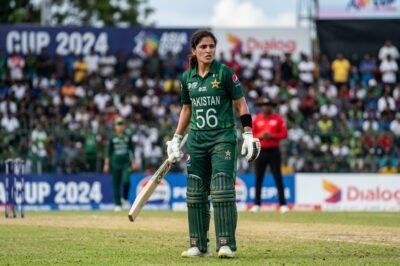
The fierce rivalry between India and Pakistan in the world of cricket has always been more than just a game; it is a spectacle of high emotions, national pride, and intense athletic competition. During the recent Women’s Asia Cup, this intensity reached a boiling point during the group stage clash between the two neighboring giants. The match, which was already under the global spotlight, took a controversial turn when Pakistan’s captain, Fatima Sana, was officially sanctioned by the International Cricket Council (ICC) for a breach of the player code of conduct. The incident centered around a directed gesture toward India’s prolific opening batter, Shafali Verma, following her dismissal. In a sport that prides itself on being a ‘gentleman’s game,’ and by extension a ‘gentlewoman’s game,’ such moments of friction serve as a stark reminder of the pressures that come with leadership and the heavy burden of the India-Pakistan legacy. This fine is not merely a financial penalty but a disciplinary marker that highlights the ICC’s commitment to maintaining a specific standard of professional behavior on the field. As Fatima Sana leads a transitioning Pakistan side, this event serves as a pivotal learning moment for the young captain and the team at large. ## The Anatomy of the Incident: What Really Happened on the Field? The incident occurred during a critical phase of the India-Pakistan encounter in the Women’s Asia Cup. Shafali Verma, known for her aggressive batting style, was providing India with a solid start, threatening to take the game away from Pakistan. When Fatima Sana finally managed to secure the wicket or witnessed the dismissal of Verma, the release of tension manifested in a ‘send-off’ gesture. According to the match officials, the gesture was deemed provocative and outside the spirit of the game. Under the ICC Code of Conduct, specifically Article 2.5, players are prohibited from using language, actions, or gestures which disparage or which could provoke an aggressive reaction from a batter upon their dismissal during an International Match. The match referees, after reviewing the footage and the reports from the on-field umpires, concluded that Sana’s actions met the criteria for a Level 1 breach. Consequently, she was fined a percentage of her match fee and received a demerit point on her disciplinary record. This specific type of infraction is common in high-stakes matches where the adrenaline is flowing, but for a captain, the scrutiny is significantly higher as they are expected to set the behavioral benchmark for their teammates. ## ICC Disciplinary Actions and the Code of Conduct Explained. The International Cricket Council maintains a strict hierarchy of disciplinary actions to ensure that the game is played within the ‘Spirit of Cricket.’ A Level 1 breach, like the one Fatima Sana was charged with, typically carries a minimum penalty of an official reprimand and a maximum penalty of 50 percent of a player’s match fee, along with one or two demerit points. When a player reaches four or more demerit points within a 24-month period, those points are converted into suspension points, leading to a ban from international matches. In Sana’s case, the fine serves as a warning. The ICC’s reasoning for such strictness is to prevent on-field altercations from escalating into larger conflicts that could tarnish the image of the sport. In women’s cricket, which is seeing a massive surge in global viewership and commercial investment, the ICC is particularly keen on ensuring that the athletes are viewed as professional role models. The sanctioning of a captain sends a clear message: no player, regardless of their status or the importance of the match, is above the rules. ## The Weight of Leadership: Fatima Sana’s Role as Pakistan’s Captain. Fatima Sana is widely regarded as one of the most promising talents in Pakistan cricket. Taking over the captaincy at a young age, she carries the hopes of a nation that is desperate to bridge the gap between themselves and top-tier teams like India and Australia. Her leadership style is characterized by her own performance; she is a bowling all-rounder who leads from the front with her energy and wicket-taking ability. However, leadership in international cricket involves more than just tactical decisions and personal stats; it requires emotional intelligence and the ability to remain composed under extreme provocation. The incident with Shafali Verma highlights the ‘heat-of-the-moment’ challenges that young captains face. For Sana, this fine is a rite of passage. While the aggression is part of her competitive DNA, channeling it into her game rather than toward the opposition is the next step in her evolution as a world-class skipper. The Pakistan Cricket Board (PCB) has historically stood by its players in such instances but also emphasizes the need for discipline to avoid unnecessary match bans that could hurt the team’s chances in major tournaments like the Asia Cup or the T20 World Cup. ## India vs. Pakistan: A Rivalry That Transcends the Scoreboard. Every time India and Pakistan meet on the cricket field, the atmosphere is electric. Even in the women’s game, where the gap in resources and domestic structures has traditionally favored India, the matches are contested with a ferocity that is unmatched in other rivalries. Shafali Verma herself is a symbol of the new, fearless Indian side that takes the fight to the opposition. When a bowler like Fatima Sana gets the better of a batter like Verma, the emotional outburst is often a reflection of the hours of preparation and the weight of public expectation. The history of this rivalry is dotted with such instances of gamesmanship. From the Javed Miandad-Kiran More jump to the more recent exchanges between male stars, the ‘send-off’ has been a recurring theme. By penalizing Sana, the ICC is attempting to ensure that these historical tensions do not lead to a breakdown in the professional relationship between the two sets of players, who often share mutual respect off the field. This incident adds another chapter to the storied history of India-Pakistan cricket, serving as a talking point for fans and analysts alike about where the line between passion and provocation should be drawn. ## The Impact on Women’s Cricket Global Standing and Professionalism. The Women’s Asia Cup is a vital platform for the growth of the game in the region. With increased broadcasting deals and higher attendance, the visibility of women cricketers has never been higher. Incidents like the fine of Fatima Sana draw significant media attention, which is a double-edged sword. On one hand, it shows the competitive nature of the women’s game, proving that it is just as intense and high-stakes as the men’s game. On the other hand, it puts a spotlight on the need for continued professional development for players. As the women’s game moves toward a more commercialized and professional era, the players are under the same microscopic scrutiny as their male counterparts. This incident will likely be used in training modules for domestic players in Pakistan to illustrate the consequences of losing one’s cool. Furthermore, it highlights the role of the ICC in officiating not just the technical aspects of the game but also the behavioral aspects, ensuring that the growth of the sport is accompanied by a growth in the standard of conduct. ## Future Implications: Learning Curves for Young Captains in International Cricket. Looking ahead, the fine imposed on Fatima Sana will likely have a sobering effect on her future conduct and that of her team. For a captain, a demerit point is a shadow that follows them into subsequent matches, forcing them to be more cautious in their celebrations and interactions with the opposition. This could lead to a more tactical and less emotional approach to captaincy, which might actually benefit Pakistan’s game plan in the long run. For the ICC, the consistency in applying these rules is key. As long as the governing body is seen as impartial and firm, the integrity of the game remains intact. For the fans, such incidents add to the drama and narrative of international cricket, making the next encounter between Sana and Verma even more anticipated. The ultimate takeaway from this incident is that while the fire of competition is necessary for the growth of cricket, it must be contained within the boundaries of mutual respect. Fatima Sana’s journey as a leader is just beginning, and this moment of controversy will likely be remembered as the catalyst that helped her refine her leadership style on the global stage. As the Asia Cup progresses, all eyes will be on how she balances her natural aggression with the decorum required of an international captain.
Pakistan Captain Fatima Sana Fined Over Shafali Verma Gesture in Asia Cup: A Comprehensive Analysis of Sportsmanship and Competition
Posted by
Stories





-

Hunkkaar Teaser Analysis: Aneet Padda’s Gritty Transformation and the Evolving Landscape of Indian Thrillers
-

Mithila Palkar: The Relatable Queen of Indian Web Series and Her Meteoric Rise
-

Wamiqa Gabbi: The Meteoric Rise of Indian Web Series’ Most Versatile Leading Lady
-

Triptii Dimri Biography: The Evolution of India’s Newest Cinematic Sensation and Web Series Star
-

Wamiqa Gabbi: The Rise of India’s New Digital Icon and the Future of OTT Stardom
-

Mithila Palkar: The Unstoppable Evolution of India’s Digital Darling and Her Journey to the Silver Screen
-

Mithila Palkar: The Comprehensive Journey of India’s Web Series Sensation and Digital Pioneer
-

Mithila Palkar: The Relatable Queen of Indian Web Series and Her Inspiring Journey to Stardom
-

Sobhita Dhulipala Biography: The Meteoric Rise of India’s Most Versatile Web Series Star
-

Mithila Palkar: The Unstoppable Journey of India’s Digital Darling and Web Series Queen
-

Triptii Dimri: The Complete Biography of India’s Newest Cinematic Sensation and Web Series Icon
-

Wamiqa Gabbi: The Ethereal Rise of India’s Most Versatile Web Series Star
-

Sobhita Dhulipala: The Unstoppable Rise of India’s Most Versatile Web Series Icon
-

Wamiqa Gabbi: The Meteoric Rise of the New Queen of Indian Web Series and Her Unstoppable Journey to Stardom
-

Triptii Dimri: The Meteoric Rise of India’s New Cinema Sweetheart and Web Series Icon
-

Wamiqa Gabbi: The Versatile Queen of Indian OTT and Her Phenomenal Rise to Stardom
-

Tripti Dimri Biography: The Rise of India’s New National Crush and Her Journey from Laila Majnu to OTT Stardom
-

Wamiqa Gabbi Biography: The Meteoric Rise of India’s Newest OTT Sensation and Versatile Powerhouse
-

Wamiqa Gabbi Biography: The Meteoric Rise of the Digital Queen of Indian Web Series
-

The Rise of Wamiqa Gabbi: A Deep Dive into the Journey of India’s Most Versatile OTT Sensation
-

The Meteoric Rise of Triptii Dimri: Biography, Acting Prowess, and the Journey of India’s Newest Cinema Sensation

Launching Soon: The Future of News with Our E-Newspaper
In the ever-evolving landscape of media and technology, we are thrilled to announce the upcoming launch of our innovative e-newspaper, set to redefine the way news is consumed in the digital age. Embracing the convenience and accessibility that the digital world offers, our e-newspaper aims to deliver real-time news updates, insightful articles, and interactive features directly to your devices. With a commitment to journalistic integrity and a passion for storytelling, we are dedicated to keeping you informed, engaged, and connected, no matter where you are. Stay tuned for the launch of our e-newspaper, where the future of news awaits at your fingertips.
Recent News
- RBI to transfer record ₹2.11 lakh crore surplus to Indian government for FY24

- UK Prime Minister Rishi Sunak Calls for Surprise General Election on July 4: A Comprehensive Strategic Analysis

- Four Suspected ISIS Terrorists of Sri Lankan Nationality Arrested at Ahmedabad Airport: A Deep Dive into Regional Security Threats
- Nvidia Shares Skyrocket as Quarterly Revenue Triples Amid Insatiable Global Demand for AI Infrastructure

- Calcutta High Court Strikes Down OBC Status for 77 Communities in West Bengal: A Comprehensive Legal and Political Analysis

- Ireland, Spain and Norway announce formal recognition of Palestinian state

Politics
- UK Prime Minister Rishi Sunak Calls for Surprise General Election on July 4: A Comprehensive Strategic Analysis
- Calcutta High Court Strikes Down OBC Status for 77 Communities in West Bengal: A Comprehensive Legal and Political Analysis
- Ireland, Spain and Norway announce formal recognition of Palestinian state
- Calcutta High Court Strikes Down OBC Status of Several Classes in West Bengal: A Comprehensive Legal and Political Analysis

- Ireland, Norway, and Spain formally announce recognition of Palestinian statehood

- UK Prime Minister Rishi Sunak Calls for Snap General Election on July 4: A Strategic and High-Stakes Political Gamble

Categories
- Art & Culture 106
- Auto 85
- Beauty 15
- Blog 307
- Books 7
- Business 376
- Celebrities 217
- Crime Files 139
- Democracy 308
- Education 84
- Entertainment 154
- Environment 133
- epaper 1
- Fashion 37
- Food 59
- Gadgets 89
- Guide 150
- Handicrafts 14
- Health 281
- Healthy Living 108
- History 5
- incidents 172
- Lifestyle 41
- Music 7
- Photography 15
- Politics 469
- Science & Technology 160
- Sports 283
- Tech 142
- Television 4
- Travel 68
- Travel & Tourism 30
- Trends 57
- Weather 9
- Web Series 97
- Workout 4
- World 665
Leave a Reply