
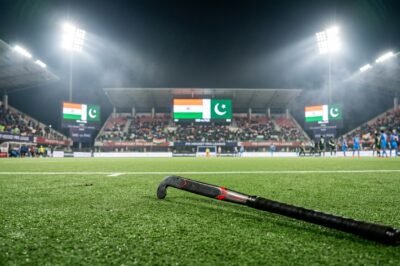
The geopolitical landscape of South Asian sports has once again been thrust into the limelight following the Pakistan Hockey Federation’s (PHF) formal request to the Asian Hockey Federation (AHF) to relocate the upcoming Asian Champions Trophy from India to a neutral venue. This development marks a significant escalation in the ongoing tension between the two neighboring nations, where the hockey field is rarely just a patch of synthetic turf but a theater of intense national pride and complex diplomatic maneuvering. By citing the inability to travel to India under current circumstances, Pakistan is not merely making a logistical request; it is setting a precedent that could reverberate across multiple sporting disciplines, including the highly anticipated Champions Trophy in cricket scheduled for 2025. This bold move challenges the status quo of Asian hockey governance and places the AHF in a precarious position, forced to balance the commercial interests of hosting a tournament in India against the inclusivity and participation of one of the sport’s most storied protagonists.
The PHF Formal Request: Analyzing the Strategic Pivot
In a letter that has sent ripples through the international hockey community, the Pakistan Hockey Federation has articulated its concerns regarding the safety and feasibility of sending its national squad to India. The primary argument hinges on the lack of diplomatic clarity and the historical precedent of visa delays and security threats that have often plagued cross-border sporting events. The PHF leadership has emphasized that while they are committed to participating in the Asian Champions Trophy, the current political climate makes a neutral venue the only viable solution to ensure the fair and safe participation of all competing nations. This strategic pivot mirrors the ‘Hybrid Model’ successfully lobbied for by the Pakistan Cricket Board (PCB) during the recent Asia Cup, suggesting a coordinated effort across Pakistan’s sporting bodies to avoid travel to India while maintaining their presence in international competitions.
Furthermore, the PHF’s request is not just about security; it is about status. By demanding a neutral venue, Pakistan is asserting its right to play on level ground, free from the perceived home-field advantages—both psychological and physical—that India would enjoy as a host. The request also serves as a litmus test for the Asian Hockey Federation’s commitment to neutrality. If the AHF yields to Pakistan’s demands, it could set a massive precedent for future tournaments, potentially diminishing India’s power as a primary host in the region. Conversely, if the request is denied, it sets the stage for a potential boycott, which would significantly dilute the quality and commercial appeal of the tournament, given the historical significance of the India-Pakistan rivalry.
Historical Context: A Legacy of Sporting Boycotts and Diplomatic Standoffs
The history of India-Pakistan hockey is a storied one, filled with legendary matches and iconic players. However, this history is also deeply scarred by political interventions. Since 2008, bilateral sporting ties have been largely suspended, with the two nations only meeting in multi-nation tournaments hosted outside of their respective borders. The Asian Champions Trophy in India was seen as a potential bridge-building exercise, but the PHF’s latest move indicates that the bridge remains incomplete. Historically, Pakistan has skipped major events in India citing security concerns, and India has reciprocated by refusing to travel to Pakistan, as seen in the recent tug-of-war over the Cricket Asia Cup and the upcoming Champions Trophy.
To understand the current impasse, one must look at the events of the last decade. Every time a sporting rapprochement seemed likely, a political or security event would occur, leading to a freeze in relations. For hockey, a sport that is struggling for global visibility and financial stability compared to cricket, these boycotts are particularly damaging. The loss of an India-Pakistan match in a major tournament translates to millions of lost viewers and significant hits to sponsorship revenue. By asking for a neutral venue, Pakistan is attempting to decouple the sport from the specific geography of the host nation, arguing that the health of Asian hockey depends on the participation of all its major powers, regardless of where they are required to play.
The ‘Neutral Venue’ Precedent: Learning from Cricket’s Playbook
The concept of a neutral venue is not new to South Asian sports, but its application in hockey is now being aggressively pursued following the precedent set in cricket. When the PCB successfully forced the Asian Cricket Council to adopt a hybrid model for the Asia Cup—where India played their matches in Sri Lanka while Pakistan hosted a portion of the tournament—it provided a blueprint for other sports. The PHF is clearly taking a leaf out of the PCB’s book, recognizing that if they can prove a neutral venue is logistically possible and commercially viable, they can protect their athletes from the pressures of traveling to India while still competing for the title.
However, hockey operates on a much tighter budget than cricket. Organizing a tournament in a neutral venue like Oman, the UAE, or Malaysia involves significant overhead costs that the AHF might not be prepared to bear. India, as a powerhouse of hockey sponsorship and fan engagement, provides a lucrative backdrop that neutral venues struggle to replicate. The PHF’s demand, therefore, forces a confrontation between the financial realities of the sport and the political realities of the member nations. The success of this demand will depend largely on whether other member nations, such as Malaysia, Japan, and South Korea, support the idea of a neutral venue or prefer the stability and infrastructure of an Indian-hosted event.
Security Concerns and the Narrative of Risk
The official stance from the PHF often centers on the ‘security of the players.’ While India has successfully hosted numerous international events, including the Hockey World Cup and the G20 summit, Pakistan continues to voice concerns regarding the specific targeting of their athletes by extremist elements. This narrative of risk is a potent tool in international sports diplomacy. By framing the issue as one of ‘athlete safety,’ the PHF can appeal to the International Hockey Federation (FIH) and the AHF on humanitarian and ethical grounds, making it difficult for the governing bodies to simply dismiss the request as political posturing.
Conversely, Hockey India and the Indian government have consistently maintained that all visiting athletes are provided with state-of-the-art security and that Pakistan’s concerns are unfounded. The debate over security often devolves into a ‘he-said, she-said’ scenario where objective data is ignored in favor of national narratives. If the AHF conducts an independent security assessment and finds India to be a safe host, the PHF will be left with a difficult choice: attend under protest or face sanctions for a boycott. This tension highlights the lack of an independent, non-political arbitration mechanism in Asian sports to handle such disputes before they escalate into full-blown crises.
Impact on Asian Hockey Governance and the AHF’s Dilemma
The Asian Hockey Federation finds itself in a classic ‘catch-22.’ On one hand, India is the commercial engine of Asian hockey. Its stadiums are modern, its broadcast deals are substantial, and its government is willing to invest heavily in the sport’s infrastructure. Alienating Hockey India by moving the tournament could have long-term financial consequences for the AHF. On the other hand, a tournament without Pakistan loses its ‘El Clasico’ moment—the most-watched match of the event—and risks being labeled as a regional tournament rather than a true continental championship. The AHF must now navigate these treacherous waters, attempting to find a compromise that satisfies both giants.
The dilemma also extends to the FIH, the global governing body. As hockey looks to expand its footprint and maintain its Olympic status, the instability in one of its most traditional and passionate regions is a cause for concern. The PHF’s request puts pressure on the AHF to demonstrate strong leadership. Will they uphold the hosting rights of a member nation, or will they adapt the tournament format to ensure the participation of all teams? The decision made regarding the Asian Champions Trophy will likely serve as a template for how similar disputes are handled in the future, possibly leading to a more formalized ‘neutral venue’ policy for all high-risk matches in the region.
Future Implications: A Precursor to the 2025 Champions Trophy?
The timing of the PHF’s request is particularly strategic, coming just as discussions regarding the 2025 ICC Champions Trophy are heating up. In that tournament, Pakistan is the designated host, and India has already hinted at a refusal to travel. By demanding a neutral venue for the hockey tournament in India now, Pakistan is creating a ‘tit-for-tat’ diplomatic environment. If Pakistan is forced to play in India for hockey, they lose leverage in the cricket negotiations. If they successfully move the hockey tournament, they can argue that the same logic should apply to cricket, or conversely, use it as a bargaining chip to force India to travel to Pakistan in 2025.
Ultimately, the resolution of this conflict will define the trajectory of Indo-Pak sporting relations for the next decade. If a compromise is reached, such as moving only Pakistan’s matches to a neutral venue (a complex logistical feat in a tournament format), it could pave the way for a more flexible, albeit fragmented, era of Asian sports. If the standoff leads to a boycott, it will further entrench the walls between the two nations, depriving fans of the world’s most intense sporting rivalry and hindering the growth of hockey in a region where it was once the undisputed king. The ball is now in the AHF’s court, and the world is watching to see how they play it.



































Leave a Reply