
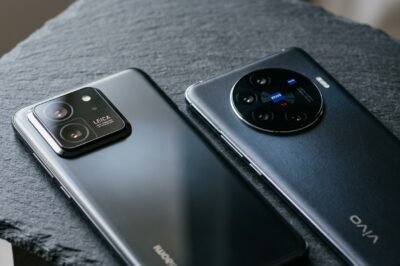
The smartphone landscape has undergone a seismic shift during Week 39, a period that will likely be remembered as the most influential week for mobile technology in the latter half of the year. With the simultaneous official unveiling of the Xiaomi 18 Pro, Xiaomi 18 Pro Max, and the highly anticipated vivo X500 series, including its own Pro and Pro Max variants, the industry has reached a new pinnacle of engineering and consumer expectation. These launches are not merely incremental updates; they represent a fundamental realignment of how flagship devices are positioned against legacy leaders like Apple and Samsung. As we peel back the layers of these announcements, it becomes clear that the focus has shifted from raw specifications to a nuanced harmony between bespoke silicon, sophisticated imaging algorithms, and a deep integration of artificial intelligence. The competition between Xiaomi and vivo has reached a fever pitch, resulting in a technological arms race that benefits the consumer through unprecedented innovation. In this comprehensive review, we examine the intricacies of these new releases and what they signal for the future of the global smartphone market.
Xiaomi 18 Pro and Pro Max: Redefining the Ultra-Premium Segment
Xiaomi has once again pushed the boundaries of what is possible within the flagship Android ecosystem with the introduction of the Xiaomi 18 Pro and the flagship-defining 18 Pro Max. These devices serve as the first real-world implementation of the next generation of Qualcomm’s Snapdragon architecture, paired with Xiaomi’s proprietary HyperOS enhancements. The 18 Pro Max, in particular, stands out as a titan of industrial design, featuring an ultra-slim chassis that houses a revolutionary silicon-carbon anode battery. This technology allows for a significantly higher energy density than traditional lithium-ion packs, enabling the Pro Max to maintain a sleek profile while offering nearly two days of heavy usage on a single charge. The display technology has also seen a massive leap, utilizing the latest generation of LTPO panels that can throttle from a buttery smooth 120Hz down to a static 0.5Hz, drastically reducing power consumption during passive tasks.
Furthermore, the partnership with Leica continues to bear fruit in the Xiaomi 18 series. The Xiaomi 18 Pro Max features a triple-sensor array where every single lens is a high-resolution powerhouse. The primary sensor is a custom-developed one-inch-type monster that captures light with such efficiency that traditional night mode processing is becoming almost redundant. Xiaomi has focused heavily on the color science this year, introducing ‘Leica Authentic 2.0,’ which moves away from over-sharpening and toward a more natural, filmic look. The integration of a new 10-bit color pipeline ensures that images captured on these devices retain incredible dynamic range, even in the most challenging backlit scenarios. The Pro Max also introduces an improved periscope telephoto lens with a floating element design, allowing for macro photography from a distance, a feat that sets it apart from almost every other competitor currently on the market.
The vivo X500 Series: A Masterclass in Mobile Photography
Not to be outdone, vivo has launched its X500 series, including the X500, X500 Pro, and X500 Pro Max, focusing squarely on its reputation as the king of mobile imaging. The vivo X500 Pro Max is a statement piece, featuring the new BlueImage imaging brand and the V4 imaging chip. This dedicated silicon works in tandem with the primary processor to handle complex computational photography tasks without draining the main battery. The vivo X500 series continues its deep collaboration with ZEISS, featuring the T* coating on all lenses to minimize ghosting and flare. The primary sensor on the Pro Max is a technical marvel, utilizing a dual-layer transistor pixel technology that effectively doubles the light sensitivity compared to previous generations. This allows for stunning low-light performance that rivals dedicated mirrorless cameras in specific use cases.
The design philosophy of the X500 series is equally impressive, leaning into a more artistic aesthetic. The ‘Cloud Ring’ camera module has been refined to look more like a piece of high-end jewelry than a tech component. Internally, vivo has opted for a dual-chip strategy, utilizing both the flagship Snapdragon and MediaTek Dimensity chipsets across different models within the range to optimize performance for different global markets. The X500 Pro, specifically, has been praised in early reviews for its exceptional thermal management. Using a massive vapor chamber that covers nearly 70% of the internal components, the device can maintain peak performance during sustained gaming sessions or high-resolution 8K video recording without thermal throttling, a common pain point for many modern flagship devices.
Comparative Analysis: Processing Power and Thermal Management
When comparing the Xiaomi 18 Pro Max and the vivo X500 Pro Max, the battle of the chipsets takes center stage. While both brands have moved toward 3nm fabrication processes, their approaches to system-on-a-chip (SoC) optimization vary significantly. Xiaomi’s implementation of HyperOS is designed to work at the kernel level with the hardware, prioritizing task scheduling to ensure that the most demanding applications receive immediate resources. This results in an incredibly responsive UI that feels instantaneous. vivo, on the other hand, uses its ‘BlueLM’ AI engine to predict user behavior, pre-loading frequently used apps into the RAM to minimize startup times. Both strategies are effective, but they offer slightly different user experiences; Xiaomi feels raw and powerful, while vivo feels fluid and intelligent.
Thermal management has become the secret battlefield of 2024 flagships. As chipsets become more powerful, the heat they generate requires advanced cooling solutions. Xiaomi has introduced a ‘Loop LiquidCool’ technology in the 18 Pro Max, which uses a unidirectional circulation system to move heat away from the CPU more efficiently than traditional heat pipes. vivo has countered with a multi-layered graphite sheet and a high-thermal conductivity gel. In stress tests, both devices show remarkable stability, but the Xiaomi 18 Pro Max tends to maintain a slightly higher average clock speed over an hour of sustained load. However, the vivo X500 Pro Max stays cooler to the touch, which might be preferable for users who do not use a protective case.
Software Ecosystems: HyperOS vs. OriginOS
The software experience remains a deciding factor for many flagship buyers. Xiaomi’s HyperOS has matured into a global-ready platform that emphasizes cross-device connectivity. With the 18 series, Xiaomi has introduced ‘HyperConnect,’ allowing users to seamlessly transition tasks between their phones, tablets, and even Xiaomi’s electric vehicles. The interface is highly customizable, with a new design language that utilizes glassmorphism and real-time physics-based animations. The focus here is on creating a cohesive ecosystem where the phone acts as the central hub for a smart lifestyle. The AI integration in HyperOS also includes real-time translation and a sophisticated generative AI tool for image editing that can remove complex objects from backgrounds with surprising accuracy.
In contrast, vivo’s OriginOS (or Funtouch OS in international markets) focuses on the philosophy of ‘atomic design.’ The UI is built around modular widgets that provide a high level of information density without feeling cluttered. vivo has integrated ‘Blue Heart’ AI, which is more of a personal assistant than a simple set of tools. It can summarize long articles, draft emails based on a few bullet points, and even organize your photo gallery based on aesthetic quality. The level of polish in vivo’s software has improved dramatically, with a focus on smooth transitions and a minimalist aesthetic that appeals to a premium audience. While Xiaomi offers more depth for power users, vivo offers a more curated and streamlined experience that many will find more approachable.
Market Strategy: Pricing and Global Availability
The pricing strategy for Week 39’s releases indicates a confident move into the ultra-premium price bracket. Both Xiaomi and vivo have priced their ‘Pro Max’ models to compete directly with the iPhone 16 Pro Max and the Samsung Galaxy S24 Ultra. This is a bold move that reflects their belief in the superiority of their hardware. Xiaomi is leveraging its massive global retail presence to ensure that the 18 Pro is available in European and Asian markets almost immediately after the Chinese launch. They are positioning the 18 series as the ‘choice for professionals,’ particularly targeting mobile photographers and tech enthusiasts who are tired of the iterative nature of Western flagships.
vivo, however, is taking a more surgical approach to its global rollout. The X500 series will first dominate the domestic Chinese market before making a calculated move into Southeast Asia and India, where vivo maintains a significant market share. The ‘Pro Max’ model might see a limited release in certain regions to maintain exclusivity and high resale value. By focusing on imaging excellence as their primary marketing pillar, vivo is able to carve out a niche that is less about general smartphone usage and more about specialized mobile photography. This differentiation is key in a crowded market where spec-sheets are often indistinguishable to the average consumer.
Future Implications: What This Means for the Mobile Industry
The events of Week 39 signal a major turning point in the industry: the ‘Pro Max’ moniker is no longer exclusive to one brand but has become a standardized tier representing the absolute peak of mobile technology. The introduction of these devices forces other manufacturers to reconsider their roadmaps. We are seeing a move away from ‘gimmick’ features toward meaningful improvements in battery chemistry and sensor size. The success of the Xiaomi 18 series and vivo X500 series will likely accelerate the adoption of silicon-carbon batteries and one-inch sensors across the board, eventually trickling down to more affordable mid-range devices in the coming years.
Moreover, the integration of deep AI into the core of the operating system is no longer optional. Both Xiaomi and vivo have demonstrated that AI can be used to improve everything from battery life to photo quality and user productivity. As we move into 2025, the focus will likely shift from hardware specs to ‘AI intelligence scores,’ where the value of a phone is determined by how well it can assist the user in their daily life. The groundwork laid by Xiaomi and vivo this week has set a high bar, and it will be fascinating to see how their competitors respond in the final quarter of the year. For now, the Xiaomi 18 and vivo X500 series stand as the dual kings of the Android world, each offering a unique vision of the future of mobile technology.







































Leave a Reply