
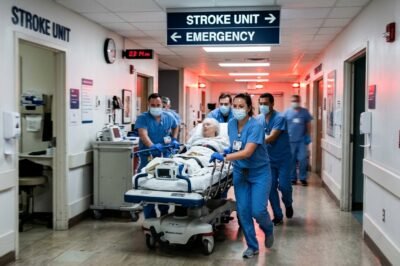
When the world collectively held its breath in early 2020, the healthcare landscape underwent a seismic shift that few could have predicted. While the immediate threat of a novel respiratory virus dominated every headline and hospital boardroom, a silent and deadly parallel crisis was unfolding in the shadows of the pandemic response. Stroke, a medical emergency where every passing second equates to the death of nearly two million neurons, became a secondary priority in many overstretched healthcare systems. The European Medical Journal recently published a comprehensive analysis revealing that the logistical bottlenecks, public fear, and resource reallocation necessitated by COVID-19 led to significant, global delays in stroke care. These delays were not merely administrative inconveniences; they represented a fundamental breakdown in the ‘Golden Hour’ of neurological intervention, leading to increased morbidity and mortality rates that are only now being fully quantified. As researchers look back at the data, it becomes clear that the pandemic’s collateral damage extended far beyond the virus itself, deeply impacting the efficacy of emergency neurological services across the globe.
The findings presented by the European Medical Journal highlight a disturbing trend where the sophisticated, high-speed ‘stroke chains’ developed over decades were suddenly severed. In normal times, a stroke patient benefits from a streamlined protocol that begins with rapid ambulance dispatch and ends with life-saving thrombolysis or mechanical thrombectomy. However, during the height of the pandemic, these pathways were obstructed by new triage layers, infection control measures, and a catastrophic shortage of specialized staff. This detailed analysis explores how the global healthcare infrastructure struggled to maintain its standards for stroke care while simultaneously battling a once-in-a-century viral outbreak, providing a sobering look at the fragility of even the most advanced medical systems.
The Global Scale of Care Disruption and the EMJ Findings
The European Medical Journal’s meta-analysis reveals that the disruption to stroke care was a truly universal phenomenon, transcending borders and economic statuses. From high-income nations with robust emergency networks to developing regions with emerging healthcare systems, the story remained consistent: patients arrived later, received treatment slower, and suffered worse outcomes. The study indicates that the average ‘door-to-needle’ time—the interval between a patient arriving at the hospital and receiving clot-busting medication—increased by as much as twenty-five percent in many urban centers. This delay was often caused by the mandatory COVID-19 screening processes that every patient had to undergo regardless of their neurological state.
Furthermore, the EMJ report emphasizes that the infrastructure usually reserved for stroke patients, such as specialized Stroke Units (SUs) and Intensive Care Units (ICUs), was frequently repurposed for COVID-19 patients. This reallocation of resources meant that even if a stroke patient received initial treatment, their post-acute care was often compromised. Stroke units provide a level of specialized monitoring and early rehabilitation that is crucial for recovery; when these units were transformed into respiratory wards, stroke patients were moved to general wards where the staff might lack the specific expertise required for complex neurological management. The result was a measurable decline in the quality of multidisciplinary care that is essential for minimizing long-term disability.
Statistical Realities and the ‘Time is Brain’ Metric
In the world of neurology, the phrase ‘Time is Brain’ is more than a slogan; it is a clinical reality that dictates the window of opportunity for intervention. According to the statistics cited in the EMJ analysis, the delay in treatment during the pandemic correlated directly with higher scores on the Modified Rankin Scale (mRS), which measures the degree of disability in stroke survivors. For every thirty-minute delay in treatment, the likelihood of a patient regaining full independence decreased by a significant margin. The data suggests that during 2020 and 2021, the global average for mechanical thrombectomy delays increased by approximately thirty-five to forty minutes compared to pre-pandemic benchmarks.
This statistical breakdown also sheds light on the ‘Missing Stroke’ phenomenon. Interestingly, many hospitals reported a sharp decrease in the total number of stroke admissions during the early phases of the pandemic. Researchers believe this was not due to a decrease in actual strokes, but rather a result of patients with milder symptoms choosing to stay home out of fear of contracting the virus in a hospital setting. These ‘missing’ patients often presented weeks or months later with irreversible brain damage or secondary complications that could have been prevented with timely intervention. The EMJ analysis underlines that the societal cost of these untreated minor strokes will likely manifest as a surge in chronic disability and long-term healthcare needs over the coming decade.
The Impact of Resource Redirection and Staffing Shortages
The redistribution of medical personnel was perhaps the most acute factor in the degradation of stroke care quality. Neurologists, stroke nurses, and specialized therapists were often drafted into front-line COVID-19 roles, leaving a skeletal staff to manage neurological emergencies. This brain drain within the hospital environment meant that the rapid-response teams traditionally tasked with managing acute strokes were often fragmented. The European Medical Journal notes that in some regions, the availability of interventional neuroradiologists—the specialists capable of performing complex thrombectomies—fell by over fifty percent during peak infection waves.
In addition to staffing, the physical logistics of the hospital changed. The implementation of ‘Red’ and ‘Green’ zones to separate infectious and non-infectious patients added layers of complexity to patient transport. Moving a stroke patient to the CT scanner now required extensive sanitization of corridors and equipment, adding precious minutes to the diagnostic process. The EMJ study highlights that while these measures were necessary to prevent hospital-acquired COVID-19 infections, they created a friction-filled environment that was antithetical to the high-speed requirements of acute stroke management. The technical challenges of performing surgeries while wearing full Personal Protective Equipment (PPE) also contributed to increased procedural times for mechanical interventions.
Psychological Barriers: Fear as a Major Comorbidity
One of the most profound findings in the EMJ analysis was the role that public psychology played in care delays. The ‘Stay Home, Save Lives’ messaging, while effective for viral containment, inadvertently discouraged people from seeking help for life-threatening symptoms. Survey data included in the report suggests that a large percentage of the population viewed hospitals as dangerous epicenters of infection rather than places of healing. This fear led to a catastrophic increase in ‘last-seen-normal’ to hospital arrival times. Instead of calling for an ambulance at the first sign of facial drooping or speech difficulty, many families waited to see if the symptoms would resolve on their own.
This psychological barrier was compounded by the isolation of the elderly, who are at the highest risk for stroke. With many seniors living in social isolation to avoid the virus, their strokes often went unnoticed by family members or caregivers. By the time medical help was finally sought, the window for thrombolysis (usually 4.5 hours) or thrombectomy (up to 24 hours in specific cases) had frequently closed. The EMJ stresses that public health messaging in future crises must clearly distinguish between ‘staying home’ for social reasons and ‘seeking help’ for medical emergencies to prevent a repeat of this avoidable tragedy.
Long-term Consequences for Stroke Survivors and Systems
The long-term implications of these delays are only beginning to surface. Patients who survived strokes during the pandemic are now presenting with higher rates of permanent physical and cognitive impairments than their pre-pandemic counterparts. The EMJ analysis suggests that the lack of immediate rehabilitation services—due to the closure of outpatient clinics and the prioritization of acute beds—has resulted in a ‘recovery gap.’ Physical therapy, speech therapy, and occupational therapy were often moved to telehealth formats, which, while useful, could not replace the intensive hands-on care required for significant neurological recovery.
Economically, the burden of these delays is expected to be massive. Increased disability means higher costs for long-term care, lost productivity, and a greater strain on social safety nets. The European Medical Journal calls for a comprehensive reassessment of how stroke survivors from the 2020-2022 era are being supported. There is a growing need for ‘catch-up’ rehabilitation programs to mitigate some of the long-term disabilities that were exacerbated by the pandemic-era care delays. Furthermore, the psychological trauma of undergoing a stroke in an isolated hospital environment, without the support of family members due to visitation bans, has led to increased rates of post-stroke depression and anxiety.
Conclusion: Future Implications and Rebuilding Stroke Resilience
As we move into a post-pandemic era, the lessons outlined in the European Medical Journal analysis must serve as a blueprint for healthcare resilience. The core takeaway is that stroke care must be ‘ring-fenced’ against future external shocks. This means establishing dedicated stroke pathways that remain operational regardless of the infectious disease environment. Hybrid models that utilize rapid point-of-care COVID testing alongside neurological assessment are essential to minimize door-to-needle times. Furthermore, the pandemic accelerated the adoption of telestroke technologies, which should now be integrated into permanent care models to provide expert consultation to remote or understaffed areas.
Rebuilding public trust is also a priority. Future public health campaigns must emphasize that certain conditions, like stroke and heart attack, require immediate hospital intervention regardless of ongoing pandemics. By analyzing the failures and successes of the COVID-19 era, the medical community can develop more robust, flexible systems that protect the most vulnerable patients from the collateral effects of global health crises. The EMJ analysis serves as a vital reminder that in the fight against a new disease, we cannot afford to lose ground on the medical battles we have already spent decades learning to win. Strengthening the stroke chain of survival is not just a clinical goal, but a moral imperative for global health systems.





































Leave a Reply