
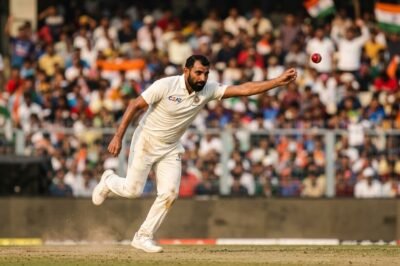
The Ranji Trophy, India’s premier first-class cricket tournament, once again proved why it remains the ultimate testing ground for temperament and skill. As Day 4 concluded across various venues, the cricketing world witnessed a mix of clinical dominance and gritty stalemates. The headline act featured a resurgent Bengal side that comfortably brushed aside a struggling Delhi unit, securing a massive nine-wicket victory that reverberated through the Group standings. Bengal’s victory wasn’t just a result; it was a statement of intent, showcasing a balanced attack and a composed top order. Meanwhile, in other significant fixtures, the heavyweight clash between Tamil Nadu and Karnataka ended in a high-scoring draw, a result mirrored in the fixture involving Jammu and Kashmir. These matches highlighted the grueling nature of domestic cricket where flat tracks and resilient batting lineups often force games into the fourth day without a decisive result. For fans and analysts alike, Day 4 provided a rich tapestry of tactical battles, individual brilliance, and the relentless pursuit of points in the quest for the knockout stages. As we dive deeper into the highlights, the disparity between clinical finishing and defensive resilience becomes the defining narrative of the round, setting the stage for an intense finish to the group stages where every bonus point and first-innings lead could determine the fate of the heavyweights.
Bengal’s Tactical Masterclass: Dismantling the Delhi Defense
Bengal’s victory over Delhi was a masterclass in modern red-ball cricket. Entering the fourth day with a clear advantage, the Bengal bowlers wasted no time in exploiting the early morning moisture and the wear on the pitch. The pace battery, led by the relentless Suraj Sindhu Jaiswal and the experienced Ishan Porel, maintained a disciplined line and length that gave the Delhi batters no room to breathe. Delhi, who had been struggling to find consistency throughout the match, found themselves under immediate pressure as wickets fell at regular intervals. The collapse was not just a result of poor shot selection but a testament to the suffocating pressure applied by the Bengal fielders and bowlers alike.
The second innings for Delhi was particularly disappointing. Despite a few glimpses of resistance from their middle order, the lack of a substantial partnership meant they could only set a meager target for the hosts. Bengal’s chase was a mere formality, but they approached it with the professionalism expected of a championship-contending side. Sudip Gharami and the veteran Abhimanyu Easwaran provided a solid start, ensuring that there were no late hiccups. Gharami, in particular, looked in sublime touch, piercing the gaps with precision and rotating the strike with ease. The nine-wicket margin of victory not only earned Bengal full points but also provided a significant boost to their Net Run Rate, which could be a deciding factor later in the tournament.
Furthermore, the performance of Bengal’s lower-middle order in the first innings cannot be overlooked. Their ability to scrap for every run ensured that the bowlers had enough of a cushion to attack without fear. This holistic team effort is what has historically made Bengal a powerhouse in domestic cricket. As the players shook hands at the end of the match, the contrast in body language between the two sides was stark: Bengal looked like a team peaking at the right time, while Delhi appeared to be a side searching for answers to fundamental questions about their batting depth and bowling variety.
The Southern Derby: Tamil Nadu and Karnataka Battle to a Draw
In one of the most anticipated fixtures of the round, the clash between Tamil Nadu and Karnataka at the M.A. Chidambaram Stadium lived up to its billing, albeit ending without a decisive winner. The match was a classic battle of attrition, played on a surface that offered some help to the spinners but remained largely favorable for batting over the first three days. By the time Day 4 arrived, the game was effectively a race for the first-innings lead, which carries significant weight in the Ranji Trophy points system. Karnataka’s formidable batting lineup, featuring stalwarts and rising stars, went toe-to-toe with a disciplined Tamil Nadu bowling attack led by skipper R. Sai Kishore.
Tamil Nadu’s first innings total was built on the back of some gritty centuries and solid contributions from the middle order. However, Karnataka responded with equal vigor. The likes of Mayank Agarwal and Devdutt Padikkal showed immense composure, negating the threat of the turning ball and ensuring that their team remained in the hunt. The tactical battle between Sai Kishore’s left-arm orthodox spin and the Karnataka batters was a highlight of the final day. Every maiden over was cheered, and every boundary felt like a shift in momentum. As the sun began to set on the fourth day, it became clear that neither side would be able to force a result, leading to a handshake between the two captains.
While the draw might seem like a neutral result, the points gained from the first-innings lead will be crucial for the knockout qualifications. The match also served as a reminder of the incredible depth in Southern Indian cricket. Both teams displayed a high level of technical proficiency, particularly in their defensive play against quality spin. For the spectators, it was a display of old-school Test match cricket where patience is as much a weapon as a cover drive or a googly. The rivalry between these two states continues to be one of the most respectful yet competitive spectacles in the Indian domestic circuit.
Jammu and Kashmir Hold Their Ground in a Gritty Draw
Away from the limelight of the metropolitan centers, Jammu and Kashmir produced a performance of significant character to earn a draw against their opponents. J&K has been a team on the rise over the last few seasons, and their ability to compete with established powerhouses is no longer a surprise. On Day 4, their primary objective was to bat through the sessions and deny the opposition a victory. This required immense mental fortitude, especially on a pitch that was starting to show signs of uneven bounce and sharp turn. The J&K batters showed that they have the temperament to handle high-pressure situations, playing close to their bodies and showing remarkable discipline in leaving the ball outside the off-stump.
The contributions from their unheralded players were the backbone of this resilience. It wasn’t just about the runs scored, but the number of balls faced. In first-class cricket, the clock is often the biggest enemy of the bowling side, and J&K utilized time to their advantage. Their bowlers also played their part earlier in the match, ensuring that the opposition didn’t run away with a massive lead. This all-round improvement in J&K’s cricket is a positive sign for the BCCI’s efforts to spread the game across all regions. The draw earns them valuable points and keeps them relevant in a highly competitive group where every point is contested with fierce intensity.
Statistical Breakdown and Group Standings Impact
The conclusion of Day 4 has led to several shifts in the Ranji Trophy points table. Bengal’s comprehensive win propels them into the top tier of their group, making them strong favorites for a quarter-final berth. The six points earned from a win, plus potential bonus points for the margin, are invaluable. On the other hand, Delhi’s lack of points from this round puts them in a precarious position, potentially facing a battle to avoid relegation from the Elite groups if their form does not improve drastically in the coming weeks. The statistics from the match show a worrying trend for Delhi: their average partnership for the first three wickets has dropped significantly compared to the previous season.
Key Individual Performances
- Suraj Sindhu Jaiswal (Bengal): A devastating spell on Day 4 that broke the back of the Delhi middle order.
- Sudip Gharami (Bengal): A match-winning knock that combined aggression with solid defensive technique.
- R. Sai Kishore (Tamil Nadu): Bowled over 40 overs in the match, showing the stamina and skill of a top-tier red-ball spinner.
- Mayank Agarwal (Karnataka): His leadership and batting stability were crucial in ensuring Karnataka did not crumble under pressure.
The high-scoring draws in other matches mean that the teams involved had to settle for three points (for the first-innings lead) and one point (for the team trailing). This system often leads to teams playing conservatively once they realize a win is out of reach, a critique often leveled at the Ranji Trophy format. However, it also rewards the team that dominates the first half of the match, ensuring that consistent performance over all four days is recognized. As the tournament progresses, the gap between the top four teams in each group is narrowing, suggesting a photo-finish to the league stage.
Tactical Insights: Pitch Behavior and Captaincy Decisions
A major talking point of Day 4 was the behavior of the pitches across the country. In Kolkata, the surface at the Eden Gardens offered consistent carry, which Bengal’s pacers utilized to perfection. The decision by the Bengal captain to bowl first (if they did) or to enforce certain field settings showed a deep understanding of local conditions. In contrast, the pitch in Coimbatore was a ‘slow turner,’ requiring bowlers to be extremely patient. Sai Kishore’s captaincy was tested as he had to constantly rotate his bowlers to keep them fresh while maintaining a restrictive field. The use of ‘short-leg’ and ‘silly point’ fielders in the final sessions added to the drama, even if the wickets didn’t come as frequently as the bowling side hoped.
Another tactical aspect was the timing of the declarations. In matches that ended in draws, some analysts argued that earlier declarations could have forced a result. However, the fear of losing points by being too aggressive often dictates a more cautious approach. In the Bengal vs Delhi match, the tactical superiority was evident in how Bengal squeezed Delhi in the second innings. By cutting off the boundary options and forcing the batters to play at every delivery, they induced the errors needed to wrap up the game quickly. This tactical maturity is what separates the championship contenders from the rest of the pack.
Future Implications: Scouting and the Road to the Knockouts
As the dust settles on Day 4, the implications for the future are manifold. For the national selectors, these matches provided a wealth of data on players who are on the fringes of the Indian Test team. Abhimanyu Easwaran’s consistency continues to keep him in the conversation for the backup opener’s slot, while the emergence of young pacers like Jaiswal adds to the country’s fast-bowling stocks. The Ranji Trophy remains the primary vehicle for identifying talent that can endure the rigors of five-day international cricket. The performances of spinners in the drawn games will also be closely monitored, especially with several home Test series on the horizon for the national team.
Looking ahead to the next round, the pressure will be on teams like Delhi and Karnataka to convert draws and losses into wins. The margin for error is shrinking, and the tactical nuances of the game will only become more pronounced. Fans can expect more aggressive cricket as teams realize that draws may not be enough to secure a spot in the knockouts. The resilience shown by teams like Jammu and Kashmir also suggests that there are no ‘easy’ games in the Ranji Trophy anymore. Every team is capable of holding their own, making the tournament one of the most competitive domestic leagues in the world. As we move into the business end of the season, the focus will remain on individual brilliance, team strategy, and the undying spirit of Indian domestic cricket.







































Leave a Reply