
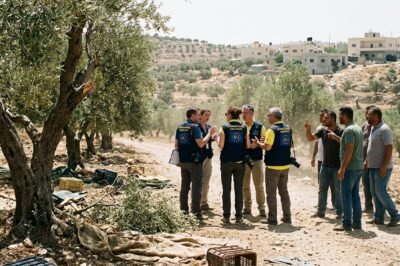
The rolling hills of the West Bank, traditionally a sea of silver-green olive leaves during the autumn months, have increasingly become a theater of visceral conflict and geopolitical friction. The olive harvest, a cornerstone of Palestinian heritage and a vital economic lifeline for thousands of families, is currently unfolding under a cloud of unprecedented violence. In a shocking escalation that has reverberated through the corridors of power in Brussels and Paris, Israeli settlers reportedly launched a physical assault on a delegation of European diplomats and local officials, including the mayor of a French town. This incident, occurring amidst the already heightened tensions of the regional conflict, marks a significant departure from localized skirmishes, signaling a bold defiance of international diplomatic immunity and the rule of law. As foreign dignitaries find themselves in the literal crosshairs of extremist aggression, the incident underscores the deepening volatility of the West Bank and the systemic failure to protect non-combatants and international observers alike. This analysis delves into the specifics of the assault, the broader context of settler activity, and the potentially irreversible damage these events inflict on Israel’s international standing and the prospects for regional peace in a territory that remains one of the most contested landscapes on the planet.
The Sacred Olive Harvest: Cultural and Economic Significance
For Palestinians, the olive harvest is more than just an agricultural season; it is a profound expression of identity and sumud, or steadfastness. The olive tree, known for its longevity and resilience, symbolizes the deep-rooted connection of the Palestinian people to their ancestral lands. Economically, the industry is a pillar of the local economy, supporting the livelihoods of nearly 100,000 families. According to data from the United Nations, the olive sector contributes up to 25 percent of the total agricultural income in the Palestinian territories. However, this economic vitalization is annually threatened by access restrictions and, increasingly, by targeted destruction of trees and harassment of farmers by extremist elements within the settler movement.
The harvest typically takes place between October and November, a period that has historically seen a spike in friction. This year, the stakes are significantly higher as the broader regional war has emboldened radical factions. Settlers have frequently blocked access to groves located near settlements, often under the watchful eyes of security forces. The loss of a single harvest can push a family into poverty, as many depend entirely on the sale of oil and preserved olives to sustain themselves throughout the year. The destruction of ancient trees, some hundreds of years old, is not merely a financial blow but a cultural erasure that deepens the animosity between the two populations, making reconciliation an even more distant dream.
Anatomy of the Conflict: The Assault on Diplomacy
The recent reports from the West Bank detail a harrowing encounter where a group of European diplomats, including representatives from France, were physically confronted while accompanying Palestinian farmers to their fields. The most prominent figure targeted was Patrice Leclerc, the mayor of the French town of Gennevilliers. Witnesses describe a scene where settlers approached the harvesting group with aggression, eventually resorting to physical violence and the use of tear gas. This incident is particularly alarming because it involves individuals carrying diplomatic passports, who are traditionally afforded protection and respect by all parties involved in a conflict. The fact that extremist settlers felt empowered to attack a foreign mayor and diplomatic staff highlights a perceived sense of impunity that has permeated the region.
The diplomats were present as part of a protective presence mission, a common practice where international observers accompany farmers to deter violence. However, this deterrent failed as the assailants reportedly threw stones and used blunt force to disperse the group. The Times of India and other international outlets have highlighted that such brazen attacks against Western officials are becoming more frequent, suggesting a shift in the settlers’ strategy to intimidate not just the local population, but the international community that supports them. This escalation places the Israeli government in a difficult position, as it must balance the demands of its right-wing domestic base with the international obligations it holds under various treaties and diplomatic protocols.
The Escalating Cycle of Violence: Data and Trends
Data compiled by the Office for the Coordination of Humanitarian Affairs (OCHA) indicates a sharp rise in settler-related incidents since early 2023. This trend has only intensified following the events of October 7, with recorded incidents of violence, property destruction, and displacement reaching record levels. Since the start of the current harvest season, there have been hundreds of documented cases of interference. Key statistics include:
- A 40% increase in settler violence incidents resulting in Palestinian casualties or property damage compared to the previous year.
- The destruction or uprooting of over 10,000 olive trees across the West Bank in the last twelve months.
- At least 28 Palestinian communities have been partially or fully displaced due to systemic harassment.
This data reveals a systematic pattern rather than isolated incidents of lawlessness. The geographical distribution of these attacks suggests a strategic effort to expand settlement outposts and squeeze Palestinian communities into smaller enclaves. By targeting the economic heart of these communities—the olive groves—extremist groups are effectively conducting a campaign of attrition. The involvement of international figures in these clashes brings a new dimension to the data, as it provides verifiable testimony to the international community of the conditions on the ground, which are often contested by official narratives.
International Reactions: From Paris to the United Nations
The assault on the French mayor and European diplomats has sparked a diplomatic firestorm. The French Ministry for Europe and Foreign Affairs issued a stern condemnation, demanding that Israeli authorities take immediate and effective measures to protect farmers and hold the perpetrators of the violence accountable. In Brussels, the European Union has expressed deep concern, with several officials calling for increased sanctions against violent settlers. These sanctions, which have already been implemented by the United States and the United Kingdom, typically involve travel bans and the freezing of assets, but many argue they have not gone far enough to deter the grassroots extremist movement.
Furthermore, the United Nations has repeatedly warned that the lack of accountability for settler violence is a primary driver of instability. The international community views the settlements as illegal under international law, a position that Israel disputes but which remains a cornerstone of global policy regarding the conflict. When foreign officials are beaten or gassed, it signals a breakdown in the basic tenets of international relations. The pressure on the Netanyahu government to rein in these elements is mounting, yet the political composition of the current coalition, which includes strong advocates for settlement expansion, makes any significant crackdown politically perilous for the Prime Minister.
The Role of Israeli Security Forces and Legal Accountability
One of the most contentious aspects of the ongoing violence in the West Bank is the role of the Israeli Defense Forces (IDF) and the local police. Many human rights organizations, such as B’Tselem and Yesh Din, have documented instances where security forces either stood by during settler attacks or actively participated in the dispersal of Palestinian farmers. The legal system is also under scrutiny; statistics from Yesh Din show that a staggering 93% of investigations into settler violence are closed without an indictment. This high rate of impunity serves as a tacit endorsement for extremist behavior, according to many legal experts.
In the case of the attack on the European diplomats, the international community is watching closely to see if any arrests will be made. Failure to prosecute those who attacked a foreign mayor would further isolate Israel on the global stage. There is a growing calls for a reform in how the West Bank is policed, with demands for a neutral application of the law that protects all residents regardless of their nationality. The Times of India report notes that the current environment is one of ‘legal dualism,’ where two different sets of laws apply to people living in the same territory, a situation that many international observers describe as unsustainable and inherently unjust.
Conclusion: A Fragile Future for the West Bank
The targeting of European diplomats and the physical assault on a French mayor represent a dangerous new threshold in the West Bank conflict. These events are not merely localized brawls over land; they are symptomatic of a deeper erosion of the international order and the rule of law in the Palestinian territories. As the olive harvest continues, the risk of further bloodshed remains high, with both sides entrenched in their respective positions. The future of the region depends on whether the international community can move beyond verbal condemnations to tangible actions that ensure the safety of all individuals, including those who represent the world’s democratic institutions.
Ultimately, the olive trees of the West Bank will continue to bear fruit, but the soil in which they grow is being poisoned by a cycle of violence and impunity. For the peace process to have any hope of revival, the immediate priority must be the cessation of settler aggression and the restoration of a sense of security for Palestinian farmers. Without a robust and impartial legal response from the Israeli state, the rift between Israel and its Western allies will only widen, further complicating an already labyrinthine path toward a two-state solution. The international community’s patience is wearing thin, and the physical scars borne by diplomats today may well become the diplomatic scars of tomorrow, permanently altering the relationship between Israel and the world.




































Leave a Reply