
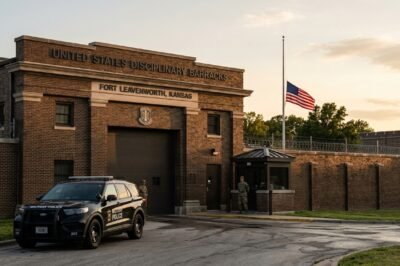
In a move that underscores the complex intersection of digital-age transparency and the somber traditions of military justice, the Trump administration has clarified that the impending military execution of the Fort Hood gunman will not be broadcast to the public via any digital medium. This decision, while perhaps disappointing to those who view extreme transparency as a deterrent or a form of ultimate closure, reaffirms a long-standing commitment to the gravity and solemnity of capital punishment within the United States Armed Forces. The case of Nidal Hasan, the former Army psychiatrist who opened fire on his fellow soldiers in 2009, remains one of the most painful chapters in modern American military history. As the legal processes finally approach their ultimate conclusion, the debate over how justice should be seen to be done has reached a fever pitch. By rejecting the notion of a livestream, the administration is making a definitive statement about the nature of state-sanctioned death: it is a functional necessity of the law, not a spectacle for public consumption. This decision carries significant weight, as it balances the rights of the victims’ families with the ethical considerations of modern governance and the potential for radicalization in the digital sphere.
The Historical Context of the Fort Hood Tragedy and Its Legal Aftermath
The 2009 shooting at Fort Hood was not merely a criminal act; it was a profound betrayal of the military brotherhood. On November 5, 2009, Nidal Hasan, then a Major in the U.S. Army, entered the Soldier Readiness Processing Center and opened fire, killing 13 people and wounding more than 30 others. The shockwaves of this event were felt across the globe, as it raised uncomfortable questions about domestic terrorism, radicalization within the ranks, and the vulnerabilities of military installations. For the survivors and the families of the fallen, the road to justice has been agonizingly slow, spanning over a decade of legal maneuvers, appeals, and political debates. The death sentence handed down in 2013 was a landmark moment, but the execution of a service member is a rare and highly regulated event, requiring presidential authorization.
Historically, the U.S. military has used the death penalty sparingly. The last execution carried out by the military was in 1961, when Private John Bennett was hanged for rape and attempted murder. This long hiatus means that every step of the current process is scrutinized under a microscope. The decision regarding the livestream is therefore not just about technology; it is about setting a precedent for the 21st century. By choosing to keep the execution private, the administration avoids the “gladiatorial” comparisons that critics often level against televised or broadcasted punishments. This approach preserves the professional integrity of the military justice system, ensuring that the focus remains on the fulfillment of the sentence rather than the media circus surrounding it. Furthermore, it respects the specific protocols of the Uniform Code of Military Justice (UCMJ), which emphasizes order and discipline over public exhibition.
The Legal Framework of the UCMJ and Presidential Authority
The Uniform Code of Military Justice provides the framework for how capital cases are handled within the armed forces. Unlike the civilian justice system, where state or federal laws dictate the terms of execution, military executions require the direct sign-off of the President of the United States. This places the Commander-in-Chief in a unique position as the final arbiter of life and death for a service member. Trump’s decision to bar a livestream is a reflection of this executive power. Legal scholars note that while the Sixth Amendment guarantees a public trial, there is no corresponding constitutional right to a public execution. The Supreme Court has historically allowed for restrictions on who can witness an execution, prioritizing the safety of the facility and the dignity of the process.
Furthermore, the UCMJ is designed to maintain the morale and discipline of the armed forces. A livestreamed execution could be seen as damaging to the military’s image, potentially serving as a recruitment tool for extremist groups or creating a spectacle that detracts from the professional nature of the service. By maintaining a closed environment, the military can ensure that the execution is carried out according to the strictest protocols without the interference of public opinion or real-time commentary. This legal boundary is essential for maintaining the distinction between a judicial outcome and a political event. The administration’s stance reinforces the idea that justice is a process, not a product for the digital attention economy.
The Psychology of Terrorist Acts and the Risk of Glorification
One of the primary reasons for prohibiting a livestream of Nidal Hasan’s execution is the significant risk of glorification. Hasan, who claimed his actions were a form of “jihad,” remains a figure of interest for extremist organizations. Publicizing his death in real-time could inadvertently provide him with the “martyrdom” he sought. Experts in counter-terrorism argue that the visual documentation of such an event can be weaponized by insurgent groups to incite further violence or to create propaganda. By denying a public broadcast, the government effectively de-platforms the final moment of a terrorist, reducing the event to a clinical, administrative end to a criminal life.
Moreover, the psychological impact on the public must be considered. In an era where viral videos of violence are already a significant social concern, adding a state-sanctioned execution to the digital landscape could have desensitizing effects. The government has a vested interest in ensuring that the power of the state to take a life is viewed with the utmost seriousness. Livestreaming, by its very nature, often encourages a casual or detached viewing experience that is at odds with the gravity of the death penalty. This decision protects the public from the commodification of violence, ensuring that the execution remains a somber legal reality rather than a viral trend.
The Trump Administration’s “Law and Order” Philosophy
President Trump has consistently branded himself as a “law and order” leader, advocating for swift and decisive punishment for violent criminals. His support for the death penalty is well-documented, having overseen a significant increase in federal executions during his first term. However, his refusal to livestream the Fort Hood execution shows a nuanced side of this philosophy. It suggests that while the administration is committed to the application of the death penalty, it is equally committed to the traditional structures of government power. This is not about hiding the act, but about controlling the narrative and ensuring it aligns with institutional norms.
This decision also reflects a desire to avoid unnecessary legal complications. A livestreamed execution would likely face a barrage of last-minute legal challenges from human rights groups and defense attorneys, who could argue that such a broadcast constitutes “cruel and unusual punishment.” By sticking to established, private protocols, the administration minimizes the legal surface area for appeals. This strategic restraint ensures that the primary goal—the completion of the sentence—is not derailed by secondary debates over media access. It is a pragmatic application of power that prioritizes results over public relations, even in an administration known for its media-savvy approach.
Victim Advocacy and the Right to Witness
The families of the 13 individuals killed at Fort Hood have waited over 15 years for this day. For many of them, the execution is not about revenge, but about the closing of a traumatic chapter. While a livestream would have allowed a broader range of survivors and distant relatives to witness the event, the military typically allows a limited number of designated witnesses, including victim representatives. This controlled access is intended to provide closure to those most affected without turning the execution into a public spectacle. The administration’s decision ensures that the focus remains on the victims and their families, rather than the perpetrator.
Advocacy groups for victims of the Fort Hood shooting have expressed a range of emotions. Some believe that the most public possible death is a fitting end for a man who committed such a public atrocity. Others, however, prefer the quiet, clinical nature of a private execution, fearing that a broadcast would only revive the trauma of the 2009 event. By choosing the latter path, the Trump administration is siding with the traditionalists who believe that the private witness of the law is more powerful than the public roar of the crowd. This approach respects the sanctity of the victims’ memories by refusing to let the perpetrator’s final moments dominate the national airwaves one last time.
Conclusion: The Future of Military Capital Punishment
The decision to bar the livestreaming of Nidal Hasan’s execution marks a significant moment in the evolution of military justice in the digital age. It establishes a clear boundary between the government’s duty to provide public information and the necessity of maintaining the dignity of the law. As we move forward, this case will serve as a touchstone for how the military handles its most high-profile and controversial sentences. It reaffirms that the power of the state to execute a citizen is a solemn responsibility that must be exercised away from the glare of the cameras, ensuring that justice is served with professional detachment rather than emotional fervor.
Ultimately, the execution of the Fort Hood gunman will stand as a testament to the endurance of the American legal system. Despite the long delays and the complex political landscape, the process has moved toward its conclusion with a focus on the rule of law. By rejecting the livestream, the Trump administration has chosen a path of institutional stability over populist appeal, a move that will likely influence military and federal execution protocols for decades to come. As the final arrangements are made at Fort Leavenworth, the nation watches not through a screen, but through the lens of history, acknowledging that true justice often requires the quietest of rooms.




































Leave a Reply