
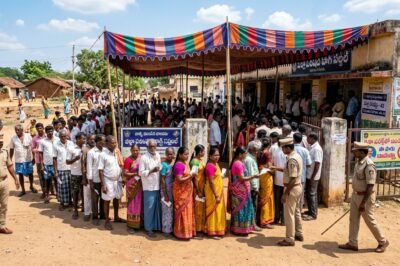
The democratic landscape of Andhra Pradesh has once again become the stage for a high-octane political confrontation as the municipal elections conclude under a cloud of controversy and intense rivalry. As the sun set on the polling day, the atmosphere in the state remained electric, not because of the celebratory spirit of voting, but due to the sharp allegations of electoral malpractice and the subsequent demand for a repoll in the critical constituency of Pulivendula. YSR Congress Party (YSRCP) chief and former Chief Minister Y.S. Jagan Mohan Reddy has spearheaded this demand, alleging that the sanctity of the ballot was compromised by the ruling coalition. This development marks a significant escalation in the regional political narrative, where local body elections often serve as a litmus test for the popularity and organizational strength of the major political players. The implications of these elections go far beyond local governance; they are a reflection of the deep-seated political fissures that define the state’s current climate, setting the stage for future legal and administrative battles that will undoubtedly influence the trajectory of Andhra Pradesh’s governance for years to come.
The Culmination of a High-Stakes Electoral Battle
The municipal elections in Andhra Pradesh have always been more than just a local administrative exercise; they are a periodic battlefield for the state’s political titans. As polling concluded, the initial reports suggested a robust voter turnout, indicating a high level of civic engagement despite the underlying tensions. However, the narrative quickly shifted from voter participation to allegations of coercion and systemic failure in several key wards. The ruling party and the opposition have been locked in a fierce exchange of accusations, with each side claiming to represent the true will of the people while accusing the other of manipulating the machinery of democracy.
Across various municipalities, the polling process was marked by heavy police presence and a watchful eye from the State Election Commission (SEC). Despite these measures, reports of sporadic violence and technical glitches in Electronic Voting Machines (EVMs) surfaced throughout the day. These incidents provided the fuel for political leaders to question the fairness of the entire process. The focus on local governance, including issues such as urban infrastructure, sanitation, and water supply, seemed to take a backseat to the larger narrative of political dominance and survival. The conclusion of the polling process does not signify the end of the struggle but rather the beginning of a complex post-poll analysis and legal maneuvering.
Pulivendula: The Epicenter of Political Unrest
Pulivendula, a region long considered the stronghold of the Y.S. family, became the focal point of the day’s controversies. For Jagan Mohan Reddy, the integrity of the vote in Pulivendula is not just a matter of municipal administration but a question of his political legacy and territorial influence. The demand for a repoll in this specific area stems from allegations that the Telugu Desam Party (TDP) and its allies engaged in booth capturing and voter intimidation. These claims have been vehemently denied by the ruling coalition, who argue that the YSRCP is merely reacting to a perceived loss of ground in their traditional bastion.
The significance of Pulivendula cannot be overstated. It is a region that has consistently backed the YSRCP, and any shift in the voting pattern or disruption in the polling process there is seen as a major political event. The allegations of rigging suggest that the opposition believes the administrative machinery was used to facilitate unfair advantages for the ruling party. This has led to a tense standoff, with party cadres from both sides gathering near polling stations and administrative offices, demanding justice and transparency. The outcome of the SEC’s investigation into these claims will be a pivotal moment for the credibility of the entire election cycle.
Understanding Jagan Mohan Reddy’s Demands for a Repoll
The formal demand for a repoll by Jagan Mohan Reddy is grounded in several specific grievances that his party has documented throughout the day. According to the YSRCP leadership, there were instances where polling agents were forcibly removed from booths, and unauthorized individuals were allowed to influence the voting process. These allegations are backed by purported video evidence and testimonies from local supporters, which the party intends to present to the State Election Commission and the judiciary if necessary.
Key Grievances Highlighted by the YSRCP:
- Booth Capturing: Allegations that specific polling stations were overtaken by ruling party workers to cast proxy votes.
- Intimidation of Voters: Reports of voters being threatened to prevent them from reaching the polling stations or being forced to vote against their choice.
- Administrative Partiality: Claims that local officials and police turned a blind eye to irregularities committed by the ruling coalition.
- Technical Failures: Concerns that EVMs in opposition strongholds were deliberately slowed down or malfunctioned during peak voting hours.
By demanding a repoll, Jagan Mohan Reddy is positioning himself as the protector of democratic values, even as his critics label the move as a desperate attempt to save face in a changing political landscape. The rhetoric used by the YSRCP chief emphasizes a direct confrontation with the current administration, accusing them of subverting the mandate of the people through muscle power and administrative misuse. This strategy is designed to keep the party’s base energized and to challenge the legitimacy of the election results before they are even officially declared.
Law, Order, and the Role of the State Election Commission
The role of the State Election Commission (SEC) is now under intense scrutiny as it evaluates the validity of the complaints filed by various parties. The SEC is tasked with ensuring that every vote is cast in a free and fair environment, a mandate that is increasingly difficult to fulfill in a highly polarized political environment. The commission has already sought detailed reports from district collectors and police observers regarding the incidents in Pulivendula and other sensitive areas. The decision to order a repoll is not taken lightly, as it requires substantial evidence of systemic failure or widespread malpractice that could have altered the outcome of the election.
From a law and order perspective, the state police had a challenging day managing the crowds and preventing clashes between rival party workers. In several municipalities, section 144 was imposed to restrict large gatherings, yet the tension remained palpable. The heavy deployment of security forces was intended to instill confidence in voters, but the subsequent allegations of violence suggest that the measures may have been insufficient in certain hotspots. The aftermath of the polling will require continued vigilance to prevent post-poll violence, a common occurrence in Andhra Pradesh’s political history.
The Broader Impact on Andhra Pradesh’s Political Landscape
These municipal elections are a precursor to larger electoral battles in the state. The results will provide a snapshot of the current public sentiment toward the ruling coalition and the effectiveness of the YSRCP as an opposition force. If the ruling party secures a landslide victory, it will be seen as a validation of their policies and governance style. Conversely, a strong showing by the YSRCP, especially in contested areas like Pulivendula, would signal that the opposition remains a potent threat to the status quo. The financial markets and local businesses also keep a close eye on these developments, as political stability is a key driver of investment and economic growth in the state.
Furthermore, the allegations of rigging and the demand for repolls could lead to a series of legal challenges that might delay the formation of local bodies. This delay has direct consequences for the implementation of developmental projects and the disbursement of funds at the municipal level. The political uncertainty can also affect the morale of the bureaucracy, as officials find themselves caught in the crossfire of partisan politics. The state’s ability to navigate these challenges will be a test of its democratic institutions and the maturity of its political leadership.
Statistical Insights and Voter Turnout Trends
Preliminary data indicates a significant variation in voter turnout across different municipalities. While some urban centers saw moderate participation, rural and semi-urban pockets registered high percentages, reflecting the importance of local body governance to the grassroots population. Analysts are currently dissecting these numbers to understand which demographics favored which party. High turnout is often interpreted as a desire for change, but in the context of Andhra Pradesh, it can also reflect the mobilization of party cadres and the effectiveness of welfare schemes in retaining voter loyalty.
The demographic breakdown of the voters, particularly the participation of women and youth, will be crucial in determining the final outcome. Both major parties have tailored their campaigns to appeal to these segments through specific promises related to employment, education, and social security. The statistical analysis of the polling data, combined with the reports of irregularities, will provide a comprehensive picture of the electoral exercise. However, until the SEC makes a final determination on the repoll demands, the true will of the voters remains subject to political interpretation and legal verification.
Conclusion: Future Implications for Regional Governance
The conclusion of polling in the Andhra Pradesh municipal elections has not brought the expected closure; instead, it has opened a new chapter of political and legal maneuvering. The demand for a repoll in Pulivendula by Jagan Mohan Reddy highlights the intense competition and the high stakes involved in local governance. As the state awaits the official results and the SEC’s decision, the focus will remain on the integrity of the democratic process. The future of regional governance in Andhra Pradesh depends on the ability of its institutions to address these allegations transparently and decisively. The coming days will reveal whether the state can move past this period of friction or if the controversy will further deepen the political divide, impacting the socio-economic progress of its municipalities for the foreseeable future. Ultimately, the resilience of the democratic framework in Andhra Pradesh is being tested, and the outcome will resonate far beyond the borders of any single municipality.




































Leave a Reply