
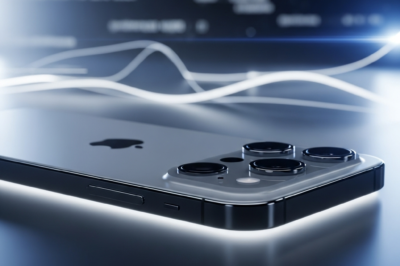
The consumer electronics landscape is currently experiencing a seismic shift as the latest ‘Apple Loop’ reports emerge, shedding light on the Cupertino giant’s multi-year roadmap. According to high-level supply chain leaks and expert analysis, the trajectory for the iPhone 18 Pro, the revolutionary iPhone Air 2, and the sophisticated iOS 27 operating system suggests a paradigm shift in how we perceive mobile computing. This is not merely an iterative update cycle; it is a fundamental reimagining of the smartphone’s role in an AI-driven society. As competitors like Samsung and Google push the boundaries of foldable screens and generative software, Apple is reportedly doubling down on a fusion of ultra-premium hardware and deeply integrated, autonomous software that promises to redefine user experience by the year 2026 and 2027.
The iPhone 18 Pro: A New Epoch of Silicon Excellence
The centerpiece of the 2026 lineup, the iPhone 18 Pro, is slated to be the first device to fully leverage the power of 2-nanometer (2nm) process technology. While the current industry standard is hovering around 3nm, the jump to 2nm, facilitated by Apple’s long-standing partnership with TSMC (Taiwan Semiconductor Manufacturing Company), represents a quantum leap in transistor density. What does this mean for the average user? It translates to a projected 15% increase in speed and a staggering 30% reduction in power consumption compared to the A18 and A19 chips. This efficiency allows for more complex background processes, specifically designed to handle the burgeoning demands of on-device Artificial Intelligence. The iPhone 18 Pro is also rumored to feature a new ‘High-NA EUV’ lithography-produced A20 chip, which will likely integrate a much larger Neural Engine to facilitate real-time video generative AI tasks, effectively turning the smartphone into a professional-grade cinema studio in the palm of one’s hand.
Beyond the internal silicon, the iPhone 18 Pro is expected to debut a revolutionary under-display Face ID system. This technology has been the ‘holy grail’ for Apple engineers for nearly half a decade. By moving the sensors behind the OLED pixels, Apple will finally be able to eliminate the Dynamic Island, offering a truly edge-to-edge, uninterrupted visual canvas. This transition marks the end of the notch/pill era, providing a display-to-body ratio that was once considered science fiction. Furthermore, the camera system is expected to receive a massive overhaul, with all three rear sensors—wide, ultra-wide, and telephoto—standardizing on 48-megapixel resolution to ensure consistent color science and detail across all focal lengths, including a new 10x optical zoom capability powered by a multi-prism ‘periscope’ lens design.
iOS 27: The Rise of Intent-Based Computing
While the hardware of the iPhone 18 series is impressive, the software leaks surrounding iOS 27 suggest an even more radical transformation. Insiders describe iOS 27 as the ‘Autonomous OS,’ a version of Apple’s mobile operating system that moves away from a grid of apps toward a fluid, intent-based interface. In this future version, ‘Apple Intelligence’ will have matured into a system that anticipates user needs before they are articulated. For instance, if you have a flight scheduled, iOS 27 won’t just notify you; it will have already coordinated with your smart home to lower the thermostat, booked your Uber based on current traffic data, and curated a localized news feed for your destination—all without a single manual prompt. This hidden layer of ‘proactive agents’ is built on a private, localized large language model that ensures user data never leaves the device, maintaining Apple’s ironclad commitment to privacy while delivering unprecedented convenience.
Hidden deep within the code of early iOS 27 prototypes are references to ‘Semantic UI,’ a feature that dynamically adjusts the color, font, and layout of the operating system based on the user’s mood and environmental lighting. If the device detects through biometric sensors that the user is in a high-stress environment, the UI might simplify itself, muting non-essential notifications and adopting a calming blue-shifted color palette. Additionally, iOS 27 is expected to introduce ‘Universal Handoff 2.0,’ allowing for seamless interaction with the Apple Vision Pro and future Apple Glasses. Imagine dragging a digital document from your iPhone’s physical screen directly into a 3D space in your peripheral vision—this is the level of ecosystem synergy Apple is targeting.
iPhone Air 2: Perfecting the Ultra-Thin Aesthetic
The most intriguing hardware revelation in the Forbes report is the detail surrounding the iPhone Air 2. Following the projected debut of the first ‘iPhone Air’ (or iPhone 17 Slim) in 2025, the second generation is where Apple truly hits its stride. The iPhone Air 2 is designed to be the thinnest device Apple has ever produced, surpassing even the 5.1mm thickness of the iPad Pro M4. To achieve this, Apple is reportedly using a new ‘Silicon-Carbon’ battery technology. These batteries have a significantly higher energy density than traditional lithium-ion packs, allowing for a much thinner profile without sacrificing battery life. The iPhone Air 2 is aimed at the fashion-forward consumer who prioritizes aesthetics and portability over the heavy-duty performance of the Pro models, yet it will still pack the A19 or A20 chip, ensuring it remains a powerhouse in its own right.
The engineering challenges for the iPhone Air 2 are immense, particularly regarding heat dissipation. Without the internal volume of a Pro Max model, Apple is reportedly developing a ‘Vapor Chamber’ cooling system combined with a graphite-infused chassis to pull heat away from the processor. The device is also rumored to be the first to entirely ditch physical buttons in favor of ‘Solid-State’ haptic surfaces, further contributing to its sleek, monolithic appearance. This design philosophy aligns with Apple’s long-term goal of creating a ‘glass slab’ device that feels less like a piece of technology and more like a magical tool.
Market Implications and Global Manufacturing Shifts
The roadmap for the iPhone 18 Pro and iPhone Air 2 carries significant weight for the global economy and Apple’s supply chain strategy. As of 2024 and 2025, Apple is aggressively diversifying its manufacturing base away from China, with India emerging as a critical hub for the iPhone 18 Pro’s production. This shift is not just about avoiding geopolitical friction; it’s an investment in a growing market. The ‘Make in India’ initiative has allowed Apple to scale up production and reduce costs, which might be necessary as the BOM (Bill of Materials) for these advanced 2nm devices is expected to soar. Analysts suggest that the iPhone 18 Pro could see a price hike, potentially pushing the entry-level Pro model past the $1,199 mark, while the iPhone Air series occupies a new ‘luxury-thin’ segment between the standard and Pro models.
Economically, Apple’s move toward a subscription-heavy ecosystem—likely bundled with advanced iOS 27 AI features—will further solidify its services revenue. There is speculation that certain high-level ‘Autonomous AI’ features in iOS 27 might be gated behind an ‘Apple Intelligence+’ subscription, creating a recurring revenue stream that complements the high-margin hardware sales. This dual-pronged approach ensures that Apple remains the most valuable company in the world, even as the global smartphone market reaches a plateau of saturation.
Sustainability and the Future of Mobile Hardware
Finally, we must consider the environmental impact of this ‘Apple Loop.’ With the iPhone 18 series, Apple is expected to reach its ‘Apple 2030’ goal of being carbon neutral across its entire business, including the manufacturing supply chain. The iPhone 18 Pro will likely feature a 100% recycled aluminum or titanium frame and recycled cobalt in the batteries. The move toward thinner devices like the iPhone Air 2 also reduces the total material footprint of each unit. As consumers become more eco-conscious, Apple’s ability to market ‘The World’s Most Powerful Carbon-Neutral Phone’ will be a key differentiator. The future of the iPhone is not just about faster chips and thinner bodies; it is about a sustainable, intelligent companion that seamlessly integrates into our lives while respecting the planet. As we look toward the 2026 release of the iPhone 18 Pro and the 2027 rollout of iOS 27, it is clear that the ‘Apple Loop’ is accelerating, and the results will be nothing short of revolutionary.




































Leave a Reply