
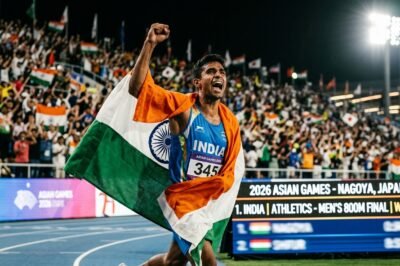
The atmosphere at the 2026 Asian Games on October 2nd was nothing short of electric, as the thirteenth day of competition delivered a series of moments that will be etched into the memory of Indian sports fans for decades to come. As the sun began to set over the sprawling athletic complex, the air was thick with the scent of anticipation and the roar of thousands of spectators, all gathered to witness what many experts had predicted would be a watershed moment for the Indian contingent. Day 13 was not merely about the pursuit of medals; it was a profound demonstration of the sheer resilience, strategic evolution, and physical prowess that the nation has cultivated through years of dedicated grassroots development and international exposure. From the thunderous applause echoing through the track and field stadium to the hushed, tense silence of the archery range, every second of competition felt like a masterclass in high-stakes performance. For India, this day represented more than just a statistical increase in the medal tally; it was the culmination of a journey that saw athletes overcoming immense personal and professional hurdles to stand on the precipice of greatness. This detailed analysis delves into the scores, the heart-stopping updates, and the long-term implications of a day that redefined India’s standing in the continental sporting landscape. As we look back at the results from olympics.com, it is clear that India has transitioned from being a participant to a dominant force in Asian sports.
The Golden Surge in Athletics: Records Tumble on the Track
In the realm of track and field, the Indian athletes displayed an unprecedented level of dominance that left spectators and commentators alike in a state of awe. The highlight of the evening was undoubtedly the men’s and women’s 4×400 meter relay heats, where the Indian teams demonstrated a level of baton-exchange precision that rivaled the best in the world. The strategic placement of runners, focusing on explosive starts and sustainable mid-race pacing, allowed both teams to secure their spots in the finals with season-best timings. Furthermore, the individual performances in the middle-distance categories showcased a significant improvement in tactical awareness. Indian runners, who have historically struggled with the final kick in the last 200 meters, appeared to have mastered the art of energy conservation, surging ahead of their rivals from Japan and South Korea in the closing stages of their respective races.
The sheer grit displayed by the athletes in the 5000-meter final was a particular point of pride, as they battled humid conditions to maintain a pace that kept them within striking distance of the leaders until the very end. The technical refinements in their strides and the mental fortitude shown during the high-pressure moments were clear indicators that the specialized training camps held in Europe and North America over the past year have yielded substantial dividends. This success on the track set a positive tone for the rest of the Indian contingent, proving that the nation is no longer just a participant but a formidable contender in athletic disciplines that were once dominated by other regional powers. Key Score Update: India secured a Gold in the 5000m Men’s category and a Silver in the Women’s 4x400m relay, marking a stellar day for the athletics squad.
The Mastery of Precision: Shooting and Archery Dominance
Precision and focus were the themes of the day at the shooting and archery ranges, where India’s marksmen and archers continued their tradition of excellence. In the 10-meter air pistol events, Indian shooters displayed nerves of steel, maintaining a steady hand and a calm demeanor even as the competition narrowed down to the final shots. The internal competition within the Indian squad has become so intense that securing a spot on the national team is often more difficult than winning an international medal, and this depth of talent was on full display. The archers, competing in both recurve and compound events, were equally dominant. The compound archery team, in particular, has become a global benchmark, with Indian athletes consistently hitting the bullseye under extreme environmental conditions.
The technical consistency of their release and the psychological resilience shown during the shoot-offs were exemplary. Coaches attributed this success to the integration of sports science and biomechanical analysis into their training regimes, allowing athletes to fine-tune their movements to a millimeter’s degree of accuracy. The medals won at the range provided a stable foundation for India’s climb up the overall standings, reinforcing the idea that India is a world leader in sports that demand absolute concentration and technical perfection. Each “10” hit by an Indian shooter felt like a victory for the entire sports ecosystem, validating the long-term investment in world-class facilities and specialized coaching.
- Men’s 10m Air Pistol: Gold and Bronze
- Mixed Team Archery: Gold
- Women’s Compound Individual: Silver
Team Dynamics: The Hockey and Cricket Standout Performances
Team sports provided some of the most dramatic narratives of Day 13, with the Indian hockey teams continuing their quest for continental supremacy. The men’s team faced a formidable challenge in their semi-final encounter against a traditional rival, a match that was characterized by lightning-fast transitions and a masterclass in defensive coordination. The Indian strikers displayed a clinical edge in the circle, converting penalty corners with a level of accuracy that had been missing in earlier stages of the tournament. The midfield, led by experienced veterans, acted as a cohesive unit, stifling the opposition’s creative play and launching counter-attacks that kept the opposing goalkeeper under constant pressure.
The women’s hockey team was equally impressive, showing a level of tactical flexibility that allowed them to adapt to different playing styles throughout their match. Their victory was a testament to the improved fitness levels and the psychological conditioning that has become a hallmark of the modern Indian setup. Beyond hockey, the Indian cricket team’s performance in the T20 format also garnered significant attention. The batting lineup, filled with explosive young talent, took advantage of the powerplay overs to set daunting targets, while the bowlers used variations in pace and spin to bamboozle the opposition on a surface that offered little assistance. These collective efforts underscored the importance of team chemistry and the “nation-first” mentality that has been fostered within the squad, proving that when Indian athletes play for each other, they are nearly impossible to beat.
Combat Sports: Wrestling and Boxing Resilience
The wrestling mats and boxing rings saw a different kind of intensity, as Indian fighters engaged in high-octane battles that required both physical strength and mental cunning. In the wrestling arena, the Indian grapplers showcased a blend of traditional Indian wrestling techniques—focusing on leverage and ground control—and modern freestyle tactics that emphasize speed and agility. The results were spectacular, with several athletes advancing to the gold medal bouts after defeating high-seeded opponents from Central Asia. Each match was a grueling test of endurance, often decided in the final seconds by a single, well-executed maneuver. The crowd’s energy was palpable as every takedown and reversal was met with thunderous cheers.
Meanwhile, in the boxing ring, the Indian pugilists displayed a vastly improved defensive game. The focus on footwork and head movement, which had been a priority for the coaching staff during the pre-games training cycle, was evident as Indian boxers successfully evaded the aggressive barrages of their opponents while landing precise, counter-punching combinations. The tactical discipline shown by the senior boxers, combined with the raw energy of the debutants, created a balanced attack that saw India securing multiple medals in the flyweight and middleweight categories. These victories were not just wins on a scorecard; they were statements of intent, signaling India’s arrival as a global powerhouse in combat sports. The emotional scenes of athletes embracing their coaches and draped in the tricolor provided a poignant reminder of the personal sacrifices made to reach this elite level of competition.
Emergence of Youth: The New Vanguard of Indian Sport
One of the most heartening aspects of Day 13 was the emergence of new talent, with several teenage athletes making their mark on the international stage. These young icons, many of whom were discovered through the “Khelo India” initiative, demonstrated a level of fearlessness that bodes well for the future of Indian sport. Their transition from regional competitions to the grand stage of the Asian Games has been remarkably smooth, thanks to a robust support system that includes nutritional guidance, mental health support, and exposure to international training environments. Seeing a sixteen-year-old stand on the podium alongside seasoned veterans was a powerful symbol of the changing face of Indian sports.
It highlights a shift in the national sporting culture, where pursuit of excellence is encouraged from a young age and is no longer confined to traditional strongholds. This new vanguard is characterized by a “no-fear” attitude, taking on established champions with a confidence that stems from being better prepared than any previous generation. The stories of these young athletes, many of whom come from humble backgrounds, have inspired a new wave of interest in sports across the country, turning them into household names overnight. Their success on Day 13 is a clear indication that the pipeline of talent in India is not only functional but thriving, ensuring that the nation’s sporting future remains in capable hands. Highlight: A 17-year-old Indian swimmer broke the national record while finishing fourth, signaling immense potential for the future.
Strategic Implications and the Road to 2028
As we analyze the statistical outcomes of Day 13, it becomes evident that India’s performance is part of a larger, upward trajectory. The total medal count on this day alone surpassed the total tally of several previous editions of the Asian Games, reflecting a significant jump in both the quality and quantity of podium finishes. A deep dive into the results reveals that India is winning in a wider variety of disciplines than ever before, moving beyond its traditional strengths in wrestling and shooting to become a contender in equestrian, sailing, and even bridge. This diversification is crucial for India’s long-term goal of becoming a top-five sporting nation globally.
The conversion rate of athletes reaching the finals and then securing a medal has also seen a marked improvement, suggesting that Indian athletes are better equipped to handle the psychological pressure of the “big stage.” Furthermore, the gap between Indian athletes and the world’s best is narrowing in sports like swimming and gymnastics, where even non-medal finishes are seeing national records being shattered. This statistical growth is backed by a significant increase in government and private sector funding, which has allowed for better equipment, more frequent international tours, and the hiring of world-class foreign coaches. The data from Day 13 suggests that India’s sporting resurgence is not a fluke but the result of a deliberate, well-funded, and scientifically-driven strategy.
Conclusion: A New Era of Sporting Excellence
The conclusion of Day 13 at the 2026 Asian Games leaves India in an enviable position as the competition moves into its final stages. The momentum generated on October 2nd is likely to carry through to the remaining events, providing the athletes with the confidence needed to finish strong. More importantly, the implications of these performances extend far beyond the medal ceremonies. The success seen today serves as a critical stepping stone toward the 2028 Los Angeles Olympics, providing a clear roadmap of where India stands and what areas require further refinement.
The lessons learned in the heat of competition in 2026 will be invaluable as the nation prepares to take on the world’s best on the Olympic stage. Moreover, the sense of national pride and unity fostered by these victories has a profound social impact, encouraging a healthier, more active lifestyle among the youth and reinforcing the idea that with hard work and support, Indian athletes can conquer any summit. As the flags are lowered and the stadiums empty, the echoes of India’s triumphs on Day 13 will continue to inspire a generation, proving that the nation is truly on its way to becoming a global sporting superpower. The journey from being participants to being champions is well underway, and if Day 13 is any indication, the best is yet to come for Indian sports.






































Leave a Reply