
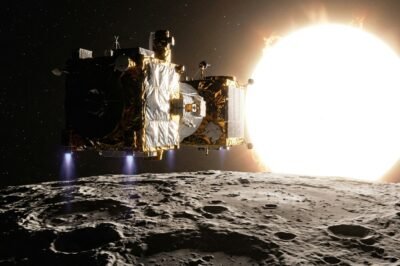
In the high-stakes theater of deep-space exploration, the margin for error is often calculated in millimeters and milliseconds. The BepiColombo mission, a joint venture between the European Space Agency (ESA) and the Japan Aerospace Exploration Agency (JAXA), has recently underscored this reality by successfully navigating its complex entry into Mercury’s orbit despite a nerve-wracking software anomaly. This mission, which has spent seven years traversing the inner solar system, represents one of the most ambitious engineering feats in human history. To reach Mercury, the closest planet to the Sun, BepiColombo had to fight the immense gravitational pull of our star while executing a series of precise planetary flybys. The successful transition into an orbital phase, even with a technical hitch, marks a definitive victory for the European Space Operations Centre (ESOC) in Darmstadt, Germany. The mission’s resilience in the face of a software glitch that threatened to compromise its propulsion logic serves as a testament to the robust redundancy systems built into modern spacecraft and the quick-thinking expertise of ground controllers who manage these multi-billion-euro assets from millions of miles away.
The Intricacies of the Mercury Orbit Insertion
Entering orbit around Mercury is fundamentally more difficult than reaching the outer planets of our solar system. Because Mercury resides so deep within the Sun’s gravity well, any spacecraft traveling toward it gains an immense amount of velocity. To actually enter orbit rather than simply flying past, a probe must shed a massive amount of kinetic energy. For BepiColombo, this required a decade of planning and a seven-year journey involving nine planetary flybys: one of Earth, two of Venus, and six of Mercury itself. Each maneuver was designed to use the gravity of these planets to slowly brake the spacecraft, acting as a natural cosmic brake system. The recent maneuver was the culmination of these efforts, intended to place the Mercury Transfer Module (MTM) and its two piggybacking orbiters into the precise window required for permanent capture.
The engineering complexity of the BepiColombo stack is unparalleled. It consists of the MTM, which provides propulsion, the ESA-led Mercury Planetary Orbiter (MPO), and the JAXA-led Mercury Magnetospheric Orbiter (Mio). These components must remain attached during the long cruise phase, shielded by a specialized sunshield to protect them from temperatures exceeding 450 degrees Celsius. The transition from the transfer phase to the science phase is the most critical part of the mission life cycle. Any deviation in thrust during the final approach could have resulted in the spacecraft either crashing into the scorched surface of the planet or being flung back out into a useless solar orbit. The success of this insertion, therefore, represents the successful navigation of a gravitational minefield where the Sun’s influence is the primary antagonist.
Decoding the Software Anomaly: A Crisis Averted
The reported software glitch occurred within the Mercury Transfer Module’s power management and propulsion control logic. In the vacuum of space, software is the nervous system of the craft, translating commands from Earth into physical actions like firing ion thrusters or adjusting solar arrays. During the critical approach sequence, an unexpected error in the code caused the MTM to operate at a reduced power capacity, which in turn affected the thrust output. This could have been catastrophic, as the mission’s trajectory was calculated based on specific delta-v (change in velocity) requirements. ESA engineers reported that the glitch prevented the thrusters from reaching their full intended force, forcing the mission control team to rapidly re-simulate the trajectory and issue patch commands to compensate for the lower thrust over a longer duration.
The root cause of the glitch appears to reside in the way the spacecraft’s internal clock synchronized with the propulsion system’s telemetry. This type of ‘logic error’ is the nightmare of space agencies, as it often only reveals itself under the specific radiation and thermal stresses found in the inner solar system. However, the BepiColombo team had prepared for such contingencies. By utilizing the ‘Safe Mode’ protocols, the spacecraft was able to protect its primary instruments while ground teams diagnosed the issue. The fix involved bypassing the corrupted logic gates and manually overriding the power distribution to the ion engines. This manual intervention saved the mission, ensuring that despite the software’s initial failure, the hardware was able to perform the necessary braking to achieve orbital capture.
The Financial and Geopolitical Landscape of the Mission
From a financial perspective, BepiColombo is one of the most expensive and high-risk investments in the current ESA science program, with a total cost exceeding 1.65 billion euros. This figure includes the contributions from JAXA and the various national space agencies of Europe. The stakes of a failure were not merely scientific but also political. For Europe, BepiColombo is a demonstration of its ability to lead a flagship deep-space mission independently, rivaling the capabilities of NASA’s previous MESSENGER mission. A total loss due to a software error would have been a significant blow to the European space industry’s reputation, particularly for the lead contractor, Airbus Defence and Space, and the hundreds of subcontractors involved in the craft’s construction.
Furthermore, the mission represents a critical geopolitical bridge between European and Japanese aerospace sectors. JAXA’s contribution, the Mio orbiter, is designed specifically to study Mercury’s magnetic field and magnetosphere. The collaboration allows both agencies to share the immense costs and risks associated with planetary exploration. The successful recovery from the glitch ensures that the return on investment for both taxpayers and scientific institutions remains intact. In an era where private companies like SpaceX and Blue Origin are dominating the headlines, the success of BepiColombo serves as a reminder that state-level agencies are still the primary drivers of pure scientific discovery and complex interplanetary logistics that do not yet have a commercial profit motive.
Engineering Resilience: Protecting Billion-Dollar Assets
To survive at Mercury, BepiColombo had to be built like a tank while remaining as delicate as a laboratory. The environment at Mercury is characterized by intense solar radiation and a thermal environment that would melt conventional electronics. The spacecraft is wrapped in 80 layers of high-temperature multi-layer insulation (MLI), composed of ceramics and specialized metals. The software glitch, while internal, occurred in an environment where the hardware was already under extreme thermal stress. The fact that the electronics did not fail physically under these conditions is a triumph of European materials science. The resilience of the craft is not just in its software patches but in its physical ability to endure the ‘solar wind’ while its brain was momentarily confused.
Another layer of resilience is found in the propulsion system itself. BepiColombo uses solar-electric propulsion, or ion thrusters. These engines are incredibly efficient, using xenon gas accelerated by electricity to provide a low but constant thrust. Unlike chemical rockets, which fire in short bursts, ion engines can run for thousands of hours. This characteristic allowed the ground team the luxury of time; when the software glitch reduced thrust, they could simply run the engines for a longer period to achieve the same total change in velocity. This ‘design for endurance’ is a hallmark of modern deep-space missions, providing a buffer against the unforeseen anomalies that inevitably occur when operating in the harshest environments known to man.
Scientific Horizons: Solving the Mysteries of the Iron Planet
Now that BepiColombo is successfully entering its orbital phase, the real scientific work begins. Mercury is a planet of contradictions: it is the smallest planet, yet it has the highest density relative to its size, suggesting a massive iron core that takes up about 70% of its radius. Scientists are eager to use the MPO’s high-resolution cameras and the BELA (BepiColombo Laser Altimeter) to map the planet’s surface in unprecedented detail. One of the primary goals is to investigate the ‘hollows’—strange, bright depressions on the surface that seem to be unique to Mercury and suggest that the planet is still geologically active or at least volatile-rich in ways we do not yet understand.
The mission will also delve into the mystery of water ice at the poles. Despite Mercury’s proximity to the Sun, some of its polar craters are in permanent shadow and are among the coldest places in the solar system. Previous missions have detected signatures of ice there, and BepiColombo’s suite of spectrometers will attempt to confirm its origin. Is it delivered by comets, or is it outgassing from the interior? Additionally, JAXA’s Mio orbiter will provide a 3D map of the magnetosphere, helping scientists understand how Mercury’s magnetic field interacts with the solar wind. This data is crucial not just for understanding our own solar system, but for interpreting the observations of exoplanets orbiting close to other stars.
Conclusion: A New Era for Inner Solar System Exploration
The successful orbital insertion of BepiColombo, despite its ‘software glitch,’ is a landmark achievement that marks the beginning of a new era in planetary science. It proves that human ingenuity and rigorous engineering can overcome the unpredictable nature of deep-space hardware. The mission is set to provide at least one to two years of intensive data collection, which will likely rewrite textbooks on how terrestrial planets form and evolve. As the MTM is eventually discarded and the two orbiters begin their independent paths around the planet, the global scientific community waits with bated breath for the first high-resolution data streams to arrive.
Ultimately, the BepiColombo saga is a story of international cooperation and technical persistence. It highlights the importance of redundancy, the value of experienced ground controllers, and the sheer difficulty of exploring our celestial neighborhood. As we look forward to the discoveries Mercury has in store, we must also acknowledge the thousands of engineers and scientists whose work ensured that a minor glitch did not turn into a billion-euro tragedy. The resilient arrival of BepiColombo at the iron planet is a victory for science, a triumph for Europe and Japan, and a significant step forward in our quest to understand the origins of the solar system.



































Leave a Reply