
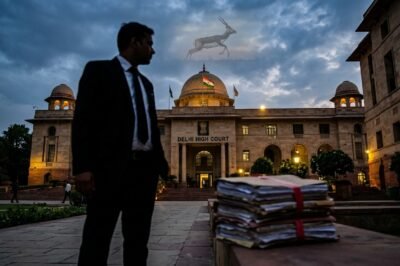
The Delhi High Court’s recent intervention regarding the release of the film titled ‘Kala Hiran’ has sent ripples through both the Indian judiciary and the vibrant corridors of Bollywood. For decades, the name Salman Khan has been synonymous with blockbuster success, yet it has remained perpetually intertwined with the legal shadows of the 1998 blackbuck poaching case. This latest development involves a plea seeking an immediate stay on the film’s release, prompting the court to issue a formal notice to the actor and other stakeholders. The legal challenge underscores a delicate intersection between artistic freedom and the potential for a film to influence or prejudice ongoing legal narratives. As fans and legal experts alike watch closely, the case highlights the enduring nature of celebrity-linked controversies in India, where the lines between cinematic storytelling and real-life judicial proceedings often blur. The High Court’s request for a response from Salman Khan signifies a critical juncture, ensuring that the grievances of the petitioner are addressed before the film reaches the silver screen. This unfolding drama serves as a potent reminder of the complexities involved when popular culture attempts to dramatize events that remain sensitive within the public consciousness and the legal system, especially when those events involve one of the nation’s most influential figures.
The Judicial Move and Its Significance
The decision by the Delhi High Court to issue a notice to Salman Khan is a significant procedural step that indicates the court finds the petitioner’s concerns worthy of examination. Justice Prathiba M. Singh, presiding over the matter, has sought a detailed response from the actor and the production house involved. The plea asserts that the film ‘Kala Hiran’ could potentially distort the facts surrounding the infamous blackbuck poaching case, which has been a recurring theme in Khan’s life for over twenty-five years. By seeking a stay, the petitioner aims to prevent the dissemination of content that might be deemed prejudicial or defamatory. This judicial move ensures that all parties have a fair opportunity to present their side of the story before any final decision is made regarding the film’s public exhibition.
Legal analysts suggest that the court’s notice is not an indictment of the film itself but rather a safeguard to protect the integrity of the judicial process. In a country where Bollywood stars command demi-god status, the portrayal of their real-life legal struggles on screen can significantly impact public opinion. The court is tasked with balancing the right to creative expression under Article 19(1)(a) of the Constitution with the right to a fair trial and the prevention of misinformation. As the notice reaches the actor, the industry waits to see how his legal team will defend the project, likely arguing that the film is a work of fiction inspired by events rather than a factual documentary.
Historical Context: The 1998 Blackbuck Poaching Case
To understand the gravity of the current legal battle, one must look back to 1998 during the filming of ‘Hum Saath-Saath Hain’ in Rajasthan. Salman Khan, along with several co-stars, was accused of poaching two blackbucks, an endangered species protected under the Wildlife Protection Act. The incident led to a series of legal battles that have spanned decades, involving multiple arrests, convictions, and successful appeals. The case has not only been a legal hurdle for the actor but has also become a cultural touchstone, symbolizing the tension between celebrity privilege and wildlife conservation efforts. The Bishnoi community, which considers the blackbuck sacred, has been at the forefront of the legal pursuit, ensuring the case remains in the limelight.
The long-standing nature of this case means that any cinematic representation titled ‘Kala Hiran’ (Blackbuck) inevitably invokes memories of the 1998 incident. The petitioner in the current case argues that the very title and theme of the film are designed to capitalize on the actor’s past legal troubles, potentially creating a narrative that could influence the public’s perception of the actor’s character. This historical baggage makes the film a lightning rod for controversy, as it touches upon sensitive environmental, religious, and legal issues that remain unresolved in many people’s minds. The court’s investigation will likely delve into whether the film’s content is purely artistic or if it serves a more calculated purpose.
The Petitioner’s Core Contentions and Grievances
The plea filed in the Delhi High Court is rooted in the belief that the film ‘Kala Hiran’ is not merely a creative endeavor but a direct reference to the ongoing legal saga of Salman Khan. The petitioner argues that the film’s release could lead to a ‘trial by media,’ where the court of public opinion reaches a verdict based on dramatized events before the actual judiciary concludes its proceedings. Furthermore, there are concerns regarding the potential for the film to glorify the act of poaching or, conversely, to unfairly malign the actor by presenting a biased version of the truth. The petitioner seeks to ensure that the film does not interfere with the administration of justice or cause irreparable harm to the reputations involved.
In addition to concerns about legal prejudice, the petitioner also highlights the potential for the film to incite public unrest, particularly among communities that hold the blackbuck in high regard. The Bishnoi community’s emotional and religious connection to the animal adds a layer of social sensitivity to the case. The plea suggests that the film’s narrative could be interpreted as insensitive or provocative, leading to communal tensions. By bringing these issues to the High Court, the petitioner is demanding a thorough vetting of the film’s script and intent, advocating for a delay until such time that it can be proven that the film does not violate any ethical or legal standards.
The Debate Over Cinematic Representation and Ethics
This case reignites the long-standing debate over the ethics of ‘biopics’ or films inspired by real-life crimes. Filmmakers often argue that they have the right to interpret public events through a creative lens, providing social commentary or exploring the human condition. However, when the subject of the film is a living individual currently embroiled in legal proceedings, the ethical boundaries become blurred. Is it fair to monetize a person’s legal tragedies while they are still seeking justice? The ‘Kala Hiran’ controversy brings this question to the forefront, forcing a dialogue between the film industry and legal scholars about the responsibility of storytellers.
- Artistic License: Filmmakers claim the right to dramatize events for entertainment and educational purposes.
- Legal Sub-judice: Courts must ensure that media content does not bias ongoing cases or influence witnesses.
- Public Interest: Does the public have a right to see a dramatized version of events that have occupied national headlines for years?
- Right to Reputation: Individuals have a right to protect their image from unfair or distorted cinematic portrayals.
The High Court’s scrutiny will likely focus on these four pillars. If the film is found to be a thinly veiled attempt to influence the legal outcome or if it contains defamatory material, the court may impose restrictions or demand changes. Conversely, if the film is deemed a protected form of expression that does not cross these lines, the release may be allowed to proceed. This tension underscores the difficulty of regulating a creative industry that thrives on controversy and real-life drama.
Possible Legal Outcomes and Industry Precedents
As the legal process unfolds, several outcomes are possible. The court could decide to grant a temporary stay, preventing the film’s release until a full review of its content is conducted. Alternatively, the court might allow the release but require the filmmakers to include prominent disclaimers stating that the work is purely fictional. There is also the possibility that the court finds no merit in the stay plea, allowing ‘Kala Hiran’ to hit theaters as scheduled. Past precedents in Indian law have seen both outcomes; films like ‘Jolly LLB’ and ‘Gangubai Kathiawadi’ faced similar legal hurdles but were eventually released with certain modifications or clarifications.
The impact of this case on the wider film industry cannot be overstated. A ruling in favor of a stay could set a precedent that makes it significantly more difficult for filmmakers to produce content based on current events or living celebrities. This might lead to a form of self-censorship within Bollywood, where producers avoid sensitive topics to prevent legal entanglement. On the other hand, a ruling that favors the release would reinforce the strength of free speech laws in India, even when they clash with high-profile legal battles. The industry is currently in a state of ‘wait and watch,’ as the Delhi High Court’s decision will likely shape the future of narrative storytelling in Indian cinema.
Conclusion and Future Implications
Conclusion and Future Implications
The Delhi High Court’s notice to Salman Khan marks the beginning of a complex legal chapter that will undoubtedly influence the intersection of law and entertainment in India. The case of ‘Kala Hiran’ is more than just a dispute over a film release; it is a test of the judiciary’s ability to protect the sanctity of legal proceedings in an era of hyper-media consumption. As the actor prepares his response, the focus will remain on whether the film crosses the line from creative expression into legal interference. The outcome will provide much-needed clarity on how much freedom filmmakers have when dealing with real-world controversies that are still active in the courts.
Moving forward, this case may prompt the government or industry bodies to establish clearer guidelines for films based on ‘real-life’ legal incidents. Such guidelines could help balance the rights of individuals and the creative desires of directors, reducing the frequency of last-minute legal stays that often result in massive financial losses for production houses. Regardless of the court’s final verdict, the ‘Kala Hiran’ notice has already succeeded in bringing critical questions of ethics, law, and celebrity culture back into the national conversation. For Salman Khan, it is yet another instance where his reel and real lives have collided, creating a narrative that continues to captivate the public imagination while challenging the limits of the law.




































Leave a Reply