
In Shorts
- Delhi Metro began operations on two new corridors from 3 pm on Sunday.
- The new routes include extensions on the Pink Line and Magenta Line.
- The expansion is expected to improve connectivity and reduce travel time for commuters.
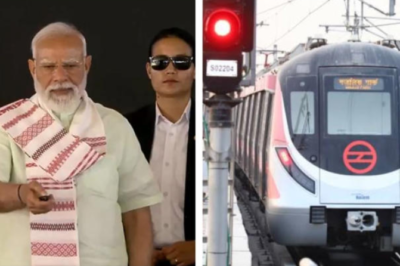
Delhi Metro services have commenced on two newly inaugurated corridors starting at 3 pm on Sunday, giving a major boost to public transport in the national capital. The expansion is expected to ease travel for thousands of commuters and improve connectivity across several key areas of the city.
The two new routes are part of a broader metro infrastructure push aimed at strengthening urban mobility. They include the Majlis Park to Maujpur Babarpur corridor on the Pink Line and the Deepali Chowk to Majlis Park corridor on the Magenta Line. These corridors together cover more than 22 kilometers and link important neighborhoods in north and northeast Delhi.
Prime Minister Narendra Modi inaugurated the projects earlier in the day as part of a larger set of development initiatives worth about Rs 33,500 crore. Of this amount, approximately Rs 18,300 crore has been allocated specifically for the expansion of the Delhi Metro network.
One of the key highlights of the expansion is the completion of the Pink Line loop, which effectively creates India’s first fully operational Ring Metro around Delhi. The circular network will allow commuters to travel across multiple parts of the city without needing to pass through the central sections, thereby reducing congestion and travel time.
The new corridors will benefit residents in areas such as Burari, Bhajanpura, Yamuna Vihar, Madhuban Chowk, Bhalaswa, and Majlis Park. Officials say the improved connectivity will not only shorten commute times but also encourage greater use of public transport, helping to reduce road traffic and pollution levels in the capital.
Urban transport experts believe the expansion will significantly enhance mobility in Delhi, particularly in regions that previously lacked direct metro connectivity. With the addition of these corridors, the Delhi Metro network continues to grow as one of the largest and most advanced urban transit systems in the world.





































Leave a Reply