
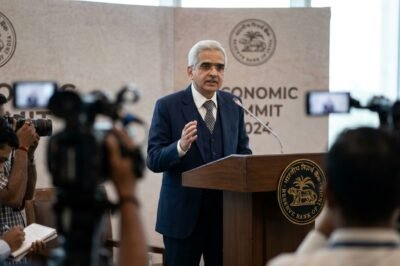
In an era defined by unprecedented global economic shifts and heightened volatility, Reserve Bank of India (RBI) Governor Shaktikanta Das has articulated a foundational principle that governs the central bank’s current strategic outlook: the inextricable link between financial stability and price stability. Speaking at a high-profile economic summit, the Governor emphasized that these two pillars of macroeconomic health are not merely complementary but are fundamentally interdependent. In the post-pandemic landscape, where supply chain disruptions, geopolitical tensions, and shifting commodity prices have frequently hijacked monetary narratives, the RBI has maintained a firm stance that a shaky financial foundation will inevitably lead to erratic price movements. This perspective shifts the focus from purely interest-rate-driven inflation management to a more holistic approach that encompasses the health of commercial banks, the resilience of the non-banking financial sector, and the integrity of digital payment systems. For the average consumer and the institutional investor alike, this philosophy underscores a commitment to a predictable economic environment where the value of the rupee is protected by the strength of the institutions that facilitate its flow. As we delve into the nuances of the Governor’s recent declarations, it becomes evident that the RBI is positioning itself as a dual guardian, ensuring that the currency retains its purchasing power while the structural infrastructure of the economy remains robust against internal and external shocks.
The Dual Mandate: Understanding the Symbiotic Relationship
The Reserve Bank of India has long operated under a mandate that prioritizes price stability while keeping in mind the objective of growth. However, Governor Das has recently brought the concept of financial stability to the forefront of this equation. He argues that price stability—typically managed through the Consumer Price Index (CPI) target of 4 percent with a margin of 2 percent—cannot be sustained if the financial system is under stress. A banking sector burdened by high non-performing assets (NPAs) or a liquidity crunch in the shadow banking sector can severely hamper the transmission of monetary policy. When banks are hesitant to lend or when borrowers are unable to service debt due to structural inefficiencies, the interest rate signals sent by the Monetary Policy Committee (MPC) fail to reach the real economy, thereby making inflation control a much more difficult task.
Furthermore, the Governor noted that financial instability often breeds inflationary pressures through indirect channels. For instance, a crisis in the credit markets can lead to a sudden contraction in supply-side investments, leading to shortages that drive up prices. Conversely, runaway inflation can erode the capital base of financial institutions, leading to a vicious cycle of economic contraction. By treating financial stability as a prerequisite for price stability, the RBI is adopting a macro-prudential framework that seeks to identify and mitigate systemic risks before they manifest as headline inflation figures. This proactive stance is a departure from reactive measures seen in previous decades and represents a sophisticated evolution in Indian central banking thought.
Analyzing the Impact of Global Macroeconomic Volatility
Governor Das’s remarks come at a time when global markets are navigating a complex web of uncertainties. From the aggressive rate hikes by the U.S. Federal Reserve to the fluctuations in global crude oil prices, the external environment poses a constant threat to domestic stability. The Governor highlighted that in a globalized world, financial instability in major economies can quickly spill over into emerging markets like India through volatile capital flows and currency depreciation. If the Indian financial system is not resilient, such external shocks could lead to domestic market dysfunction, which would ultimately translate into higher import costs and inflationary pressure.
To counter these risks, the RBI has built a significant cushion of foreign exchange reserves and has implemented rigorous stress-testing for domestic banks. Das pointed out that the Indian economy’s ability to remain one of the fastest-growing major economies is largely due to its success in maintaining a stable financial environment despite the turbulence seen in Western banking sectors recently. The resilience of the Indian rupee, compared to many of its peers in the emerging market category, serves as a testament to the effectiveness of this stability-first approach. By insulating the domestic financial system from global contagion, the RBI ensures that price stability remains an achievable target rather than a moving goalpost influenced by external actors.
The Role of NBFCs and Banking Sector Resilience
A significant portion of the Governor’s discourse was dedicated to the health of the banking and Non-Banking Financial Company (NBFC) sectors. In recent years, the RBI has significantly tightened the regulatory oversight of NBFCs, treating the larger ones with the same level of scrutiny as commercial banks. Das emphasized that the ‘shadow banking’ sector is a vital cog in the Indian credit machine, particularly for reaching the last mile of the population. Therefore, any instability in this sector could have a cascading effect on the broader economy. The Governor noted with satisfaction that the capital adequacy ratios of Indian banks are currently at historic highs, and gross NPA ratios have fallen to multi-year lows, indicating a much cleaner and stronger balance sheet across the industry.
However, he also issued a note of caution regarding the rapid growth in unsecured retail loans. The RBI’s decision to increase risk weights on such loans is a clear example of prioritizing financial stability to prevent a future buildup of systemic risk. By curbing excessive exuberance in lending before it turns into a bubble, the central bank is preventing the kind of financial collapse that would inevitably lead to economic instability and price volatility. This calibrated approach to credit growth ensures that the expansion of the Indian economy is funded by high-quality assets, providing a stable backdrop for the MPC to focus on its inflation-targeting mission without being distracted by banking crises.
Inflationary Pressures and Monetary Policy Synchronicity
Despite the focus on financial health, the Governor made it clear that the fight against inflation is far from over. Price stability remains the primary goal, especially given the persistent challenges posed by food price volatility. Das explained that while core inflation—which excludes food and fuel—has shown signs of moderation, the headline inflation remains susceptible to weather-related shocks and global supply chain hiccups. The RBI’s strategy involves a synchronized use of monetary policy tools and regulatory interventions. While the repo rate remains the primary tool for managing demand-side inflation, the central bank’s focus on financial stability ensures that supply-side investments are not stifled by a lack of credit.
The Governor also touched upon the importance of transparent communication. By providing clear guidance on the RBI’s inflation outlook and its commitment to the 4 percent target, the central bank helps anchor inflation expectations among the public and businesses. When people believe that prices will remain stable, they are less likely to engage in speculative buying or demand excessive wage hikes, both of which can lead to inflationary spirals. This ‘expectations management’ is only possible when the public has confidence in the stability of the financial system. If the public perceives the banking system as weak, their trust in the currency and the central bank’s ability to control prices diminishes, proving once again that stability is the bedrock of effective monetary policy.
Regulatory Frameworks and Tech-Driven Oversight
In the digital age, financial stability is increasingly linked to technological resilience. Governor Das highlighted the RBI’s efforts in modernizing its supervisory framework through the use of Artificial Intelligence and Machine Learning. The ‘SupTech’ (Supervisory Technology) initiatives of the RBI allow for real-time monitoring of bank transactions and liquidity positions, enabling the central bank to intervene much earlier than was possible in the past. As India leads the world in digital payments through the Unified Payments Interface (UPI), the Governor stressed that the security and efficiency of these systems are paramount. A technical failure in the payment infrastructure could lead to a loss of public confidence, which is a significant risk to financial stability.
The RBI is also fostering innovation through its regulatory sandboxes, allowing FinTech companies to test new products in a controlled environment. However, Das was firm that innovation must not come at the cost of stability. The central bank’s cautious approach toward private cryptocurrencies is a prime example of this philosophy. By preferring a Central Bank Digital Currency (CBDC)—the Digital Rupee—the RBI aims to provide the benefits of digital transactions while maintaining the stability and sovereign guarantee of the traditional financial system. This technological foresight ensures that the Indian economy remains modern and competitive without sacrificing the foundational stability required for long-term price control.
Future Implications: The Path Toward Sustained Growth
Looking ahead, the Governor’s analysis suggests that the RBI will continue to maintain a vigilant and proactive stance. The path toward a 5 trillion-dollar economy and beyond necessitates a financial system that can withstand the tests of a rapidly changing world. Das concluded that while the immediate focus might often be on the next interest rate decision, the long-term health of the economy depends on the steady, often invisible work of maintaining financial stability. This involves constant monitoring of global trends, rigorous supervision of domestic entities, and a willingness to take unpopular preemptive actions when risks begin to build up.
For stakeholders in the Indian economy, the message is clear: the Reserve Bank of India will not sacrifice long-term stability for short-term gains. As the world watches India’s ascent, the synchronization of price stability and financial stability will remain the cornerstone of its economic policy. By ensuring that the financial heart of the country beats strongly and rhythmically, Governor Shaktikanta Das and the RBI are providing the necessary conditions for sustainable growth, job creation, and a rising standard of living for all citizens. The future of the Indian economy looks bright, provided it continues to build upon the solid ground of a stable and resilient financial landscape.






































Leave a Reply