
The Precipice of Peace or Peril: An Urgent Introduction
The geopolitical landscape of the Middle East has always been characterized by its volatility, but recent revelations regarding back-channel communications between Tehran and the incoming Trump administration have reached a fever pitch. Reports surfacing from high-level diplomatic circles suggest that Iran’s Foreign Minister, Abbas Araghchi, delivered a stark and chilling warning to a representative of President-elect Donald Trump. The message was simple yet harrowing: the Islamic Republic feels it is facing the ‘chance of being bombed at any moment.’ This statement is not merely a piece of rhetorical flourish; it represents the culmination of years of failed diplomacy, crippling economic sanctions, and a regional shadow war that has finally stepped into the glaring light of potential direct confrontation. As the world watches the transition of power in Washington, the dialogue—or lack thereof—between these two nations stands as the most critical pivot point for global security in the 21st century. The gravity of Araghchi’s words underscores a desperate reality for Tehran, which finds itself squeezed between domestic unrest, the crumbling of its regional proxy network, and the looming return of a U.S. administration that previously dismantled the nuclear deal and authorized the assassination of its top general.
The Historical Weight of the ‘Maximum Pressure’ Legacy
To understand the current tension, one must look back at the historical wreckage of U.S.-Iran relations over the last decade. The Joint Comprehensive Plan of Action (JCPOA), signed in 2015, was intended to be a cornerstone of regional stability, trading nuclear limitations for sanctions relief. However, the 2018 withdrawal by the first Trump administration shattered that foundation. What followed was a policy of ‘Maximum Pressure,’ a strategy designed to collapse the Iranian economy and force Tehran back to the negotiating table on much harsher terms. While the economy did indeed suffer—with inflation skyrocketing and the rial plummeting—the political outcome was the opposite of what Washington intended. Instead of a more compliant Iran, the world saw a more defiant one. Tehran accelerated its uranium enrichment, reaching levels that the IAEA warns are near weapons-grade, and deepened its military ties with Russia and China. This historical context is vital because it explains why Araghchi is now using such apocalyptic language. He is speaking to an administration that he knows is capable of extreme measures, and he is signaling that the ‘Maximum Pressure’ era has pushed Iran to a point where they feel they have nothing left to lose but their physical survival.
The Secretive Nature of the Araghchi-Trump Envoy Talks
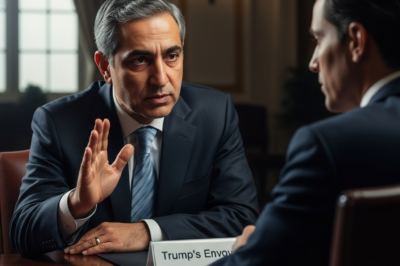
Details regarding the specific meeting between Araghchi and the Trump envoy are shrouded in the typical mystery of high-stakes espionage and diplomacy. Sources indicate that the meeting was not an official state visit but a ‘probing action’ to see if there is any common ground before Trump officially takes the oath of office. The fact that Araghchi, a seasoned diplomat known for his role in the original nuclear negotiations, was the one delivering the message is significant. It suggests that despite the hardline stance of the Revolutionary Guard, there is a faction within the Iranian government that is desperate to avoid a kinetic conflict. The envoy, representing the Trump transition team, reportedly carried the message that the ‘new’ Trump would be even less tolerant of Iranian regional interference than the ‘old’ one. The atmosphere of these talks was described as ‘cold and transactional,’ with the Iranian side emphasizing that their current posture is a direct response to the perceived existential threat posed by U.S. and Israeli military coordination. By stating they are at risk of ‘being bombed at any moment,’ Araghchi is attempting to frame Iran as the victim of unprovoked aggression, a narrative intended to garner sympathy from the Global South and put the onus of escalation on the United States.
The Existential Threat: Analyzing the ‘Bombing’ Rhetoric
When a Foreign Minister uses the word ‘bombing’ in a formal diplomatic exchange, it is a calculated move designed to trigger specific international legal and political mechanisms. For Iran, this rhetoric serves two purposes. First, it is a domestic signal. The Iranian leadership needs to justify the continued economic hardship to its population by framing it as a necessary defense against an imminent foreign invasion. Second, it is a desperate plea for a ‘Grand Bargain.’ By highlighting the extreme danger of the current situation, Araghchi is essentially telling Trump that the ‘Maximum Pressure’ campaign has reached its logical limit. If the U.S. pushes any further, the only remaining outcome is total war, which would destabilize global oil markets and draw the U.S. into another ‘forever war’—something Trump has repeatedly claimed he wants to avoid. The ‘bombing’ comment also reflects Iran’s acute awareness of Israel’s military capabilities. With the recent degradation of Hezbollah’s leadership and the tactical successes of the IDF in Gaza and Lebanon, Iran’s ‘forward defense’ strategy is failing. They are now looking at their own borders and realizing that the protective buffer provided by their proxies is thinner than ever before.
Geopolitical Fallout: Impact on Regional Proxies and Alliances
The implications of these talks extend far beyond the Washington-Tehran axis. Every major player in the Middle East—from Riyadh to Tel Aviv to Moscow—is recalibrating their strategy based on the tone of these exchanges. Saudi Arabia and the UAE, while historical rivals of Iran, have recently moved toward a policy of de-escalation, fearing that a full-scale U.S.-Iran war would result in their own infrastructure being targeted. For Israel, Araghchi’s warnings are seen as a sign that their military pressure is working. Prime Minister Netanyahu has long maintained that only a credible military threat will stop Iran’s nuclear ambitions. If Tehran truly feels they are on the verge of being bombed, Jerusalem views this as the perfect time to extract even more concessions or to strike while the enemy is off-balance. Meanwhile, Russia and China are watching closely. A weakened Iran is less useful as a strategic partner for Moscow in its war in Ukraine, and Beijing is concerned about any disruption to the flow of Iranian oil. The ‘bombing’ rhetoric, therefore, acts as a flare sent up to the international community, warning that the status quo is no longer sustainable and that the regional ‘Axis of Resistance’ is under unprecedented strain.
Trump’s ‘Maximum Pressure 2.0’: A Strategy of Absolute Leverage
The envoy’s presence and the subsequent leaks suggest that the incoming Trump administration is preparing for a ‘Maximum Pressure 2.0’ campaign. However, this time, the leverage is different. In 2018, the world was still hopeful for the JCPOA. In 2025, that hope is dead. Trump’s team likely views Iran’s current vulnerability—exemplified by Araghchi’s fear of bombing—as the ultimate bargaining chip. The strategy appears to be one of ‘total isolation’ combined with a ‘credible threat of force.’ Unlike the Biden administration, which sought to contain Iran through a mix of limited sanctions and indirect diplomacy, the Trump 2.0 approach seems geared toward a definitive resolution. This could mean a new, much broader treaty that covers not just nuclear enrichment but also ballistic missile development and regional proxy funding. The risk, of course, is that by backing a proud and militarized regime into a corner where they feel ‘bombed at any moment,’ the U.S. may inadvertently trigger the very conflict it seeks to use as a deterrent. The ‘dealmaker’ persona of Trump will be put to the ultimate test: can he leverage the threat of total destruction into a lasting peace, or will the ‘chance of being bombed’ become a self-fulfilling prophecy?
Conclusion: The Final Countdown for Diplomacy
As we move toward the inauguration and the official start of a new American foreign policy era, the words of Abbas Araghchi serve as a haunting reminder of how close the world is to a major conflagration. The ‘chance of being bombed at any moment’ is a phrase that will likely define the first hundred days of the new administration’s Middle East policy. Whether this was a moment of genuine transparency or a masterclass in psychological warfare, the result is the same: the margin for error has vanished. Diplomacy is no longer a matter of adjusting percentages of uranium or lifting specific tariffs; it has become a matter of life and death for millions. If the Trump administration and the Iranian leadership cannot find a way to de-escalate, the ‘bombing’ Araghchi fears may not just be a possibility, but an inevitability that reshapes the map of the modern world. The next few months will determine if the international community can step back from this ledge or if the cycle of threats will finally ignite a fire that no one can put out.





































Leave a Reply