
The Grand Stage: Why the India-Australia Youth Rivalry Matters
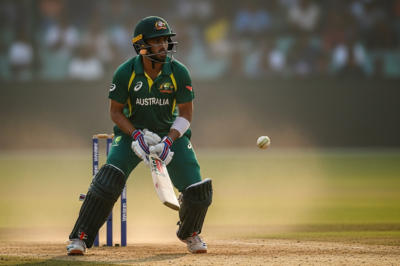
In the high-octane world of international cricket, few rivalries carry as much historical weight as the clash between Australia and India. While the senior teams battle for the Border-Gavaskar Trophy, the foundation of this rivalry is laid in the Under-19 circuits. The latest sensation to emerge from the Australian developmental system is Neel Patel, a versatile talent who is currently preparing to lead the charge against an always-formidable Indian youth squad. For young cricketers like Patel, a tour of India is not merely a series of matches; it is a rite of passage. The technical and mental hurdles presented by the subcontinent are unique, often acting as a litmus test for a player’s longevity in the professional game. In an exclusive conversation, Patel expressed his readiness to embrace this challenge, specifically acknowledging that the ‘wickets will be quite different’ from the pace-friendly decks found back home in Australia. This transition from the bouncy, hard surfaces of the southern hemisphere to the abrasive, spin-friendly dustbowls of India represents a profound shift in cricketing philosophy, requiring a total recalibration of technique and temperament.
Adapting to the Indian Subcontinent: A Technical Overhaul for Australia’s Best
For any Australian batsman, the shift from the bouncy, true surfaces of the WACA or the MCG to the cracked, spinning tracks of Chennai or Bangalore is a daunting prospect. Neel Patel, however, views this as an opportunity to refine his craft. In India, the lack of consistent pace and the presence of variable bounce mean that horizontal bat shots—the bread and butter of Australian batting—carry a high risk. Patel has been working extensively on his vertical bat play and the ability to play with ‘soft hands’ to negate the threat of the ball turning sharply from the surface. The Australian U-19 coaching staff has been simulating Indian conditions by using worn balls and drier pitches, but as Patel notes, nothing truly replicates the intensity of a live match on Indian soil. The technical adjustment involves staying lower in the stance and being prepared to use the feet to get to the pitch of the ball. For a player like Patel, who relies on timing and placement, the ability to read the length early will be the difference between a successful tour and a frustrating experience. He emphasized that the goal is to survive the initial period of ‘feel’ and then capitalize once the rhythm of the spinner is disrupted.
Neel Patel: A Profile of a Rising Prodigy with Multicultural Roots
Neel Patel represents the modern face of Australian cricket—diverse, skilled, and globally aware. Having grown up in Australia with a deep connection to his Indian heritage, Patel possesses a unique perspective on the game. This dual connection provides him with a cultural advantage, as he is familiar with the passion and pressure that Indian cricket fans bring to the stadium. His journey through the Australian junior ranks has been marked by a consistent ability to perform in crunch situations, earning him a spot in the elite Under-19 program. Coaches describe Patel as a thinking cricketer, someone who analyzes field placements and bowler tendencies with the precision of a veteran. His statistics in the Australian domestic youth league have been impressive, featuring several match-winning innings that showcase both power and poise. As he prepares to face the Indian spinners, Patel’s background allows him to approach the game with a blend of Australian aggression and an innate understanding of the subcontinent’s nuances. This series is not just about runs; it is about cementing his reputation as a player who can thrive in any environment.
The Strategic Importance of the India Series for the U-19 World Cup Path
This upcoming tour is strategically vital for Cricket Australia’s long-term vision. With the ICC Under-19 World Cup on the horizon, the management is using the India series to finalize their core squad. India is often considered the ‘final frontier’ for developmental teams because of the specific skill sets required to compete there. For the Australian selectors, watching how Neel Patel and his teammates handle the pressure of playing in front of vocal crowds on turning tracks will provide invaluable data. It is one thing to score a century on a flat deck in Adelaide; it is quite another to grind out a fifty against world-class spin in extreme humidity. The series serves as a high-stakes audition. Beyond individual performances, the team’s tactical flexibility will be tested. Australia has traditionally struggled with playing against spin in the middle overs, a phase where India often dominates. Patel’s role as a middle-order anchor will be crucial in ensuring that Australia maintains a healthy strike rate without losing clusters of wickets. The data gathered from this tour will influence training protocols back in Australia for years to come.
Analyzing the ‘Wicket’ Factor: Deciphering Patel’s Tactical Approach
In his interview, the most telling phrase from Patel was regarding the ‘different wickets.’ This isn’t just about the grass or the soil; it’s about the entire ecosystem of the pitch. Indian wickets tend to deteriorate faster, meaning that by the third or fourth day (or even the latter stages of a one-day match), the surface becomes a minefield for the batsmen. Patel highlighted the importance of the ‘sweep’ and the ‘reverse-sweep’ as vital tools in his arsenal. While these shots were once considered risky for Australians, they are now essential for disrupting a spinner’s length. Patel has also been studying footage of past Australian greats who succeeded in India, such as Matthew Hayden and Michael Clarke, to understand how to use his feet effectively. The tactical plan involves creating doubt in the bowler’s mind—forcing them to pull back their length or change their line. If the Australian batsmen stay stationary, they become sitting ducks for the Indian spinners who excel at bowling ‘straight’ and letting the pitch do the rest. Patel’s readiness to embrace these ‘alien’ conditions suggests a level of maturity that bodes well for the Australian side.
Cross-Cultural Cricketing Narratives: The ‘Indian-Australian’ Connection
The story of Neel Patel is part of a larger, evolving narrative in Australian sports. Over the last decade, there has been a significant influx of players of South Asian descent into the Australian cricketing pipeline. Players like Jason Sangha, Tanveer Sangha, and Gurinder Sandhu have paved the way, proving that the ‘Baggy Green’ is a symbol that belongs to all Australians regardless of their background. Patel’s success in the U-19 squad is a testament to the inclusivity of the Australian high-performance programs. However, when he steps onto the field in India, he will be facing players who have been raised on these very surfaces, creating a fascinating ‘clash of styles’ between his Australian training and his cultural roots. This cross-cultural connection adds a layer of intrigue to the series, as fans from both nations find reasons to root for his success. Patel himself views this as a strength, noting that his familiarity with Indian conditions—albeit through family connections and prior visits—removes the ‘fear of the unknown’ that often plagues visiting teams.
Conclusion: The Rite of Passage and the Future of Australian Cricket
As the Australia U-19 team prepares to embark on this challenging journey, all eyes will be on Neel Patel. His ability to adapt to the ‘quite different’ wickets of India will not only define the outcome of the series but also the trajectory of his burgeoning career. Cricket is a game of constant evolution, and for a young player, there is no better classroom than the cricket grounds of India. Whether it is handling the heat, the noise, or the unrelenting spin, the lessons learned here will be etched into Patel’s cricketing DNA forever. If he succeeds, he will join the elite group of Australian cricketers who have mastered the subcontinent, bringing him one step closer to the ultimate dream of senior international honors. The challenge is set, the wickets are waiting, and for Neel Patel, the time to embrace the challenge has arrived. This series promises to be a thrilling spectacle of youth talent, tactical battles, and the timeless beauty of the India-Australia cricketing saga.




































Leave a Reply