
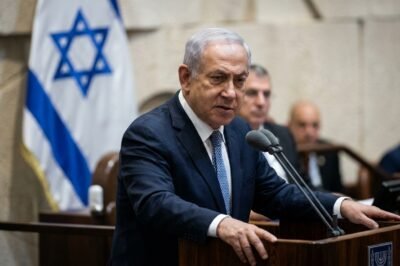
The geopolitical landscape surrounding the Levant has undergone a seismic shift as the Democratic Party secures a dominant sweep of the United States Congress, capturing both the House and the Senate in a historic electoral wave. For Israeli Prime Minister Benjamin Netanyahu, this development is more than just a change in foreign leadership; it represents a direct and existential challenge to his long-standing strategy of navigating American partisanship to maintain domestic control. As news of the sweep filtered through the halls of the Knesset, Netanyahu’s rivals were quick to capitalize on the moment, framing the election results as a definitive rejection of the Prime Minister’s friction-heavy approach to the White House and a warning sign for the future of the state. The opposition, led by figures like Yair Lapid and Benny Gantz, has seized this opportunity to argue that Israel’s most critical strategic asset—its bipartisan support in Washington—is being squandered by a leader more interested in his own political survival than the national interest. This analysis explores the deepening divide within Israeli politics and how a Democratic-controlled Washington serves as a powerful lever for those seeking to end the Netanyahu era, marking a potential turning point in Middle Eastern diplomacy.
The immediate reaction from the Israeli opposition was both swift and calculated. Within hours of the projected results in the United States, Yair Lapid, the leader of the opposition, issued a statement suggesting that the era of “playing favorites” with American political parties had reached a dead end. For years, Netanyahu has been accused of aligning himself too closely with the Republican Party, a move that critics argue has alienated a generation of Democratic lawmakers and voters. With Democrats now holding the keys to the legislative agenda and the power of the purse in Washington, the opposition is painting a picture of an isolated Israel, unable to secure its defense needs or diplomatic cover without a change in leadership at home. This narrative is designed to appeal to the Israeli center-right, which values the security relationship with the U.S. above all else, and to create cracks in Netanyahu’s right-wing coalition by highlighting the material risks of his continued tenure.
The Erosion of the Special Relationship Strategy
For decades, Benjamin Netanyahu has positioned himself as the only Israeli leader capable of standing up to international pressure while simultaneously securing American support. This “master of the world stage” persona was built on his deep understanding of American politics, yet it is this very understanding that his rivals claim has failed him. By betting heavily on Republican victories and cultivating a close personal bond with the previous Republican administration, Netanyahu arguably gambled with the bipartisan consensus that has historically underpinned U.S.-Israel relations. Now, with a Democratic sweep, the legislative landscape in D.C. is likely to shift toward more scrutiny of Israeli policies, particularly regarding settlement expansion and the humanitarian situation in Gaza. The Democratic sweep empowers the progressive wing of the party, which has been vocal about conditioning military aid, a prospect that was unthinkable just a decade ago.
Furthermore, the Democratic control of Senate committees means that key appointments and foreign aid packages will now be overseen by individuals who have expressed deep reservations about Netanyahu’s domestic judicial reforms and his coalition’s far-right elements. Rivals like Benny Gantz are using this to argue that Netanyahu has become a “persona non grata” in the halls of power that matter most. They suggest that as long as Netanyahu remains Prime Minister, Israel will struggle to find a sympathetic ear for its security concerns, potentially leading to delays in military hardware deliveries or a softening of the U.S. stance at the United Nations Security Council. This erosion of the “special relationship” is being marketed by the opposition as a strategic disaster of Netanyahu’s own making.
Internal Opposition: Lapid and Gantz’s Strategic Pivot
Yair Lapid and Benny Gantz, the primary architects of the movement to oust Netanyahu, have transitioned from defense to offense. Their strategy involves a two-pronged approach: first, convincing the Israeli public that Netanyahu is a liability to national security, and second, presenting themselves as the bridge-builders who can restore the bridge to Washington. Lapid has recently engaged in a series of high-level meetings with Democratic strategists, positioning himself as the “reliable partner” that the Biden-Harris administration and the new Congress can work with. By doing so, he is signaling to the Israeli electorate that a change in government would result in an immediate thawing of relations and a more robust security partnership.
Benny Gantz, on the other hand, is focusing on the defense and military implications. As a former Chief of Staff of the IDF, his words carry weight with the security establishment. Gantz has warned that the current friction with Washington is not just a diplomatic spat but a threat to the operational readiness of the Israeli military. He points to the necessity of long-term planning with the U.S. Department of Defense, which requires a level of trust that currently does not exist. By framing the issue through the lens of military necessity, Gantz is attempting to peel away support from Netanyahu’s base, which traditionally prioritizes security above all other political considerations. The opposition is no longer just talking about policy; they are talking about the very survival of the state’s strategic depth.
Economic and Defense Implications of a US Policy Shift
The economic ramifications of a Democratic sweep in the U.S. are already being felt in the Israeli markets. Investors are wary of a potential rift that could affect the tech sector, which is the engine of the Israeli economy and heavily integrated with American capital and markets. A Democratic Congress is expected to focus on global stability and may exert pressure through economic channels to influence Israeli policy. There are concerns that if the U.S. moves to reassess its trade agreements or research grants due to political disagreements, the Israeli economy could face significant headwinds. Financial analysts in Tel Aviv have noted a correlation between political instability and currency fluctuations, with the Shekel showing sensitivity to news of deteriorating ties with Washington.
On the defense front, the implications are even more stark. Israel receives billions of dollars in annual military aid from the U.S., most of which is mandated by long-term agreements. However, the specific allocation of funds for projects like the Iron Dome, Arrow 3, and David’s Sling often requires supplemental congressional approval. A Democratic-led Congress may introduce more rigorous reporting requirements or transparency measures on how this aid is utilized. This potential for “conditional aid” is a nightmare scenario for the Israeli defense establishment. Netanyahu’s rivals are highlighting this risk, suggesting that his presence in the Prime Minister’s Office acts as a lightning rod that attracts unwanted legislative scrutiny, whereas a different leader could navigate these waters without compromising Israel’s qualitative military edge.
The Pressure of Regional Normalization and the Palestinian Issue
The Democratic sweep also recalibrates the regional dynamics of the Middle East. The current U.S. administration, backed by a unified Congress, is likely to double down on a regional integration strategy that includes a clear pathway for Palestinian statehood or at least significant concessions. This stands in direct opposition to the platform of Netanyahu’s current coalition, which includes hardline elements opposed to any such moves. The U.S. may now leverage the promise of Saudi normalization to force Netanyahu’s hand, creating a “take it or leave it” scenario that could break his government.
Rivals are seizing on this by arguing that Netanyahu is the primary obstacle to a historic peace deal with Saudi Arabia. They claim that the U.S. is ready to facilitate a transformative regional alliance, but only if Israel is led by a government that adheres to international norms and is willing to engage in good-faith negotiations. By positioning Netanyahu as the “spoiler” of regional peace, the opposition is attempting to paint him as an archaic figure whose time has passed. This narrative is particularly effective among the Israeli business elite and moderate voters who see normalization with the Arab world as the key to long-term prosperity and security. The pressure from Washington, therefore, acts as a catalyst for internal political realignment.
Conclusion: The Precarious Future of the Coalition
In conclusion, the Democratic sweep of the U.S. Congress has provided Benjamin Netanyahu’s rivals with their most potent political weapon in years. By linking the Prime Minister’s personal political style to a perceived decline in Israel’s international standing and security, the opposition is creating a compelling case for his ouster. The coming months will likely see increased pressure within the Knesset, as the reality of a Democratic-controlled Washington begins to impact policy decisions and aid discussions. Netanyahu has survived many political storms before, but the combination of a unified American government and a mobilized domestic opposition presents a unique and formidable challenge. Whether he can pivot once again or if this marks the beginning of the end for his record-breaking tenure remains the central question of Israeli politics. One thing is certain: the “special relationship” is no longer a given, and the battle for the future of Israel’s leadership is now inextricably linked to the political winds blowing from across the Atlantic.


































Leave a Reply