
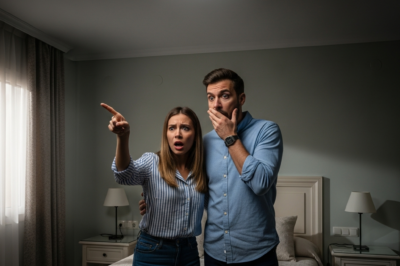
The Incident: A Dream Vacation Transformed into a Surveillance Nightmare
In an era where the sharing economy has redefined the way we experience global travel, the sanctity of personal space remains the ultimate, albeit fragile, expectation for any guest. A recent and chilling report from NDTV has brought to light a harrowing experience faced by a couple during their vacation in Spain, highlighting a persistent and terrifying flaw in the short-term rental industry. What was intended to be a restorative holiday in the picturesque landscapes of Spain quickly devolved into a privacy nightmare when the couple discovered a hidden camera strategically positioned to record their most intimate moments in their bedroom. This incident is not merely an isolated case of a ‘rogue host’; it is a stark reminder of the evolving challenges regarding digital privacy and traveler safety in the 21st century. The couple, whose identities have remained partially shielded for their protection, reported finding the device pointed directly at their bed, an area universally recognized as the pinnacle of private space. The psychological impact of such a discovery is profound, often leaving victims with a lasting sense of violation and a lingering distrust of hospitality platforms. As this story went viral, it ignited a firestorm of criticism on social media, forcing the tech giant Airbnb to once again defend its safety protocols and host vetting processes. This detailed investigation explores the specifics of the Spain incident, the technical reality of covert surveillance, and the systemic changes required to protect travelers from predatory behavior.
The Discovery: How the Veil of Privacy was Lifted
The discovery of the camera was not immediate, which adds a layer of calculated malice to the host’s actions. According to reports, the couple had already spent time in the rental before a sense of unease or a keen eye for detail led them to inspect the room more closely. Hidden cameras today are designed to be indistinguishable from everyday household objects. They are often embedded in smoke detectors, digital clocks, USB chargers, or even picture frames. In this specific Spanish rental, the device was positioned with a clear, unobstructed view of the sleeping area, suggesting that the intent was voyeuristic in nature. Once the couple identified the lens, the shock was immediate. The process of documenting the device while ensuring their own safety became their primary concern. This incident underscores a terrifying reality: without a proactive search, many travelers may never realize they are being recorded. The couple immediately contacted local authorities and Airbnb, setting off a chain of events that would lead to a temporary ban of the listing and a global conversation about the ‘hidden camera epidemic’ in vacation rentals. The sheer technical sophistication of modern spy gear means that these cameras can stream high-definition video directly to a host’s smartphone via Wi-Fi, allowing for real-time monitoring from anywhere in the world.
Airbnb’s Official Response and Policy Evolution
In response to the NDTV report and the ensuing public outcry, Airbnb issued a statement reiterating their ‘zero tolerance’ policy for such egregious violations. The company confirmed that the host in question had been suspended and the listing removed pending a full investigation. Historically, Airbnb allowed indoor security cameras in ‘common areas’ like living rooms or hallways, provided they were disclosed in the listing description. However, following years of similar scandals and increasing pressure from privacy advocates, Airbnb announced a sweeping global policy change in early 2024. The platform now strictly prohibits the use of indoor security cameras in any listing, regardless of their location or disclosure status. This total ban was a landmark decision intended to simplify the rules and prioritize guest privacy. Despite these policy shifts, the incident in Spain proves that a policy is only as effective as its enforcement. Critics argue that Airbnb’s verification process for hosts is insufficient and that the platform relies too heavily on guests to report violations after the harm has already been done. For the couple in Spain, the refund and the host’s suspension offered little solace compared to the breach of their fundamental human right to privacy.
The Global Context: Surveillance in the Short-Term Rental Market
The incident in Spain is part of a broader, more disturbing trend. From South Korea to the United States, hidden camera discoveries in hotels and Airbnbs have become a recurring headline. Statistics suggest that while the percentage of problematic listings is small relative to the millions of successful stays, the gravity of the offense is uniquely damaging to brand trust. The market for ‘spy tech’ has exploded on major e-commerce platforms, where anyone can purchase a 4K hidden camera disguised as a functional wall outlet for less than fifty dollars. This accessibility has democratized surveillance, making it easier for bad actors to exploit guests. Furthermore, the legal landscape varies significantly across borders. While the European Union’s General Data Protection Regulation (GDPR) provides some of the world’s strongest privacy protections, the criminal prosecution of such acts can be a lengthy and bureaucratic process, especially for foreign tourists who must navigate a foreign legal system. In Spain, unauthorized recording in a private space can lead to significant prison sentences, yet the difficulty lies in proving the intent and the duration of the surveillance.
Technical Insights: The Mechanics of Modern Spy Cameras
To understand the threat, one must understand the technology. Modern covert cameras are no longer bulky devices with visible wires. They are ‘Internet of Things’ (IoT) devices that utilize micro-lenses as small as a pinhead. These cameras often feature night vision capabilities, motion activation, and cloud storage integration. In many reported cases, hosts use the rental’s own Wi-Fi network to transmit the data. This provides a vulnerability that tech-savvy travelers can exploit to protect themselves. By using network scanning apps like Fing, a guest can see every device connected to the local router. If a device appears labeled as ‘IP Camera’ or ‘Shenzhen Technology Co,’ it is a major red flag. However, more sophisticated hosts may use hidden SSIDs or separate cellular connections to bypass this detection. The sheer variety of form factors—ranging from ‘smart’ lightbulbs to fake screws—makes physical inspection a daunting task for the average traveler. This technological arms race between voyeurs and privacy-conscious guests highlights the need for more advanced, perhaps AI-driven, detection tools that can be integrated into the booking platforms themselves.
Traveler’s Guide: How to Protect Your Privacy on the Road
Given the risks highlighted by the Spain incident, travelers are increasingly taking matters into their own hands. Expert security consultants recommend a multi-step ‘sweep’ protocol upon entering any new rental. First, a physical inspection is paramount. This involves checking every electronic device in the bedroom and bathroom. One effective method is the ‘flashlight test’: by turning off the lights and shining a bright torch at suspected objects, a camera lens will often produce a distinct blue or purple reflection. Second, guests should look for unusually placed objects, such as a clock radio that is angled specifically toward the bed or a smoke detector that is positioned directly above the shower. Third, hardware detectors, which pick up the radio frequencies (RF) emitted by wireless cameras, are becoming popular travel accessories. While not foolproof, they provide an extra layer of security. Finally, if a camera is found, it is vital to document it with photos and videos but avoid touching it to preserve fingerprints for the police. The immediate next step should always be leaving the premises and contacting both the platform and local law enforcement. Safety should always take precedence over financial recovery or travel convenience.
Conclusion: Restoring Trust in a Digital Age
The story of the couple in Spain is a cautionary tale that resonates with every modern traveler. It highlights the dark side of the ‘live anywhere’ lifestyle that Airbnb promotes. As we move forward, the responsibility cannot rest solely on the shoulders of the consumer. Platforms like Airbnb, VRBO, and Booking.com must invest more heavily in physical inspections or utilize technology to verify that listings are camera-free before a guest ever steps through the door. The incident in Spain should serve as a turning point, pushing the industry toward a future where privacy is guaranteed rather than a gamble. Until then, the burden of vigilance remains with the traveler. The loss of privacy is an invisible wound, but its impact on the soul of travel is undeniable. Only through a combination of strict legislation, technological safeguards, and corporate accountability can we ensure that the next ‘dream vacation’ doesn’t end with a discovery that haunts a couple for years to come. The Spain incident is a wake-up call for the world: in the digital age, our most private moments are under threat, and the time to act is now.







































Leave a Reply