
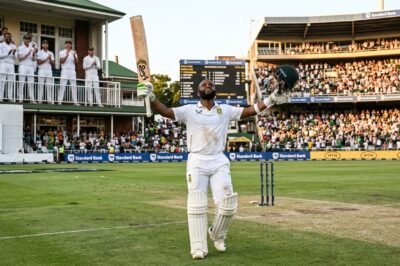
The cricketing world often speaks of defining moments, those rare instances where a single player’s performance transcends the match and becomes a cultural and sporting landmark. Temba Bavuma’s monumental innings of 179 against the West Indies at the Wanderers is precisely that. For a player who has spent years battling not just elite bowling attacks but also a relentless tide of skepticism regarding his conversion rate, this was more than a century; it was a declaration of intent. As the sun beat down on the Highveld, Bavuma stood as a solitary figure of resistance, crafting a knock that lasted nearly nine hours and faced 280 deliveries of high-quality pace and spin. This performance did not just save a Test match; it arguably saved a captaincy and provided the blueprint for the next generation of South African red-ball cricketers. The sheer weight of the 179 runs was matched only by the psychological burden it lifted off Bavuma’s shoulders, marking a pivotal shift in the trajectory of the Proteas’ middle order. This analysis delves deep into the mechanics of that innings, the statistical milestones achieved, and the broader implications for the global cricketing market and South Africa’s standing in the ICC World Test Championship.
The Weight of Expectations and the Captain’s Burden
Entering this series, Temba Bavuma was a man under immense scrutiny. Despite being the heartbeat of the South African batting lineup in terms of consistency, the lack of a second Test century had become a persistent narrative in the media. Since his maiden hundred against England in early 2016, Bavuma had managed numerous half-centuries but had failed to cross the triple-figure mark, leading to debates about his role in the side. However, the decision to appoint him as the Test captain brought a new layer of responsibility. Leadership in South African cricket is never just about tactics on the field; it is about navigating the complex socio-political landscape of the nation and serving as a beacon of transformation and excellence. Bavuma’s 179 was his response to these compounding pressures, a masterclass in blocking out the noise and focusing on the simple act of survival and accumulation.
The innings began in a familiar crisis for the Proteas. Losing early wickets has been a recurring theme for South Africa in the post-Hashim Amla and AB de Villiers era. When Bavuma arrived at the crease, the West Indian pacers, led by Alzarri Joseph and Kemar Roach, were extracting significant bounce and lateral movement. The captain’s first 50 runs were a study in defensive discipline. He played close to his body, let the ball come to him, and refused to be drawn into the wide deliveries that had accounted for his teammates. By absorbing this pressure, he allowed the lower order to find their feet, demonstrating the selflessness that has characterized his career. This was not a flamboyant display of strokeplay, but a gritty, determined effort to rebuild a shattered pride.
Technical Mastery Against the West Indian Pace Battery
To understand the greatness of Bavuma’s 179, one must analyze the technical adjustments he made during the marathon stay. The West Indies utilized a relentless short-ball strategy, attempting to exploit Bavuma’s height. However, his horizontal bat shots—the pull and the cut—were executed with surgical precision. He showed remarkable judgment in knowing which balls to duck and which to punish. His balance at the point of contact was impeccable, a testament to his fitness and mental stamina after hours at the crease. As the ball grew older and the pitch flattened slightly, Bavuma’s footwork against the spin of Gudakesh Motie became a highlight, as he used his crease depth to manipulate gaps in the field.
Furthermore, his partnership building was a tactical masterclass. Recognizing that he could not win the game alone, Bavuma mentored the younger batters at the other end. He frequently held mid-over conferences, calming nerves and advising on the movement of the ball. This communicative approach to batting is what separates a good player from a great captain. By the time he reached his 150, the West Indian bowlers were visibly exhausted, their shoulders slumped as the realization set in that Bavuma was not going to give his wicket away. He forced the opposition to earn every single dot ball, effectively neutralizing their aggressive bowling plans through sheer attrition.
Statistical Milestones and Historical Significance
Statistically, the 179-run knock is one for the record books. It stands as the highest score by a South African captain in a home Test against the West Indies, eclipsing several legendary names. More importantly, it propelled his career average back over the crucial 35-mark, a threshold that often separates permanent fixtures from rotating squad members in the Test arena. This innings also saw Bavuma join an elite group of South African batsmen who have scored over 150 in a single Test innings while batting in the middle order. The 280 balls he faced represent one of the longest stays at the crease by a Proteas batsman in the last decade, highlighting a return to the ‘old-school’ Test batting values of patience and longevity.
The impact on the ICC World Test Championship (WTC) points table cannot be overstated. South Africa, having struggled in their previous tours to Australia and England, desperately needed a win to regain confidence. Bavuma’s 179 ensured that the Proteas could dictate the terms of the match, setting a target that was well beyond the reach of the visitors. In the context of South African cricket history, this innings will be remembered alongside the great knocks of Graeme Smith and Jacques Kallis—not just for the runs, but for the timing. It signaled that South Africa is still a force to be reckoned with in the longest format of the game, despite the increasing allure and distraction of T20 franchise leagues.
The Sporting Market and Economic Implications
From a business and market perspective, Temba Bavuma’s resurgence is a goldmine for Cricket South Africa (CSA). As the face of the national team, Bavuma’s success directly correlates with the brand value of the Proteas. Sponsors are inherently drawn to success stories of resilience and leadership. After a period of administrative turmoil and fluctuating team performances, a stable and high-performing captain like Bavuma provides a reliable anchor for marketing campaigns and broadcast rights negotiations. His 179 has likely increased his personal endorsement value, making him one of the most marketable athletes in the country across all demographics.
Moreover, the performance reinforces the viability of Test cricket in the South African market. At a time when there is significant pressure to reduce the number of Test matches in favor of the SA20 league, a high-drama, high-skill performance like this proves that there is still a massive appetite for the five-day game. The viewership spikes during his final 50 runs indicate that the public is still deeply invested in the narrative arc of Test cricket. For CSA, this means continued leverage when negotiating international tours and ensuring that the Wanderers and Newlands remain iconic venues for the world’s best players to test their mettle.
Strategic Architecture of the Proteas’ Recovery
The strategy behind this innings was clearly discussed in the dressing room prior to the match. Coach Shukri Conrad has been vocal about his desire for ‘big hundreds’ rather than pretty thirties and forties. Bavuma took this directive to heart. The strategic architecture involved a slow first session where the run rate hovered around two per over, followed by a gradual acceleration once the bowlers began to tire. This ‘rope-a-dope’ style of cricket is difficult to execute but incredibly effective in wearing down an opposition. By the time the second new ball was taken, Bavuma was so well-set that he treated it like an old ball, finding the boundary with ease and putting the pressure back on the tiring West Indian seamers.
This innings also provided a template for the South African top order. For too long, the team has relied on explosive starts that often end in middle-order collapses. Bavuma showed that by valuing one’s wicket and playing the long game, the entire dynamic of a Test match can be shifted. The psychological impact on the West Indies was profound; their bowlers, who had dominated the first innings, looked toothless against a man who refused to blink. This mental victory is often more important than the runs themselves, as it creates a sense of invincibility around the captain that trickles down to the rest of the squad.
Future Implications and a New Era for South African Cricket
Looking ahead, Temba Bavuma’s 179 is the spark that could ignite a new era for South African cricket. With a settled captain who is leading by example, the Proteas can now focus on building a squad capable of challenging for the WTC trophy in the next cycle. The confidence gained from this knock will permeate through the dressing room, easing the pressure on younger players like Tony de Zorzi and Ryan Rickelton. When your leader is willing to fight for 179 runs, it sets a standard of excellence that everyone else is compelled to follow. It silences the critics who argued that Bavuma was only in the team for reasons other than his batting prowess, firmly establishing him as one of the premier Test batsmen in the world today.
In conclusion, this marathon 179 was a triumph of the human spirit as much as it was a sporting achievement. It was a recovery mission for a team in transition and a redemption story for a captain who never stopped believing in his own ability. As South Africa moves forward, the memory of this innings at the Wanderers will serve as a constant reminder of what can be achieved through grit, technical excellence, and an unwavering commitment to the cause. The road ahead for the Proteas is still long and fraught with challenges, but with Temba Bavuma at the helm, the foundation has never looked more solid. The cricketing world has been served notice: South Africa is back, and their captain is leading from the front.






































Leave a Reply