
In Shorts
- India successfully tests its 3,500-km range K4 SLBM from the INS Arighaat submarine.
- Pakistan security analysts view the test as a destabilizing signal in the regional arms balance.
- The missile strengthens India’s sea-based nuclear deterrent capability.
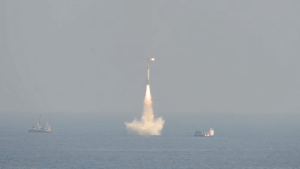
New Delhi’s latest defence milestone, the successful test of the K4 submarine-launched ballistic missile, has stirred significant strategic debate across South Asia. Conducted from the nuclear-powered submarine INS Arighaat in the Bay of Bengal, the trial showcased India’s ability to fire a long-range missile from beneath the sea, reinforcing its second-strike nuclear capability. The K4 weapon, developed by India’s Defence Research and Development Organisation, boasts a range of about 3,500 kilometres, markedly extending reach compared with earlier submarine missiles.
In Islamabad, senior defence commentators and former officials have publicly questioned the impact of the launch on regional security dynamics. Critics argue that India’s expanding sea-based arsenal could upset existing strategic calculations, particularly in the Indian Ocean Region, and contribute to an accelerated arms competition. Some voices within Pakistan’s security establishment have described the test as a warning signal that may have implications beyond bilateral tensions.
The debate underscores broader concerns about nuclear force modernisation in South Asia. While India maintains it adheres to a policy of credible minimum deterrence and a no-first-use posture, its advancing triad capability expands the flexibility of its strategic responses. Through platforms such as the INS Arihant and INS Arighaat, India now fields a sea-based leg of its nuclear arsenal that can remain hidden underwater, enhancing survivability and deterrence effectiveness.
Pakistan, for its part, continues to develop its own delivery systems, including submarine-launched cruise missiles, as part of its nuclear doctrine. Analysts note that Islamabad’s investments in naval and missile capabilities reflect its insistence on maintaining strategic parity, particularly in response to perceived shifts in India’s force posture.
Experts say that while such technological advancements can strengthen deterrence, they also raise complex questions about stability in a region marked by historic rivalries. The test comes at a time of heightened sensitivities between the two neighbours, with each side balancing deterrence needs against diplomatic pressures to avoid escalation.
India’s defence establishments have not issued detailed official commentary on the trial, but observers view the successful launch as part of a broader effort to enhance undersea nuclear deterrence and operational readiness as global strategic landscapes evolve.





































Leave a Reply