
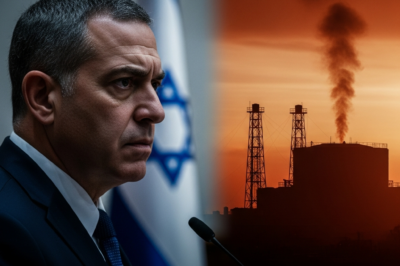
The geopolitical landscape of the Middle East is currently witnessing one of its most volatile periods in recent history, as tensions between Israel and Iran reach a fever pitch. In a series of sharp, uncompromising statements, Israeli officials have characterized the United States’ current diplomatic approach to Iran’s nuclear program as "dangerously naive." This rhetorical shift signals a widening rift between the two longtime allies regarding the best method to contain Tehran’s nuclear aspirations. Tel Aviv has underscored this frustration by asserting that it reserves the right to "act alone" if the international community fails to halt Iran’s progress toward weapons-grade uranium enrichment. The implications of such a stance are profound, suggesting that the specter of a direct military confrontation—often referred to as a "regional shadow war" coming into the light—is no longer a distant possibility but an imminent strategic calculation.
The ‘Naive’ Label: Deconstructing Israel’s Strategic Disagreement with Washington
For years, the United States has leaned into a policy of containment through diplomacy and economic pressure, punctuated by the 2015 Joint Comprehensive Plan of Action (JCPOA) and subsequent attempts to revive it. However, the Israeli intelligence community, Mossad, and the political leadership in Tel Aviv argue that this approach fundamentally misunderstands the nature of the Iranian regime. According to Israeli defense sources, the belief that Tehran can be negotiated out of its nuclear ambitions is a fallacy that grants the Islamic Republic the time it needs to achieve "breakout capacity."
Israel’s critique hinges on several key points:
- Technical Advancement: Iran has successfully enriched uranium to 60% purity at its Fordow and Natanz facilities, a short technical step away from the 90% required for a nuclear warhead.
- Transparency Concerns: Tel Aviv argues that the International Atomic Energy Agency (IAEA) has been consistently outmaneuvered, with inspectors facing restricted access to critical sites.
- The Sunset Clauses: Many Israeli officials believe that any revived deal would merely delay the inevitable, as "sunset clauses" would eventually allow Iran to resume its activities legally.
By calling the U.S. approach "naive," Israel is signaling that it no longer trusts the diplomatic process to provide the security guarantees it deems essential for its survival.
The Begin Doctrine: A Historical Precedent for Unilateral Action
When Israel speaks of "acting alone," it is invoking a long-standing strategic framework known as the "Begin Doctrine." Established by former Prime Minister Menachem Begin in 1981, the doctrine posits that Israel will not allow any enemy state in the Middle East to acquire weapons of mass destruction. This is not mere posturing; Israel has a proven track record of executing such strikes.
In 1981, Operation Opera saw Israeli F-16s destroy the Osirak nuclear reactor in Iraq. In 2007, Operation Orchard targeted the Al-Kibar facility in Syria. Both actions were taken unilaterally, often to the initial chagrin of the international community, including the United States. Today, the challenge is significantly more complex. Unlike Osirak or Al-Kibar, Iran’s nuclear infrastructure is decentralized, deeply buried in mountain complexes like Fordow, and protected by advanced S-300 air defense systems. Yet, the Israeli Air Force (IAF) has been conducting large-scale drills, simulating long-range strikes that would require complex mid-air refueling and the use of specialized bunker-buster munitions.
Regional Escalation: The Role of Proxies and the ‘Ring of Fire’
A strike on Iran would not happen in a vacuum. Tehran has spent decades building what analysts call a "Ring of Fire" around Israel, consisting of heavily armed proxy groups. If Tel Aviv were to act alone, the retaliation would likely be multi-fronted:
- Hezbollah: Situated in Southern Lebanon, Hezbollah possesses an estimated 150,000 rockets and precision-guided missiles capable of reaching every major Israeli city.
- The Houthis: From Yemen, this group has already demonstrated its ability to disrupt Red Sea shipping and launch long-range drones toward Eilat.
- Iraqi and Syrian Militias: These groups provide a land bridge for Iranian supplies and could launch localized incursions or drone swarms.
The Israeli defense establishment is currently preparing for a "multi-arena war," recognizing that a strike on Natanz or Fordow would immediately trigger these peripheral actors. This interconnectedness is why the U.S. remains hesitant; Washington fears a regional conflagration that would draw American forces back into a prolonged Middle Eastern conflict, potentially disrupting global oil supplies and destabilizing the world economy.
The Intelligence War: Sabotage and Cyber Operations
While the threat of an aerial strike looms, a "gray zone" war is already being fought. Over the past decade, Iran’s nuclear program has been plagued by mysterious explosions, the assassination of top scientists—most notably Mohsen Fakhrizadeh in 2020—and sophisticated cyberattacks. The Stuxnet virus, discovered in 2010, remains a landmark in cyber warfare, having physically destroyed Iranian centrifuges by manipulating their internal software.
Israel’s recent rhetoric suggests that these clandestine efforts may no longer be sufficient. The "naive" label applied to the U.S. suggests that Tel Aviv believes Iran has successfully insulated its program against further sabotage. This leaves kinetic military action as the only remaining lever of deterrence in the Israeli strategic playbook. The shift from "secret war" to "open threat" indicates a closing window of opportunity.
Global Economic and Diplomatic Consequences
Should Israel choose to act alone, the global repercussions would be seismic. The Strait of Hormuz, through which 20% of the world’s oil flows, would likely become a combat zone. Iran has repeatedly threatened to close the strait in response to aggression, a move that would send oil prices skyrocketing and potentially trigger a global recession. Furthermore, a unilateral Israeli strike would place the United States in a diplomatic quagmire. While Washington might not authorize the strike, it would almost certainly be compelled to defend Israel against the inevitable Iranian retaliation, effectively dragging the U.S. into the very war it sought to avoid through diplomacy.
Furthermore, the Abraham Accords—normalization agreements between Israel and several Arab nations like the UAE and Bahrain—would be put to the ultimate test. While these nations share Israel’s concern regarding a nuclear Iran, an all-out war would pressure their domestic stability and test their commitment to the new regional architecture.
Conclusion: The Point of No Return
The current standoff between Israel and Iran is a high-stakes game of chicken where the stakes are nothing less than regional survival and global stability. Israel’s characterization of U.S. policy as "naive" is a clear signal that the status quo is unacceptable to Tel Aviv. As Iran inches closer to the 90% enrichment threshold, the window for a diplomatic solution is slamming shut. Whether Israel will indeed "act alone" remains the most critical question in international relations today. If they do, the world must be prepared for a fundamental restructuring of the Middle Eastern order, the likes of which have not been seen in decades. The tension is no longer about if a conflict will occur, but when and how it will be ignited.







































Leave a Reply