
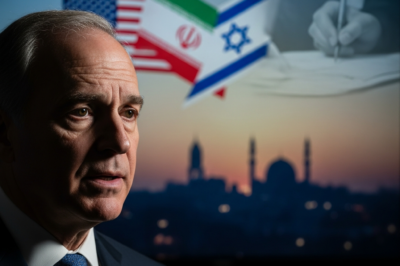
The geopolitical landscape of the Middle East is currently witnessing one of its most volatile and transformative periods in modern history. As the shadow war between Iran and Israel threatens to spill over into a full-scale regional conflagration, a startling new development has emerged from the American political sphere. Recent reports, prominently highlighted by The Hindu, suggest that Vice Presidential candidate J.D. Vance has indicated significant progress in back-channel negotiations regarding a potential U.S.-Iran deal. However, this potential diplomatic ‘reset’ reportedly awaits a ‘green light’ from former President Donald Trump, signaling a profound shift in how international relations are being conducted during a high-stakes U.S. election cycle. This development comes at a time when the world is watching the skies over Tehran and Tel Aviv, wondering if the next move will be a diplomatic handshake or a missile barrage. The stakes could not be higher, as any agreement—or lack thereof—will dictate the security architecture of the Levant and the Persian Gulf for decades to come.
The Shadow War Comes into the Light: Israel and Iran on the Brink
For decades, the animosity between Israel and Iran was fought through proxies, cyber-attacks, and covert assassinations. However, the recent months have seen this conflict transition into a direct military confrontation. Following the unprecedented direct drone and missile strikes launched by Iran against Israeli territory earlier this year, and the subsequent retaliatory strikes, the ‘rules of engagement’ have been rewritten. Israel, led by Prime Minister Benjamin Netanyahu, has maintained a stance of absolute deterrence, suggesting that any Iranian aggression will be met with overwhelming force targeting high-value strategic assets, including nuclear facilities. Conversely, Iran has bolstered its ‘Axis of Resistance,’ utilizing Hezbollah in Lebanon, the Houthis in Yemen, and various militias in Iraq and Syria to stretch Israeli defenses thin. The current ‘LIVE’ status of this war isn’t just about active kinetic strikes; it is a psychological and diplomatic tug-of-war where every statement from Washington or Tehran is parsed for signs of escalation or exhaustion. The humanitarian toll and the risk to global shipping lanes, particularly through the Strait of Hormuz and the Red Sea, have made this a primary concern for the international community.
JD Vance’s Diplomatic Breakthrough: A New Republican Realism?
In a move that has surprised many veteran diplomats, Senator J.D. Vance has emerged as a key voice in discussing a potential path forward with Iran. Vance, who represents the ‘America First’ wing of the Republican Party, has often been skeptical of ‘forever wars’ in the Middle East. His recent assertions that progress has been made in understanding Iranian red lines suggests that a more transactional, rather than purely ideological, approach might be on the table. The reporting suggests that Vance has been involved in high-level discussions—possibly facilitated by third parties like Qatar or Oman—to explore the possibility of a deal that could freeze Iran’s nuclear enrichment in exchange for specific sanctions relief and security guarantees. This ‘Vance Doctrine’ appears to prioritize regional stability and the prevention of U.S. military entanglement over the total regime change rhetoric often associated with neo-conservative elements of the past. By framing the progress as a strategic necessity, Vance is positioning the potential Trump-Vance administration as the only entity capable of brokering a ‘grand bargain’ that the current administration has struggled to finalize.
The ‘Trump Green Light’: Decoding the Republican Strategy
The most critical aspect of the current reporting is the assertion that any potential deal is currently awaiting a ‘green light’ from Donald Trump. This highlights a peculiar reality in contemporary international relations: the ‘Logan Act’ notwithstanding, foreign powers are increasingly looking toward the projected winner of the 2024 U.S. election to negotiate long-term deals. For Iran, a deal signed with a lame-duck Biden administration might be seen as fragile, easily torn up by a successor—much like Trump did with the JCPOA in 2018. By seeking a green light from Trump now, the Iranian side (and the mediators) are looking for a ‘Trump-proof’ or ‘Trump-approved’ framework. From Trump’s perspective, his approval would serve two purposes: it would demonstrate his ‘Art of the Deal’ prowess on the world stage before even taking office, and it would effectively hand him a foreign policy victory on day one. However, the political risk is immense. If Trump gives the green light and the deal fails or is seen as a ‘sell-out’ of Israel, it could alienate his core base and key allies like Netanyahu. Therefore, the ‘green light’ is likely contingent on extremely strict verification measures and significant Iranian concessions that go beyond just the nuclear issue, potentially including the cessation of proxy funding.
Regional Implications: The Saudi-Israeli Nexus and the Gulf Response
Any U.S.-Iran deal brokered or approved by the Trump camp would have immediate and profound effects on the burgeoning relationship between Israel and Saudi Arabia. The ‘Abraham Accords,’ a hallmark of the first Trump administration, were built on the foundation of a shared threat perception regarding Iran. If the U.S. moves toward a rapprochement with Tehran, Saudi Arabia and the United Arab Emirates may feel the need to accelerate their own diplomatic hedging. We have already seen a Chinese-brokered normalization between Riyadh and Tehran, and a U.S.-Iran deal would further complicate this. Israel, on the other hand, views any deal with suspicion. The Netanyahu government has repeatedly stated that it will not be bound by international agreements that it believes do not sufficiently neuter Iran’s nuclear capabilities. The tension here is palpable: can Trump maintain his ‘strongest ally of Israel’ persona while simultaneously negotiating with Israel’s existential rival? The Hindu’s reporting suggests that the regional players are in a state of ‘strategic patience,’ waiting to see if the rhetoric of the campaign trail translates into a concrete policy shift that could either stabilize the region or lead to a new era of isolationism.
Nuclear Ambitions and Sanctions: The Core of the Negotiation
At the heart of the conflict and the potential deal are two intractable issues: Iran’s nuclear program and the suffocating web of international sanctions. Since the collapse of the JCPOA, Iran has increased its enrichment of uranium to near-weapons-grade levels. Experts suggest that the ‘breakout time’—the time needed to produce enough fissile material for a nuclear bomb—has shrunk to a matter of weeks, if not days. Any deal that Vance and Trump would support would likely require Iran to not only stop further enrichment but to export its current stockpiles and allow for ‘anywhere, anytime’ inspections by the IAEA. In return, Iran is demanding the release of frozen assets and the lifting of oil export sanctions that have crippled its economy and led to widespread domestic unrest. The challenge is that the U.S. has used these sanctions as its primary lever of power; giving them up without a definitive end to Iran’s ballistic missile program and its support for groups like Hamas and Hezbollah is a tall order. The ‘progress’ Vance mentions likely involves a phased approach where sanctions are lifted in direct proportion to verifiable Iranian de-escalation across multiple fronts, not just the nuclear one.
Global Oil Markets and Economic Consequences
The economic ramifications of the Iran-Israel war and the potential U.S. deal are global in scope. The Middle East remains the world’s most vital energy-producing region. Any escalation that results in the closure of the Strait of Hormuz could send oil prices soaring past $150 a barrel, triggering a global recession. Conversely, a successful deal that brings Iranian oil officially back into the market would provide a significant downward pressure on energy prices, aiding global efforts to curb inflation. This economic incentive is a powerful motivator for the U.S. and European powers. For the American voter, the price at the pump is often a more pressing concern than the nuances of Middle Eastern geopolitics. If Trump can claim that his ‘green light’ on a deal helped lower gas prices, it becomes a potent campaign tool. However, the volatility remains high. The mere threat of an Israeli strike on Iranian oil terminals keeps the market in a state of constant anxiety. Traders are currently pricing in a ‘geopolitical risk premium,’ and the reports of progress in the Vance-Trump orbit have already caused minor fluctuations in crude futures, as the market weighs the possibility of a diplomatic ‘black swan’ event that brings peace instead of war.
Future Outlook: Is a ‘Grand Bargain’ Truly Possible?
As we look toward the final months of 2024, the situation remains on a knife-edge. The ‘LIVE’ nature of the Iran-Israel war means that a single miscalculation—a stray missile, an over-enthusiastic proxy attack, or a targeted assassination—could derail all diplomatic efforts. The prospect of a deal awaiting a ‘Trump green light’ adds a layer of complexity that is almost unprecedented in American political history. If J.D. Vance is correct and progress is being made, we may be on the cusp of a significant realignment. However, skepticism remains the default position for most analysts. Iran has a long history of using negotiations to buy time, and Israel has a long history of taking unilateral action when it feels its security is threatened. The coming weeks will be telling. Will Trump provide the green light, and if so, what will he demand in return? Will the Biden administration attempt to preempt this by finalizing its own deal, or will the conflict escalate to a point where diplomacy is no longer an option? For now, the world waits, watching the intersection of Middle Eastern warfare and American electoral politics, hoping that the ‘progress’ mentioned leads to a lasting peace rather than a temporary pause before a larger storm.



































Leave a Reply