
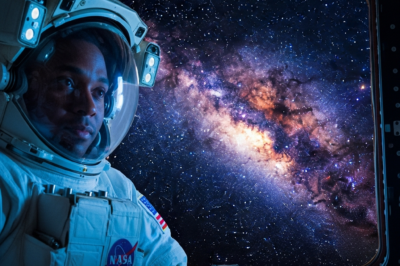
The vast, silent expanse of the cosmos has always beckoned humanity with its mystery and grandeur, but rarely do we see it with the clarity and intimacy provided by those currently living among the stars. Recently, NASA astronaut Matthew Dominick, a Commander for the SpaceX Crew-8 mission, captured a series of stunning photographs of the Milky Way galaxy from his vantage point aboard the International Space Station (ISS). These images, which quickly went viral across social media platforms and news outlets like CNBC-TV18, offer more than just a visual feast; they provide a rare window into the technical rigors and artistic sensibilities required to document our galaxy from a platform moving at orbital velocities. Dominick’s willingness to share not only the final result but also the ‘behind-the-scenes’ technical settings has sparked a renewed global interest in astrophotography and the daily lives of astronauts. This intersection of high-stakes science and digital artistry highlights how modern space exploration continues to inspire the public while pushing the boundaries of what is possible with contemporary imaging technology. As we delve into the specifics of how these photographs were taken, we uncover a fascinating narrative of precision, patience, and the pursuit of cosmic perspective.
The Technical Mastery Behind the Lens in Microgravity
Capturing the Milky Way from the International Space Station is a feat that requires a sophisticated understanding of both photography and orbital mechanics. Matthew Dominick revealed that his recent masterpiece was the result of meticulous planning and high-end hardware. Unlike terrestrial astrophotography, where a tripod can be planted on solid ground to facilitate long exposures, an astronaut must contend with an environment that is constantly in motion. The ISS orbits the Earth at a staggering speed of approximately 17,500 miles per hour, completing a full revolution every 90 minutes. This means that for any long-exposure shot, the camera is essentially on a moving platform that is also curving around a planetary body. Dominick explained that he used a fast lens—likely a 15mm or 24mm lens with an aperture as wide as f/1.4—to pull in as much light as possible in a short timeframe. To capture the faint luminosity of the galactic core without the stars turning into streaks (star trails), the exposure time must be carefully balanced. Using a Nikon Z9, the current flagship digital mirrorless camera on the ISS, Dominick opted for high ISO settings, sometimes reaching up to 12,800 or higher, to amplify the light signals hitting the sensor. This high-sensitivity approach allows for shorter shutter speeds, which is essential when the photographer is hurtling through space. Furthermore, the stabilization of the camera is paramount. Astronauts often use specialized ‘magic arms’ or clamps to fix the camera to the station’s frame, and they must even time their breathing or movements to avoid vibrating the station’s structure, which could result in a blurry image.
The Vantage Point of the International Space Station
One of the primary reasons Dominick’s photos are so much more vivid than those taken from Earth is the absence of the atmosphere. When we look at the stars from the ground, we are looking through miles of air, dust, and water vapor that distort and dim the light of distant galaxies—a phenomenon known as scintillation. Aboard the ISS, which orbits at an altitude of approximately 250 miles, the astronauts are above 99% of the Earth’s atmosphere. This provides a ‘pristine’ view where the stars do not twinkle but shine with a steady, piercing light. In the images shared by Dominick, the Milky Way appears as a dense, luminous river of stars, punctuated by dark lanes of interstellar dust. The colors are also more pronounced; the deep reds of nebulae and the cool blues of young star clusters are captured with a fidelity that is difficult to achieve on Earth without heavy filtering. Additionally, the ISS offers a unique foreground. Many of Dominick’s shots include the curved limb of the Earth, often draped in a haunting green or orange light known as ‘airglow.’ This chemiluminescence, caused by the interaction of solar radiation with the upper atmosphere, provides a stunning contrast to the deep black of the vacuum and the brilliant white of the stars, creating a composite image that anchors the viewer in a specific place in the universe.
Bridging Science and Public Engagement via Social Media
The role of the astronaut has evolved significantly in the digital age. While their primary mission remains the conduct of scientific experiments and the maintenance of the station, they have also become the primary storytellers of the space frontier. NASA and other space agencies have recognized that high-quality visual content is one of the most effective ways to maintain public interest and secure funding for future missions like Artemis. By sharing his photography on platforms like X (formerly Twitter) and Instagram, Matthew Dominick is performing a vital act of public outreach. He often accompanies his photos with detailed captions explaining his ‘ISO 6400, 15-second exposure’ settings, effectively turning a social media post into a masterclass in photography. This transparency demystifies the process of space exploration, making it feel more accessible to the average person. It also fosters a sense of global community; when a person in a small town can see the same view of the galaxy that an astronaut sees, it reinforces the ‘Overview Effect’—the cognitive shift reported by astronauts when viewing Earth from space, leading to a greater appreciation for our planet and our shared humanity. Dominick’s work is part of a broader trend where NASA crew members utilize the station’s various camera arrays, from the Cupola’s windows to external mounts, to document the beauty of the cosmos for those of us remaining on the ground.
The Milky Way: Our Cosmic Home in Focus
To understand the significance of Dominick’s photography, one must understand the subject itself. The Milky Way is a barred spiral galaxy containing an estimated 100 to 400 billion stars. When an astronaut captures the Milky Way, they are typically focusing on the Galactic Center, located in the direction of the constellation Sagittarius. This area is the most densely packed part of our galaxy, filled with old stars, gas, and a supermassive black hole known as Sagittarius A*. The ‘clouds’ seen in these photos are not actually clouds in the traditional sense, but massive accumulations of interstellar dust that block the light from stars behind them. These dust lanes are the cradles of future stars, regions where gravity is slowly pulling matter together to ignite new suns. In Dominick’s long-exposure shots, these features are rendered with incredible detail, showing the complexity of the galactic structure. For scientists, such photos can occasionally provide qualitative data on the density of the Milky Way’s visible components or the intensity of airglow, but their primary value lies in their ability to contextualize Earth’s position within the larger galactic environment. We are not just a planet orbiting a star; we are part of a massive, rotating disk of matter that is over 100,000 light-years in diameter. Seeing this through the lens of a person actually ‘out there’ brings a visceral reality to astronomical concepts that often feel abstract when viewed in a textbook.
The Evolution of Space Photography: From Film to Digital
The history of space photography is a testament to the rapid advancement of human technology. In the early days of the Mercury and Gemini programs, astronauts were equipped with modified Hasselblad film cameras. These were bulky, difficult to operate in gloves, and required the film to be returned to Earth for processing before anyone could see the images. The iconic ‘Earthrise’ photo taken during Apollo 8 was a product of this film era, a single shot that changed the world’s perception of our planet. Fast forward to the era of the International Space Station, and the technology has transitioned entirely to digital. Today, the ISS is equipped with an arsenal of the latest DSLR and mirrorless cameras, including the Nikon Z9 and various Canon models, equipped with lenses ranging from ultra-wide-angle to 800mm telephoto. The digital transition has been a game-changer; astronauts can now review their shots instantly, adjust their settings, and even transmit high-resolution files back to Earth via the station’s high-speed Ku-band radio link. This allows for the real-time sharing of events, such as solar flares, aurora borealis displays, or the transit of the Milky Way. Matthew Dominick’s recent photos represent the current pinnacle of this evolution, utilizing the high dynamic range and low-light performance of modern sensors to capture images that would have been impossible just a decade ago. The move toward mirrorless systems also reduces weight—a critical factor in spaceflight—and eliminates the mechanical vibrations of a traditional SLR mirror, further improving the sharpness of long-exposure images.
The Future of Astrophotography and Deep Space Missions
As NASA looks toward the future with the Artemis missions and the eventual goal of a crewed mission to Mars, the role of photography will only become more significant. The upcoming Lunar Gateway station will provide a new platform for astrophotography, one that is much further from Earth and offers a different perspective on the solar system. We can expect future astronauts to capture images of the Earth and Moon together against the backdrop of the Milky Way with even greater detail. Furthermore, the integration of artificial intelligence in camera systems may soon allow for automated tracking of celestial objects from a moving spacecraft, compensating for orbital motion perfectly and allowing for even longer exposures. Matthew Dominick’s work serves as a precursor to this new era of deep space documentation. His technical explanations provide a blueprint for how future explorers can communicate their experiences. As sensors become more sensitive and processing power increases, we may soon see 8K video of the Milky Way or real-time VR feeds that allow people on Earth to ‘sit’ in the Cupola and look out at the galaxy alongside the astronauts. The drive to document our surroundings is a fundamental human trait, and as we move further into the cosmos, our cameras will continue to be our most important tools for sharing the wonders of the universe.
Conclusion: The Enduring Power of the Cosmic Image
In conclusion, the photograph of the Milky Way shared by Matthew Dominick is far more than a simple social media update; it is a sophisticated blend of high-level physics, advanced engineering, and artistic vision. By explaining the technical nuances of how the image was captured—the balance of ISO, aperture, and shutter speed in a microgravity environment—Dominick has provided the public with a deeper appreciation for the skills required to live and work in space. These images remind us of our place in the universe, bridging the gap between our terrestrial lives and the infinite reaches of the galaxy. They demonstrate that even in the most technical and demanding environments, the human desire to capture and share beauty remains a driving force. As the ISS continues to orbit our planet, and as we prepare to venture further into the lunar and martian frontiers, we can look forward to more of these stunning visual testimonials. They serve as a reminder that while the science of space exploration is about data and discovery, the experience of space exploration is about wonder and the enduring quest to see our home and our galaxy in a new light.





































Leave a Reply